
Smart patch detects allergies before symptoms strike
Microneedle-packed biosensor monitors antibodies linked to food allergies, offering early warning before reactions begin.
About
A wearable device that alerts people with food allergies before a reaction begins has the potential to reduce life-threatening anaphylaxis and transform allergy management from reactive to preventive care.
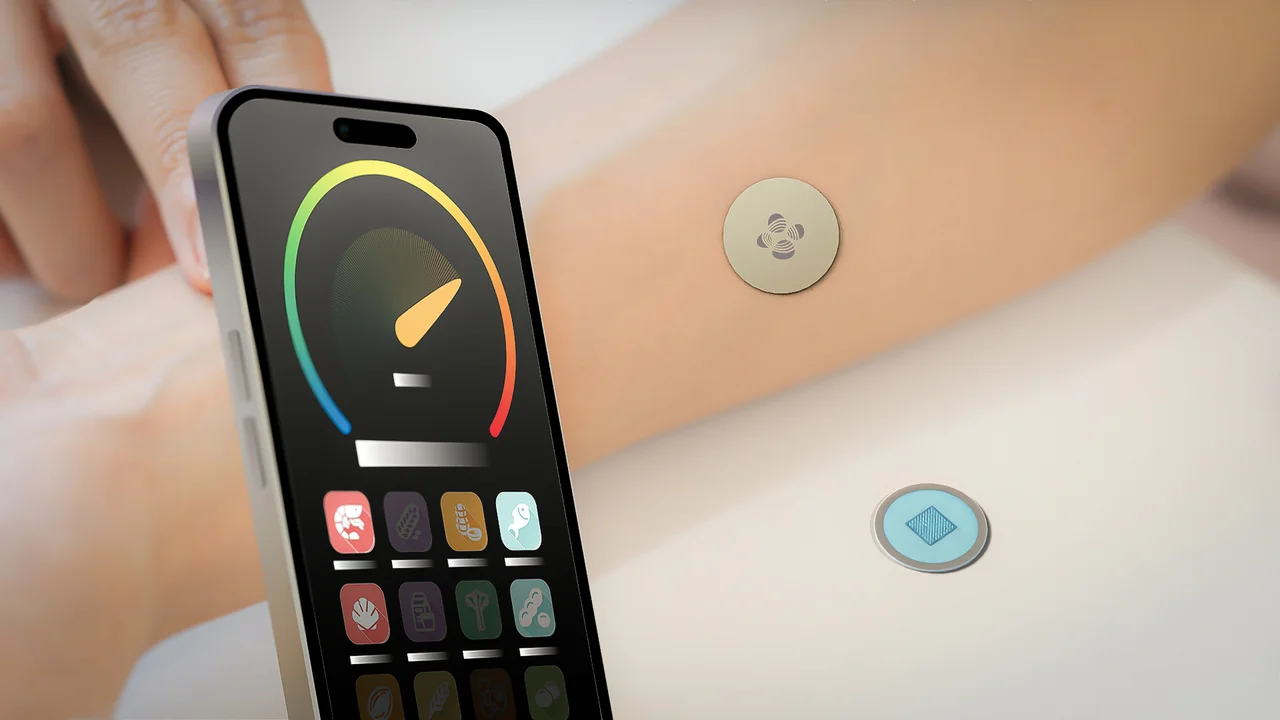
The AllergE patch is a microneedle-based biosensor developed by researchers at KAUST that painlessly detects immunoglobulin E (IgE), the antibody that triggers allergic reactions, directly from the fluid beneath the skin[1].
Food allergies — especially to eggs, nuts, milk, and seafood — are a growing public health concern. Conventional allergy tests, such as skin pricks and blood draws, are invasive, time-consuming, and carry the risk of provoking mild reactions. By contrast, the AllergE patch is painless and quick, relying on an array of tiny, porous needles — each less than a millimeter long and about the width of a human hair.
Inside each microneedle sit DNA strands, known as aptamers, that act as molecular sentinels. When these encounter IgE antibodies, they twist into new shapes that generate an electrochemical signal. A flexible electrode and a small reader then translate the signal into measurable data — a setup that the researchers say could eventually sync with a smartphone for remote monitoring at home.
The result is a continuous readout of a person’s allergy-related immune levels, all in real time. “This smart patch could one day help prevent anaphylaxis and enable safe, at-home early allergy sensitization detection,” says Dana Alsulaiman, the study’s corresponding author. Researchers hope that early, noninvasive detection could help families monitor allergy risks before exposure leads to a dangerous immune response.
In lab tests on artificial skin substitutes and on explanted skin from a human donor, the device detected IgE concentrations as low as 30 picograms per milliliter — hundreds of times more sensitive than most current assays. It could also distinguish IgE from structurally similar antibodies that dominate the body’s immune defenses but play no role in mediating allergic responses.
The microneedles are manufactured using two-photon polymerization, a high-resolution 3D lithography technique that allows precise control over their geometry and strength. That level of structural precision ensures the needles reach just beneath the surface to collect the tiny amounts of fluid needed for analysis, deep enough to sense, but shallow enough to stay painless and unobtrusive, all without breaking or losing functionality over repeated uses.
Though still in early stages, the KAUST team, including members of the Lab of Biomedical Materials and Devices (BioMAD Lab), led by Alsulaiman, and the Sensors Lab, led by Khaled Salama, the study’s co-corresponding author, envision the AllergE patch as part of a broader family of skin-worn diagnostics, capable of tracking immune molecules, hormones, and other biomarkers linked to inflammation and disease.
Read the full story in KAUST Discovery.