Professor Shamim appointed Editor-in-Chief of the IEEE Journal of Electromagnetics, RF and Microwaves in Medicine and Biology
Professor Shamim assumes Editor-in-Chief role at IEEE J-ERM
About
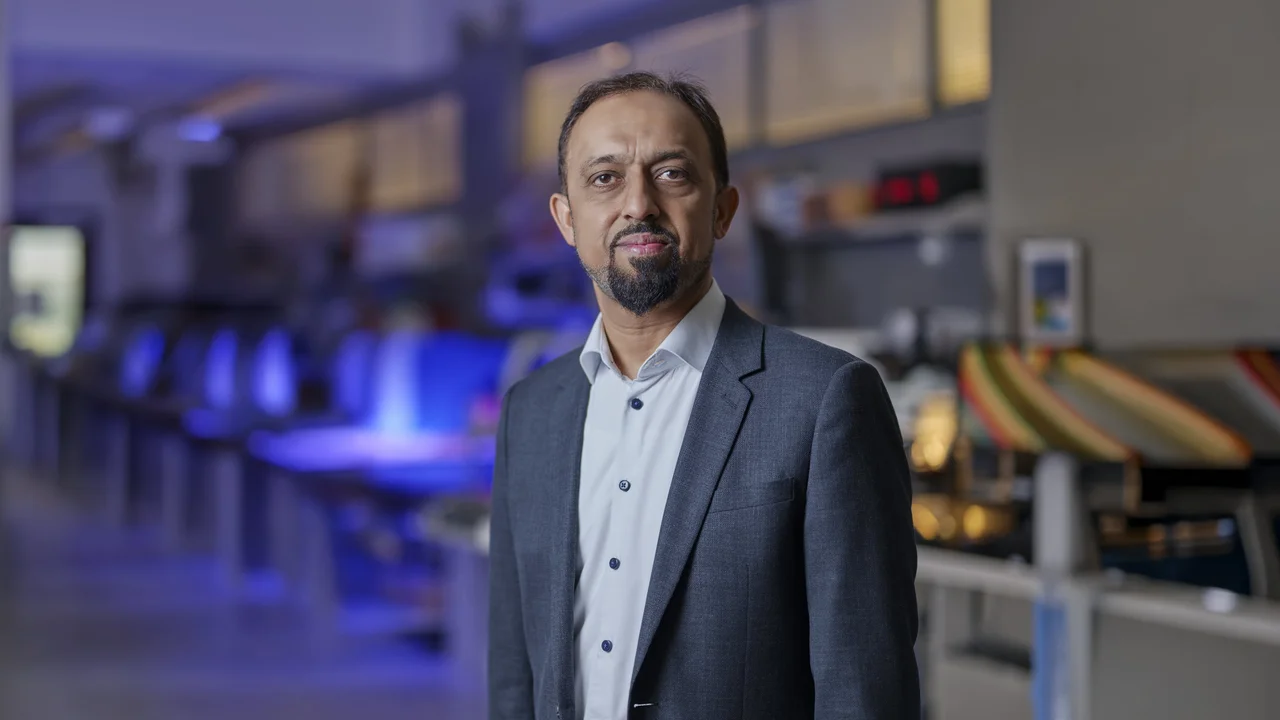
Atif Shamim, chair of the Electrical and Computer Engineering program at KAUST and principal investigator of the IMPACT Lab, has been appointed Editor-in-Chief of the IEEE Journal of Electromagnetics, RF and Microwaves in Medicine and Biology (J-ERM).
IEEE J-ERM operates at a rapidly evolving intersection where advances in electromagnetics and radio-frequency (RF) engineering are transforming diagnostics, therapeutics, and the broader practice of modern medicine. Stepping into this role at a pivotal time for the field, Shamim views the appointment as an opportunity to elevate transformative research, strengthen interdisciplinary exchange, and engage both established experts and emerging innovators.
“My appointment represents an opportunity to help shape the future of a field that has tremendous societal impact. Being entrusted with its leadership is both a privilege and a significant responsibility,” Shamim said.
He noted that J-ERM has steadily grown in quality and visibility and emphasized a focus on further strengthening its role as a premier platform for impactful research at the forefront of biomedical electromagnetics and RF technologies.
“Ultimately, I see this role as a chance to serve the community. I want to ensure that J-ERM remains a leading platform for rigorous, creative, and meaningful scholarship that advances human health and well-being.”
IMPACTful work
As head of the Integrated Microwave Packaging Antennas and Circuits Technology (IMPACT) Lab, Shamim leads research that integrates advanced antennas, RF circuits, flexible electronics, innovative materials, and additive manufacturing techniques to create wearable and bio-integrated platforms capable of tracking key physiological and biochemical indicators in real time.
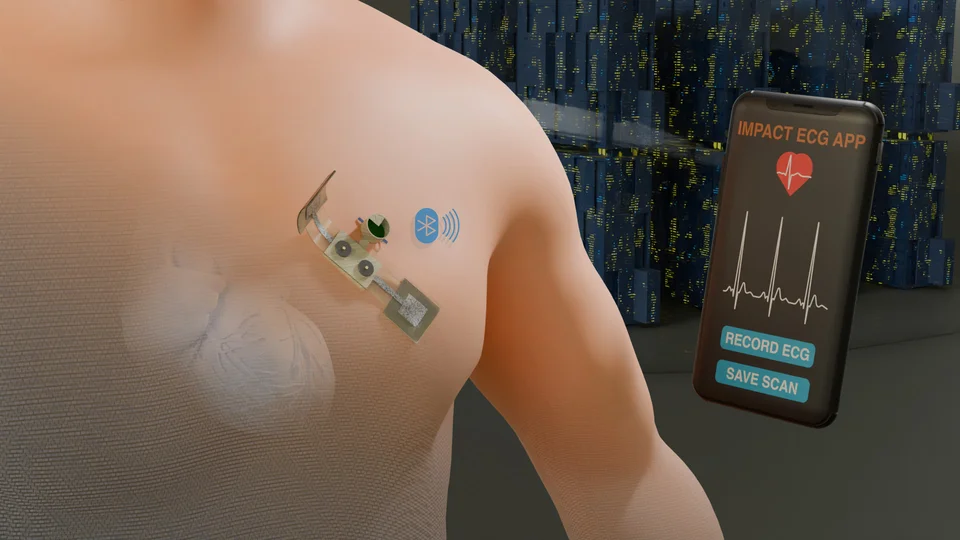
The IMPACT Lab’s fully screen-printed wireless ECG system, for example, demonstrates how soft, printed electrodes combined with compact RF readout circuits can deliver continuous cardiac monitoring with clinical-grade fidelity. Likewise, the lab’s microwave lactate biosensor demonstrates how RF technologies can achieve unprecedented biochemical selectivity for real-time metabolic monitoring in both health and fitness applications.
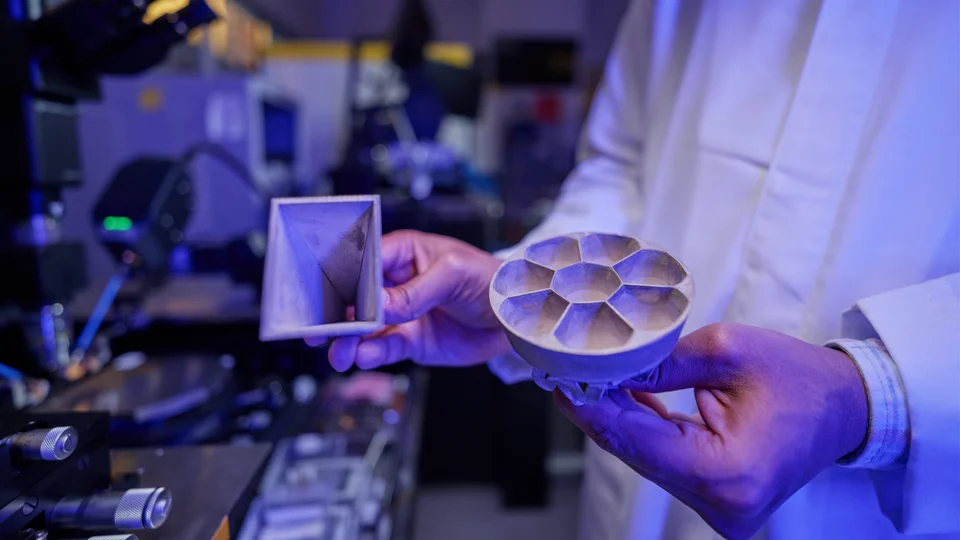
Beyond wearables, the team is advancing implantable RF devices, low-power wireless powering techniques, and novel approaches to 3D-printed RF structures using conductive inks and hybrid substrates. Together, these innovations reflect the lab’s broader mission: embedding wireless technologies seamlessly into the human body and daily life to enable continuous, intelligent health monitoring.
“My research aligns strongly with Saudi Arabia’s Vision 2030, KAUST’s institutional strategy, and the national Research, Development, and Innovation priorities—particularly Health and Wellness and Economies of the Future,” Shamim said. “Our long-term goal is to enable early-warning systems that proactively alert users or clinicians to emerging health conditions.”
A bright vision for J-ERM’s next chapter
Looking ahead, Shamim aims to strengthen J-ERM’s scientific depth, expand its global visibility, and enhance the publishing experience for authors, reviewers, and readers. By actively highlighting emerging research directions, he sees the journal playing a defining role as RF technologies and biomedical innovation continue to converge.
“Soft electronics, textile-based sensors, and skin-like platforms are reshaping personalized healthcare through RF-enabled wearables, while advances in ultra-miniaturized implantable and ingestible devices are expanding precision medicine via low-power wireless powering and through-tissue communication.
“At the same time, RF and microwave diagnostics and therapeutics—from imaging to hyperthermia and neuromodulation—are advancing rapidly through improved EM modeling and clinical validation. The integration of AI is enabling patient-specific simulations, adaptive treatment planning, and data-driven diagnostics, while innovations in additive manufacturing and novel materials are opening new possibilities for biomedical RF systems.
Shamim emphasized his commitment to advancing J-ERM’s scientific excellence and real-world relevance, reinforcing its position as a global authority in biomedical electromagnetics and RF technologies.
“I want the journal not only to reflect the state of the art, but to actively shape it,” he concluded.
Related People
Atif Shamim
- Associate Dean for Special Projects, Computer, Electrical and Mathematical Sciences and Engineering