Self-aware biosensors boost digital health monitoring
Intelligent system actively self-checks biosensor-skin connections to secure better quality health data.
About
Smart biomedical devices are transforming modern healthcare, using skin-mounted sensors to capture in-depth health information directly from the body. As clinicians increasingly use biosensing devices to guide patient care, accurate and reliable signal acquisition is critical.
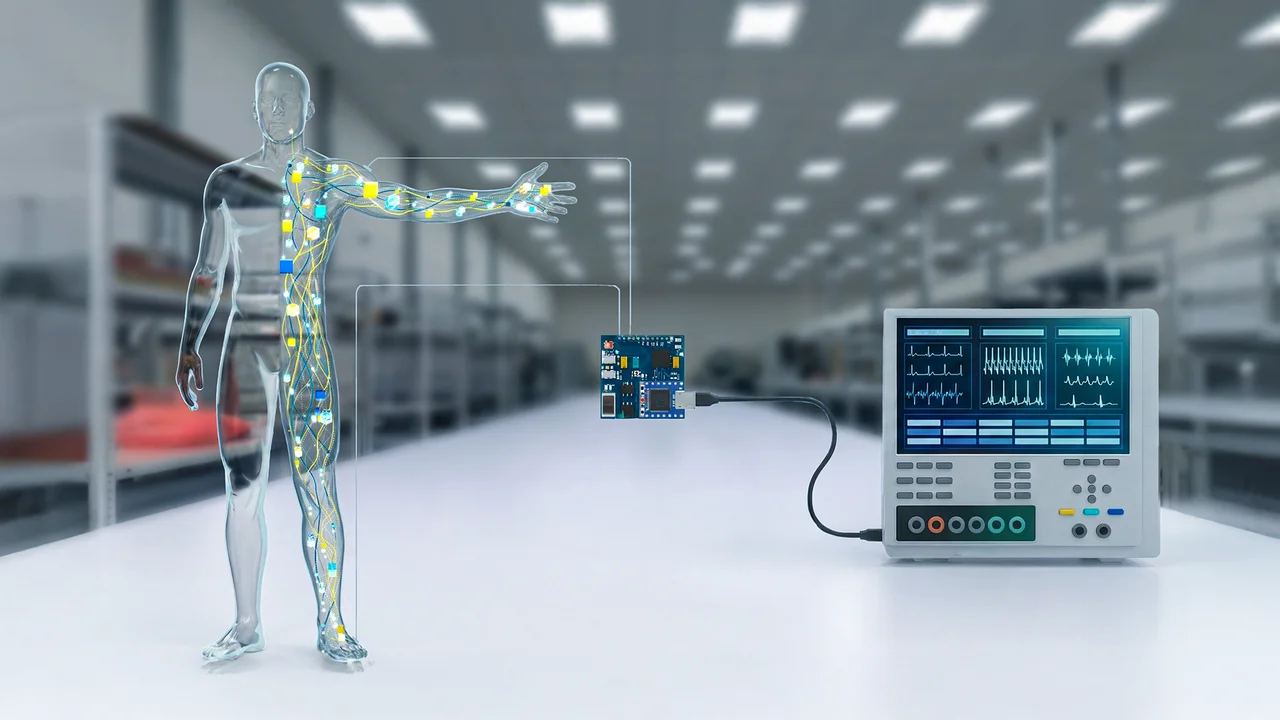
A new system that can rapidly detect when the electrodes of devices such as heart monitors start to detach from the skin has been developed by a team at KAUST[1]. Unlike indirect electrode monitoring techniques, the new system directly measures electrode integrity by evaluating digital signal quality between electrodes.
“Traditional methods for checking whether medical electrodes are properly attached, based on impedance or indirect monitoring, were developed many years ago and assume relatively stable conditions,” explains Rajat Kumar, a student in the lab of Ahmed Eltawil, who led the research.
But in real life, as people move and sweat, electrodes can partially loosen or intermittently lose skin contact, which traditional indirect monitoring methods can struggle to detect.
“This is especially problematic for home-based wearable medical devices, where poor electrode contact may go unnoticed for long periods, leading to inaccurate data being recorded and relied upon,” says Abdelhay Ali, a postdoc in Eltawil’s group.
To develop smarter electrode connection monitoring, the team rethought the role of the body itself, Eltawil says. “Instead of treating the body as something that interferes with measurements, we considered whether it could be part of the solution.”
Tiny electrical signals can safely pass through the body, previous research has shown. “We realized that if electrodes could exchange digital signals through the body, then the quality of that communication would directly reflect how well the electrodes were attached,” Kumar says.
Read the full story on KAUST Discovery.