Multicarrier Waveform Design and Optimization for Doubly Dispersive Wireless Channels
This thesis develops a structured approach to multicarrier waveform design for LTV channels to support reliable communication in high-mobility scenarios.
Overview
Sixth-generation (6G) wireless networks and beyond must support reliable communication in high-mobility scenarios, such as aerial, vehicular, satellite, and high-speed train networks. The wireless channel in these scenarios is a linear time-varying (LTV) channel that imposes severe doubly-dispersive fading and asynchronous user access. Classical orthogonal frequency division multiplexing (OFDM) fails under these conditions because doubly-dispersive fading destroys subcarrier orthogonality, highlighting the need for alternative waveform designs. This thesis develops a structured approach to multicarrier waveform design for LTV channels. We construct a periodic table of waveforms to provide an interpretable design process for multicarrier waveforms using a three-parameter synthesis equation. We then optimize the joint transmit-receive pulse shape of filter-bank multicarrier (FBMC) waveforms for multiple-access LTV channels. We formulate the optimization problem as alternating generalized Rayleigh-quotient sub-problems with closed-form solutions. The resulting waveform tolerates 20 dB of power imbalance under fully asynchronous access and cuts guard-band overhead by 91%. Moreover, we show that using Zadoff-Chu (ZC) chirp modulation uniquely collapses the two-dimensional delay-Doppler dispersion onto a single chirp-domain delay. A pairwise error probability analysis reveals that the ZC root parameterizes a tunable diversity-complexity trade-off, yielding up to 10 dB gains over OFDM on the Extended Vehicular A channel at 540 km/h.
Presenters
Brief Biography
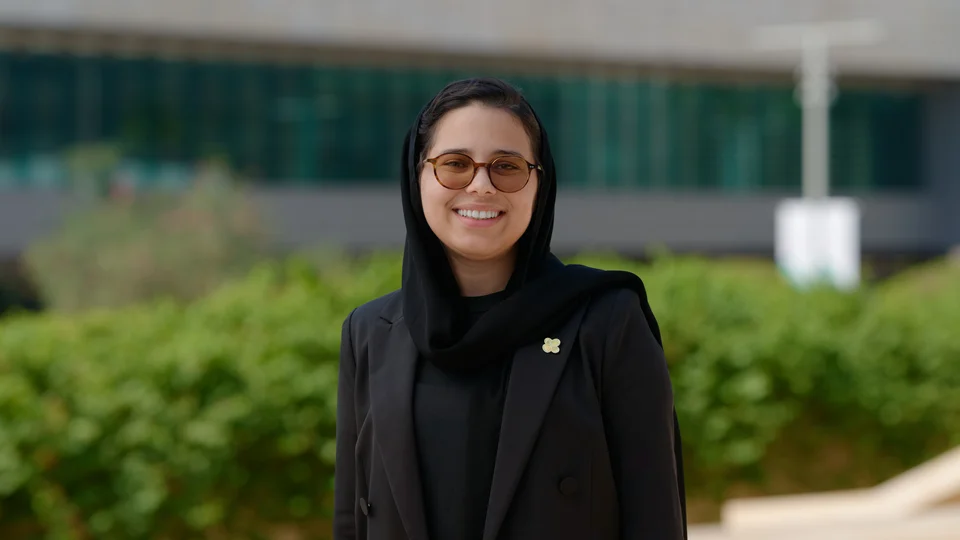
Rawan Alghamdi is a Ph.D. candidate in Electrical and Computer Engineering at King Abdullah University of Science and Technology (KAUST), working with Prof. Mohamed-Slim Alouini and Prof. Tareq Y. Al-Naffouri. Her research focuses on wireless system optimization and waveform design to develop affordable and reliable communication solutions to address global digital inequality. She has published in leading IEEE journals and conferences, including IEEE Transactions on Communications and IEEE Information Theory Magazine.
Rawan has received multiple awards, including first place in the 2025 IEEE PIMRC Three-Minute Thesis competition, the IEEE SPS scholarship, and being a runner-up in the 2023 CST and IEEE Future Networks Initiative Competition.
Rawan earned her Master of Science (M.Sc.) from King Abdullah University of Science and Technology (KAUST) in 2022, and her Bachelor of Science (B.Sc.) in electrical and computer engineering from Effat University in 2020.
In addition to her research, Rawan actively supports local talent and youth in science, engineering, and research. She is the co-chair of the IEEE Women in Engineering podcast. She has served as a teaching assistant for ten courses at KAUST, instructed over 300 undergraduate students in machine learning and deep learning, and tutored high-school research programs. Rawan leads an online community to empower local students to pursue research and graduate studies.
Related People
Related Researchers
Advisors
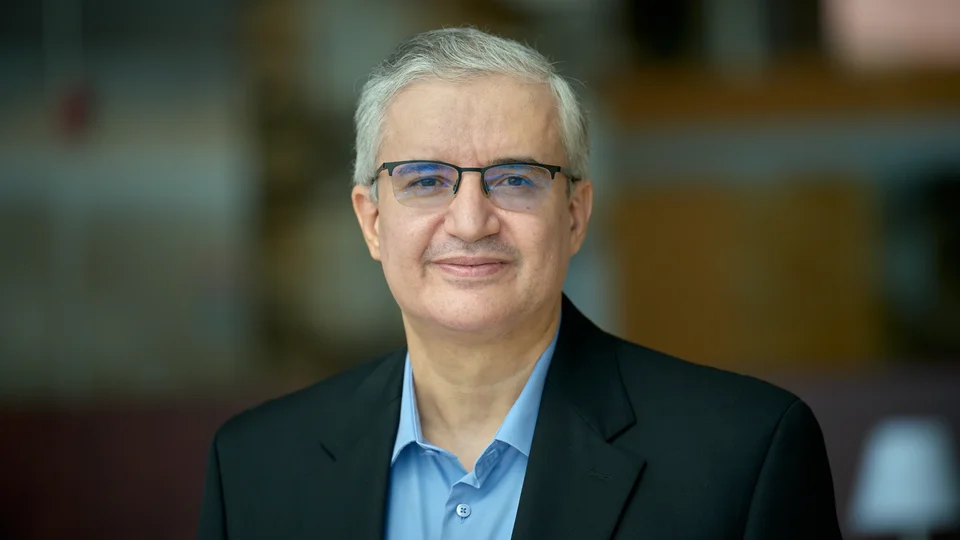
Mohamed-Slim Alouini
- Al-Khawarzmi Distinguished Professor, Electrical and Computer Engineering