Predictive Computational Science for Complex Physical Systems: PDEs, Inference, Scientific ML, and Digital Twins
B2/3 A0125
This talk will present model-constrained scientific machine learning methods that accelerate both forward prediction and the solution of regularized inverse problems.
Overview
How can we use a physical model to guide a decision when observations are sparse, model parameters are uncertain, and forecast / optimization / control / UQ require large-scale simulations? My research addresses this question by exploiting mathematical structure in the governing equations, in the information that observations provide, and in the computations that must be repeated as new data arrive. I will begin with two contributions to the numerical solution of nonlinear complex partial differential equations (PDEs). I will show how hybridized discontinuous Galerkin (HDG) methods reduce the global solve to unknowns on element interfaces, allowing parallel solves within each element. To overcome the CFL limit for explicit time integrator and computational demand of implicit counterparts, I will present an scalable exponential discontinuous Galerkin (DG) method that combines DG spatial discretization with exponential time integration. I will then turn to geophysical inversion, where we use adjoint-based optimization to estimate wave speeds in Earth’s interior from observed seismic waves. We explore the compactness of the Hessian to develop the low-rank Bayesian approach to quantify the uncertainty in the inversion of more than a million unknown parameters. Finally, I will present model-constrained scientific machine learning methods that accelerate both forward prediction and the solution of regularized inverse problems. Several digital twin benchmark problems are presented to demonstrate the effectiveness of our approach. I will close with a perspective on how these methods can support a digital twin that updates its forecasts as observations arrive and uses predictive uncertainty to guide optimization and control.
Presenters
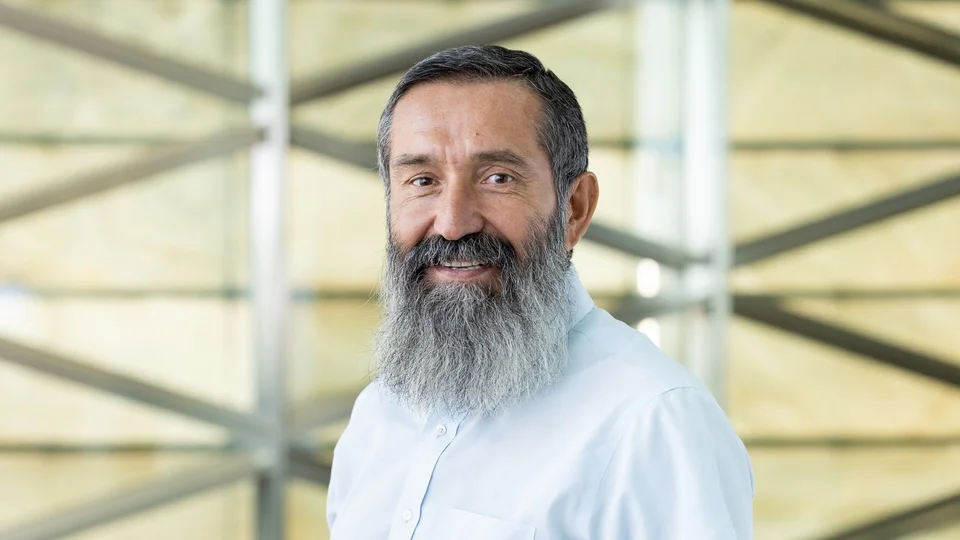
Tan Bui-Thanh, Professor, Marion E. Forsman Centennial Professorship in Engineering; Paul D. & Betty Robertson Meek Centennial Professorship in Engineering, The University of Texas at Austin (UT Austin)
Brief Biography
Tan Bui is a professor, the holder of the endowed Marion E. Forsman Centennial Professorship in Engineering and fellow of the endowed Paul D. and Betty Robertson Meek Centennial Professorship in Engineering, of the Oden Institute for Computational Engineering & Sciences, and the Department of Aerospace Engineering & Engineering Mechanics at the University of Texas at Austin. He obtained his Ph.D. from the Massachusetts Institute of Technology (MIT) in 2007. His research focuses on developing cross-disciplinary real-time scientific machine learning for digital twins applications and he has developed solutions to large-scale constrained inverse/optimization problems, Bayesian inverse problems, uncertainty quantification (UQ), reduced-order modeling (ROM) and surrogate modeling for sciences/engineering/mathematics, numerical analysis, and advanced high-order finite element methods for complex multiphysics, and mathematical scientific machine learning (SciML). Tan is currently the director of the Center for Scientific Machine Learning at the Oden Institute. He is a former elected vice president of the SIAM Texas-Louisiana Section and a former elected secretary of the SIAM SIAG/CSE. He was an NSF (OAC/DMS) early CAREER recipient, the Oden Institute distinguished research award, a two-time winner of the Moncrief Faculty Challenging award, and a Gordon Bell Prize finalist.