About Ahmed Elzanaty Ahmed Elzanaty Postdoctoral Research Fellow, Electrical and Computer Engineering Sparse signal processing source and channel coding satellite communication Ahmed Elzanaty has joined Computer, Electrical and Mathematical Sciences and Engineering (CEMSE) Division of KAUST as a post-doctoral fellow at communication theory lab in March 2019. Education and Early Career Ahmed Elzanaty received the B.Sc. (with honors) and M.Sc. degrees in Electronics and Communications Engineering from Port Said University, Egypt, in 2008 and 2013, respectively, and the Ph.D. degree (excellent cum laude) in Electronics, Telecommunications, and Information technology from the University of Bologna, Italy, in 2018. Before joining KAUST, he was a research fellow at the Articles Related News April 2023 LoRa backscatter communications: Temporal, spectral, and error performance analysis 1 min read · Thu, Apr 27 2023 News LoRa backscatter (LB) communication systems can be considered as a potential candidate for ultra low power wide area networks (LPWAN) because of their low cost and low power consumption. In this paper, we comprehensively analyze LB modulation from various aspects, i.e., temporal, spectral, and error performance characteristics. First, we propose a signal model for LB signals that accounts for the limited number of loads in the tag. Then, we investigate the spectral properties of LB signals, obtaining a closed-form expression for the power spectrum. Finally, we derived the symbol error rate March 2023 Joint uplink and downlink EMF exposure: Performance analysis and design insights 1 min read · Wed, Mar 15 2023 News Installing more BSs into the existing cellular infrastructure is an essential way to provide greater network capacity. However, a non-negligible amount of the population is concerned that such network densification will generate a notable increase in exposure to EMF. CTL researchers studied three scenarios, including the downlink, uplink, and joint downlink&uplink exposure. They integrated the EMF restrictions set by the regulatory authorities (e.g., the maximum permitted EMF exposure and the minimum distance between BSs and restricted areas,) on the coverage performance and exposure analysis May 2022 Probabilistic shaping based spatial modulation for spectral-efficient visible light communication 1 min read · Sat, May 28 2022 News 6G vlc Visible light communication (VLC) is a promising technology for 6th-generation (6G) networks because of its attractive feature such as a wide unlicensed spectrum. However, the modulation bandwidth of lens of commercially available light-emitting diode (LEDs), which are used in optical wireless data links, is limited. Therefore, in order to improve spectral-efficiency of VLC systems, a novel adaptive coded spatial modulation (SM) scheme with probabilistic shaping (PS) has been proposed. The authors also designed an algorithm to compute the capacity-achieving distribution of the proposed scheme November 2021 Using reconfigurable intelligent surfaces to reduce electro-magnetic fields exposure 1 min read · Tue, Nov 9 2021 News The deployment of the 5th-generation cellular networks (5G) has triggered health concerns from the electric and magnetic fields (EMF) exposure. Such fear increases for networks that adopt higher frequency bands such as millimeter-waves. A solution has been proposed by a master's student Hussam Ibraiwish, Prof. Ahmed Elzanaty, Prof. Yazan Al-Badarneh, and Prof. Mohamed-Slim Alouini to address the widespread public concern about EMF exposure from mobile networks. "The idea is to consider a novel architecture for the cellular network rather than just optimizing what we already have," says October 2021 Airborne antennas to address electro-magnetic fields exposure concerns 1 min read · Sun, Oct 3 2021 News communications human health electrical engineering Movable airborne antennas receiving cellphone signals could reduce EMF exposure while offering higher data transmission speed and using less power. August 2021 Reducing electromagnetic field (EMF) exposure using tethered "green" UAVs 1 min read · Mon, Aug 9 2021 News The ongoing deployment of the fifth-generation cellular network (5G) has attracted wide attention and controversy from researchers and non-specialists. Attitudes toward 5G and beyond are quite different that some even regard these new technologies as threats. Although the improvements from the communications perspective are apparent and recognized by the public, the dense deployment of next-generation Node-B base stations (gNBs) over the territory generally generates a sentiment of suspect and fear. A prevalent theory circulating among the nonscientific community is that the intensive On the performance of spectrum sharing backscatter communication systems 1 min read · Thu, Aug 5 2021 News In next-generation cellular networks, a massive number of low-cost devices are required to communicate with minimal power consumption. This paradigm opens the door for several Internet of Things (IoT) applications such as smart cities, homes, and agriculture, with 21 billion expected devices by 2025. Some of these applications require even ultra-low-power wireless communication and self-sustainable networks. In this regard, backscatter communications (BC) is one of the most prominent technologies for ultra-low-power communications. The tag (i.e., backscatter transmitter) modulates its
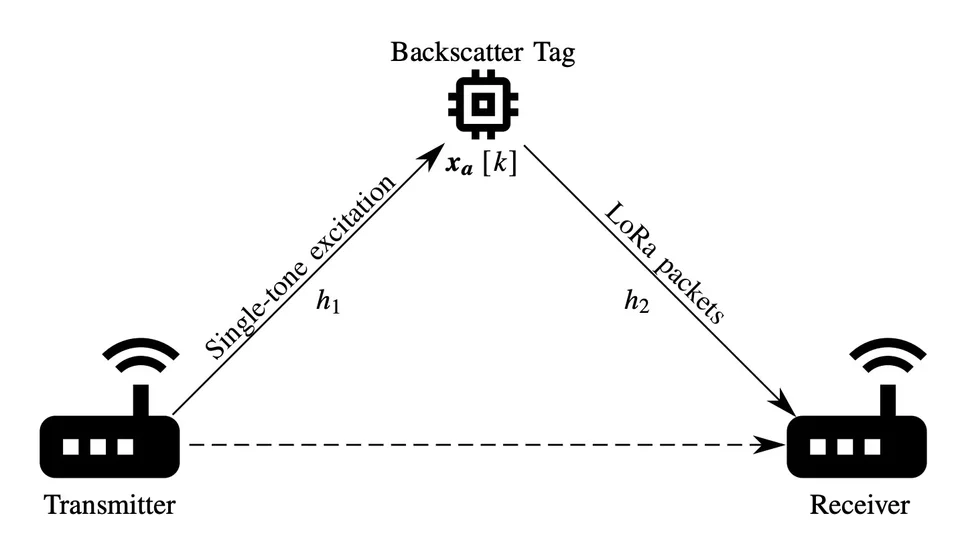
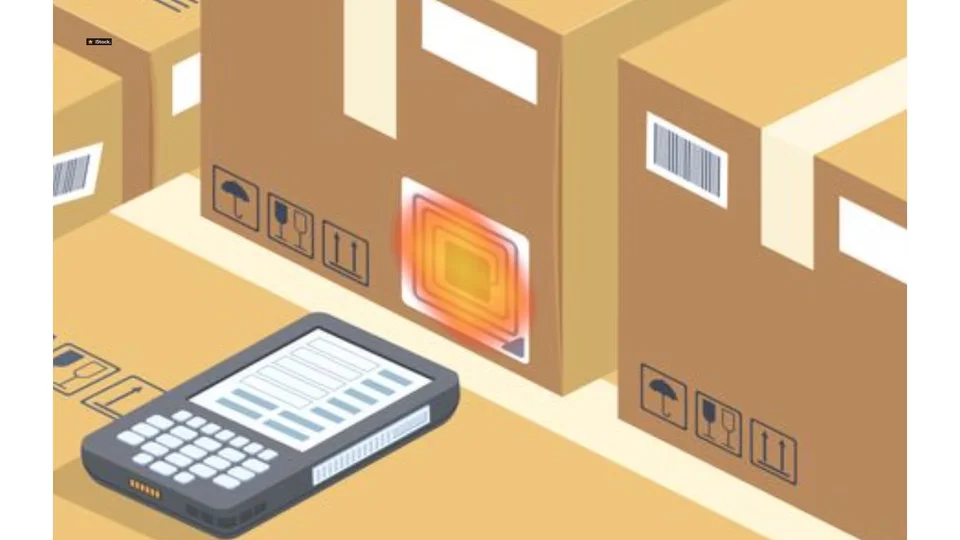
LoRa backscatter communications: Temporal, spectral, and error performance analysis 1 min read · Thu, Apr 27 2023 News LoRa backscatter (LB) communication systems can be considered as a potential candidate for ultra low power wide area networks (LPWAN) because of their low cost and low power consumption. In this paper, we comprehensively analyze LB modulation from various aspects, i.e., temporal, spectral, and error performance characteristics. First, we propose a signal model for LB signals that accounts for the limited number of loads in the tag. Then, we investigate the spectral properties of LB signals, obtaining a closed-form expression for the power spectrum. Finally, we derived the symbol error rate
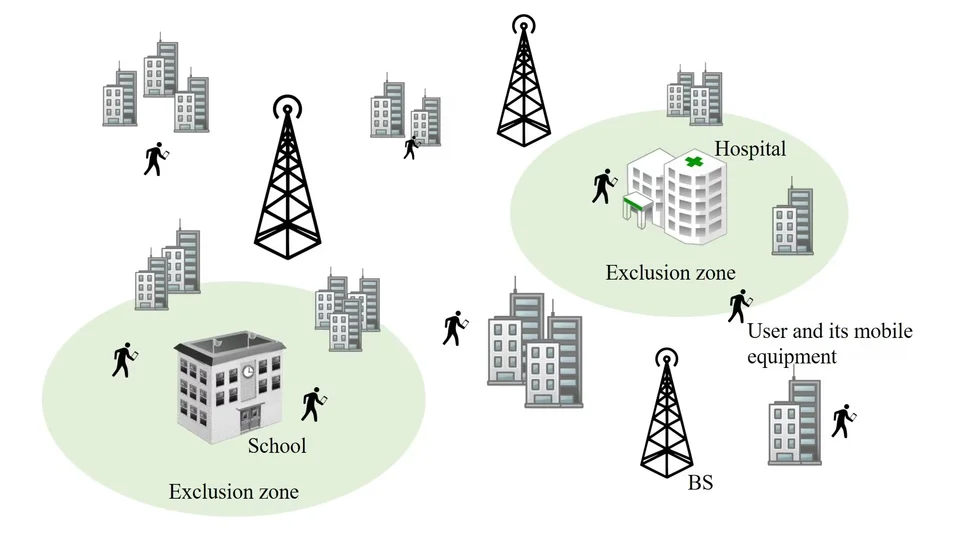
Joint uplink and downlink EMF exposure: Performance analysis and design insights 1 min read · Wed, Mar 15 2023 News Installing more BSs into the existing cellular infrastructure is an essential way to provide greater network capacity. However, a non-negligible amount of the population is concerned that such network densification will generate a notable increase in exposure to EMF. CTL researchers studied three scenarios, including the downlink, uplink, and joint downlink&uplink exposure. They integrated the EMF restrictions set by the regulatory authorities (e.g., the maximum permitted EMF exposure and the minimum distance between BSs and restricted areas,) on the coverage performance and exposure analysis
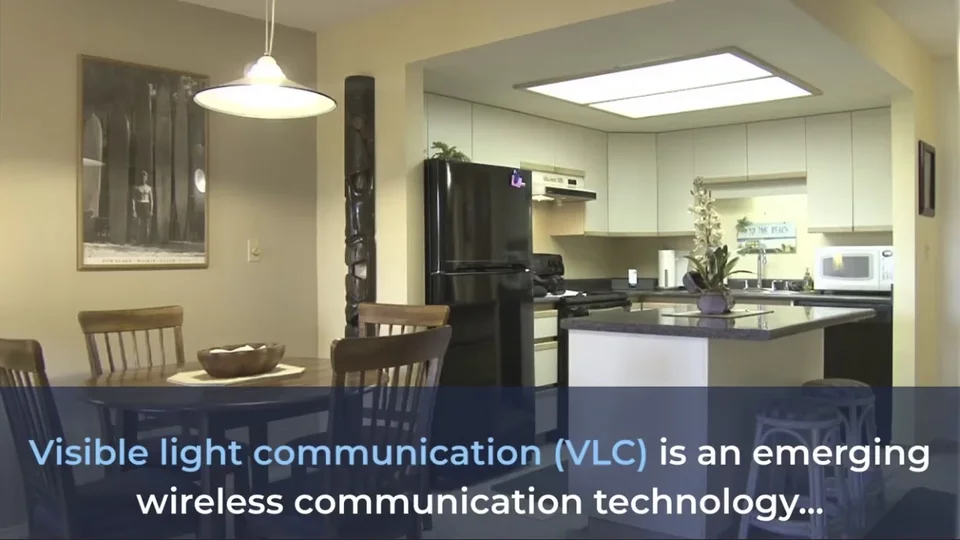
Probabilistic shaping based spatial modulation for spectral-efficient visible light communication 1 min read · Sat, May 28 2022 News 6G vlc Visible light communication (VLC) is a promising technology for 6th-generation (6G) networks because of its attractive feature such as a wide unlicensed spectrum. However, the modulation bandwidth of lens of commercially available light-emitting diode (LEDs), which are used in optical wireless data links, is limited. Therefore, in order to improve spectral-efficiency of VLC systems, a novel adaptive coded spatial modulation (SM) scheme with probabilistic shaping (PS) has been proposed. The authors also designed an algorithm to compute the capacity-achieving distribution of the proposed scheme
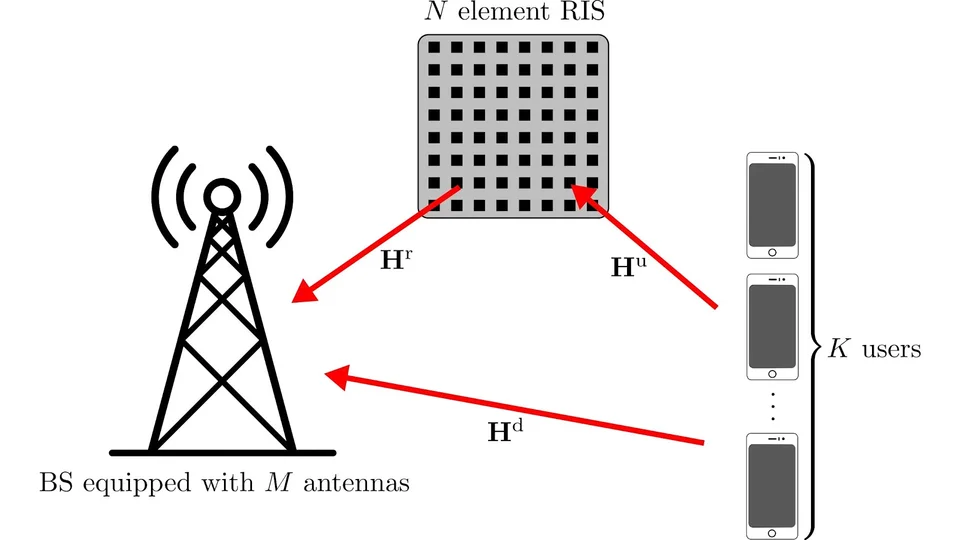
Using reconfigurable intelligent surfaces to reduce electro-magnetic fields exposure 1 min read · Tue, Nov 9 2021 News The deployment of the 5th-generation cellular networks (5G) has triggered health concerns from the electric and magnetic fields (EMF) exposure. Such fear increases for networks that adopt higher frequency bands such as millimeter-waves. A solution has been proposed by a master's student Hussam Ibraiwish, Prof. Ahmed Elzanaty, Prof. Yazan Al-Badarneh, and Prof. Mohamed-Slim Alouini to address the widespread public concern about EMF exposure from mobile networks. "The idea is to consider a novel architecture for the cellular network rather than just optimizing what we already have," says
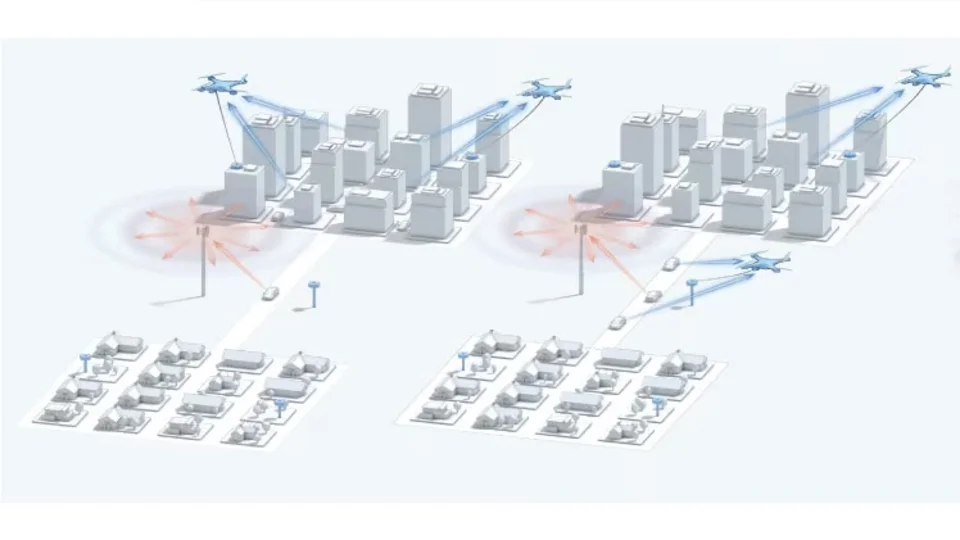
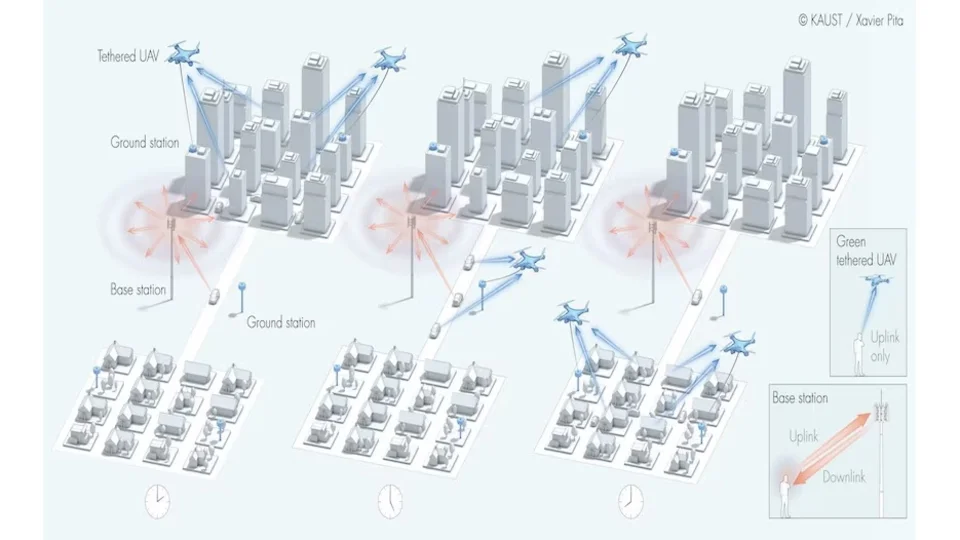
Airborne antennas to address electro-magnetic fields exposure concerns 1 min read · Sun, Oct 3 2021 News communications human health electrical engineering Movable airborne antennas receiving cellphone signals could reduce EMF exposure while offering higher data transmission speed and using less power.
Reducing electromagnetic field (EMF) exposure using tethered "green" UAVs 1 min read · Mon, Aug 9 2021 News The ongoing deployment of the fifth-generation cellular network (5G) has attracted wide attention and controversy from researchers and non-specialists. Attitudes toward 5G and beyond are quite different that some even regard these new technologies as threats. Although the improvements from the communications perspective are apparent and recognized by the public, the dense deployment of next-generation Node-B base stations (gNBs) over the territory generally generates a sentiment of suspect and fear. A prevalent theory circulating among the nonscientific community is that the intensive
On the performance of spectrum sharing backscatter communication systems 1 min read · Thu, Aug 5 2021 News In next-generation cellular networks, a massive number of low-cost devices are required to communicate with minimal power consumption. This paradigm opens the door for several Internet of Things (IoT) applications such as smart cities, homes, and agriculture, with 21 billion expected devices by 2025. Some of these applications require even ultra-low-power wireless communication and self-sustainable networks. In this regard, backscatter communications (BC) is one of the most prominent technologies for ultra-low-power communications. The tag (i.e., backscatter transmitter) modulates its
Related Sites Electrical and Computer Engineering (ECE) Communication Theory Lab (CTL) Related Content Articles 7 Related Links LinkedIn Google Scholar dblp Scopus ResearchGate ORCID