About Imane Boudellioua Imane Boudellioua Ph.D. (former), Computer Science functional prediction machine learning genetic variation variant prioritization Imane Boudellioua obtained her Ph.D. degree in Computer Science under the supervision of Professor Robert Hoehndorf at the Bio-Ontology Research Group (BORG) at King Abdullah University of Science and Technology (KAUST). Imene has a Master's degree in Computer Science from KAUST. During Master's her thesis supervisor was Professor Basem Shihada. Thesis title: " A Vehicular Guidance Wireless Sensor Actuator Network." Research Interests Imane Boudellioua's research interests include the application of machine learning and data mining algorithms for functional annotation of various biological Projects Related Projects 2019 CompleX: Variant Prioritization in Complex Disease Tue, Jan 1 2019 - Fri, Dec 31 2021 Applied Ontology Neuro-Symbolic AI Rare disease Semantic similarity The hardest cases in clinical genome sequencing are the ones where no single variant explains the disease. As Mendelian gene discovery slows and the diagnostic rate for whole-exome sequencing stalls below 50%, growing evidence points to oligogenic and polygenic origins: combinations of medium-rare or common alleles that, individually, look unremarkable. Population-level approaches lack the power to find them, and traditional single-gene Mendelian reasoning ignores them. The CompleX project (2019–2021, with the Universities of Cambridge and Birmingham) set out to break this impasse by extending 2012 Perpetual Wireless Sensor Networks Sun, Jan 1 2012 - Sun, Jan 1 2017 wireless sensor networks In this project, we tackled the dense deployment and energy efficient operation of sensor systems in underwater and terrestrial environments.
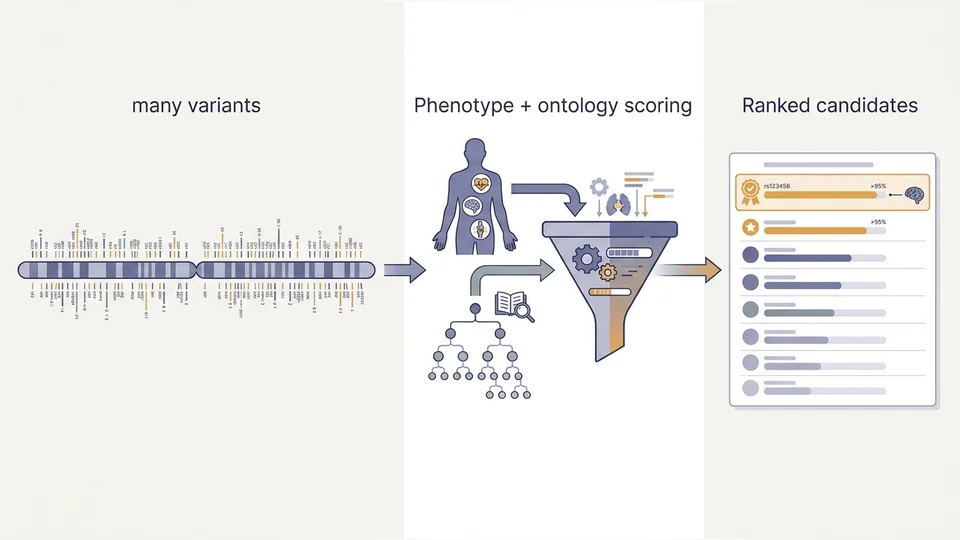
CompleX: Variant Prioritization in Complex Disease Tue, Jan 1 2019 - Fri, Dec 31 2021 Applied Ontology Neuro-Symbolic AI Rare disease Semantic similarity The hardest cases in clinical genome sequencing are the ones where no single variant explains the disease. As Mendelian gene discovery slows and the diagnostic rate for whole-exome sequencing stalls below 50%, growing evidence points to oligogenic and polygenic origins: combinations of medium-rare or common alleles that, individually, look unremarkable. Population-level approaches lack the power to find them, and traditional single-gene Mendelian reasoning ignores them. The CompleX project (2019–2021, with the Universities of Cambridge and Birmingham) set out to break this impasse by extending
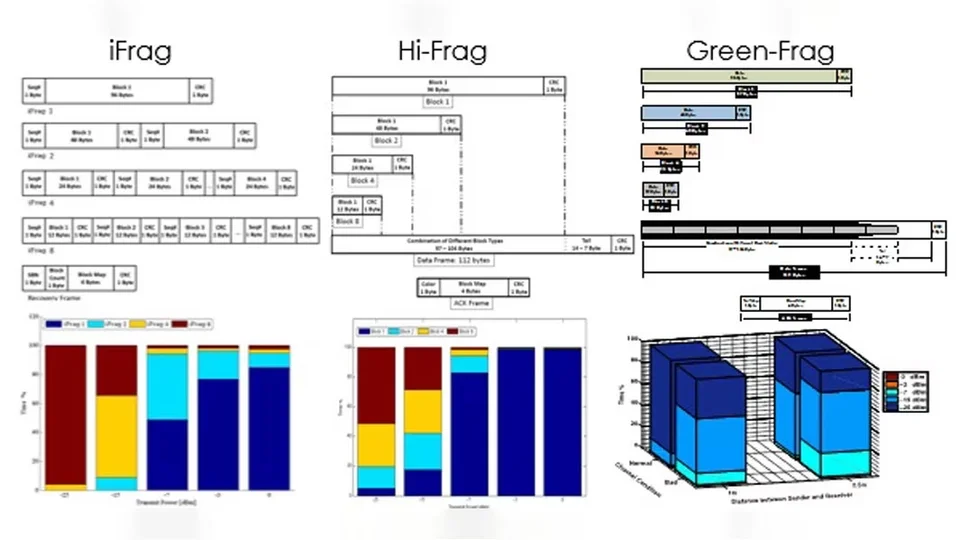
Perpetual Wireless Sensor Networks Sun, Jan 1 2012 - Sun, Jan 1 2017 wireless sensor networks In this project, we tackled the dense deployment and energy efficient operation of sensor systems in underwater and terrestrial environments.
Related Sites Bio-Ontology Research Group (BORG) Computer Science (CS) Related Content Articles 7 Projects 2 Events 1 Related Links Also view Publications in the KAUST Repository.