
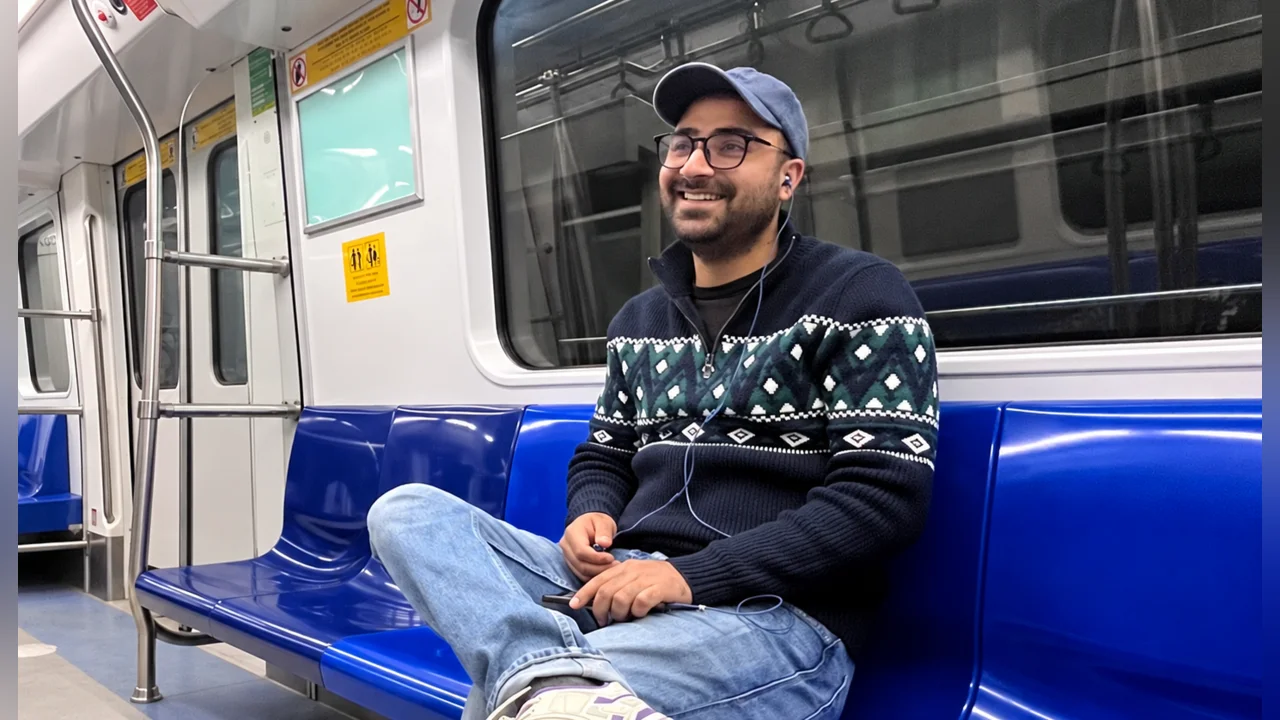
Mohammad Taha Shah
Talent is something you make bloom; instinct is something you polish.
About
Mohammad Taha Shah is currectly a postdoctoral research fellow in the Communication Theory Lab (CTL) under the supervision of Professor Mohamed-Slim Alouini at King Abdullah University of Science and Technology (KAUST).
Education and Early Career:
Mohammad Taha Shah received his B.Tech. degree from the University of Kashmir in 2017, and his M.Tech. degree from Indraprastha Institute of Information Technology Delhi (IIIT Delhi) in 2021. His M.Tech. research focused on initial access procedures in 5G networks, including cell search, synchronization, system information acquisition, and random access. During his early research and industry experience, he worked on several aspects of 5G NR physical-layer systems, including PRACH, channel-state information, MIMO-OFDM channel estimation, synchronization and frequency offsets, and LTE/5G radio-access implementations.
He subsequently received his Ph.D. from the Indian Institute of Technology Delhi (IIT Delhi) in 2025 from the Bharti School of Telecommunication Technology and Management. His doctoral dissertation, titled “Modeling and Statistical Analysis of Automotive Radar Networks Using Line Cox Processes,” developed stochastic geometric models for large-scale vehicular and automotive radar networks. His research has since expanded from stochastic geometry and wireless-network modeling to high-altitude platform systems, sequential decision-making, multi-armed bandits, and online algorithm selection. His work combines mathematical modeling, probability, optimization, and learning to understand and design next-generation communication and sensing systems.
Research Interest:
His research lies at the intersection of wireless communications, stochastic geometry, probability, optimization, and sequential learning. A major part of his work focuses on developing stochastic-geometric models for spatially structured wireless systems. In particular, he has studied Poisson and Binomial Line Cox processes for modeling vehicular networks and large-scale automotive radar systems. He is also interested in extending stochastic geometry beyond conventional terrestrial cellular models. His recent work investigates High-Altitude Platform Station (HAPS) networks using spherical stochastic geometry and Cox-process-based spatial models. The objective is to characterize coverage, access, and backhaul reliability, spatial deployment trade-offs, and energy-aware network design for emerging non-terrestrial networks.
A second major research direction concerns multi-armed bandits and sequential decision-making under risk and uncertainty. His work includes risk-aware bandit formulations based on the Sharpe ratio and finite-time regret analysis. More recently, he has been studying online algorithm selection for black-box optimization, in which a learning agent dynamically selects among optimization algorithms based on observed performance. He is particularly interested in establishing rigorous regret guarantees and understanding how algorithm-selection policies behave under non-stationary and heterogeneous problem instances.
Broadly, his goal is to develop mathematically rigorous yet practically relevant models for future communication, sensing, and autonomous networked systems.
Education Profile:
- Ph.D., Indian Institute of Technology Delhi (IIT Delhi), 2025
- M.Tech., Indraprastha Institute of Information Technology Delhi (IIIT-Delhi), 2021
Awards and Distinctions:
- IEEE Signal Processing Society Travel Grant, ICASSP 2025
Related People
Principal Investigators
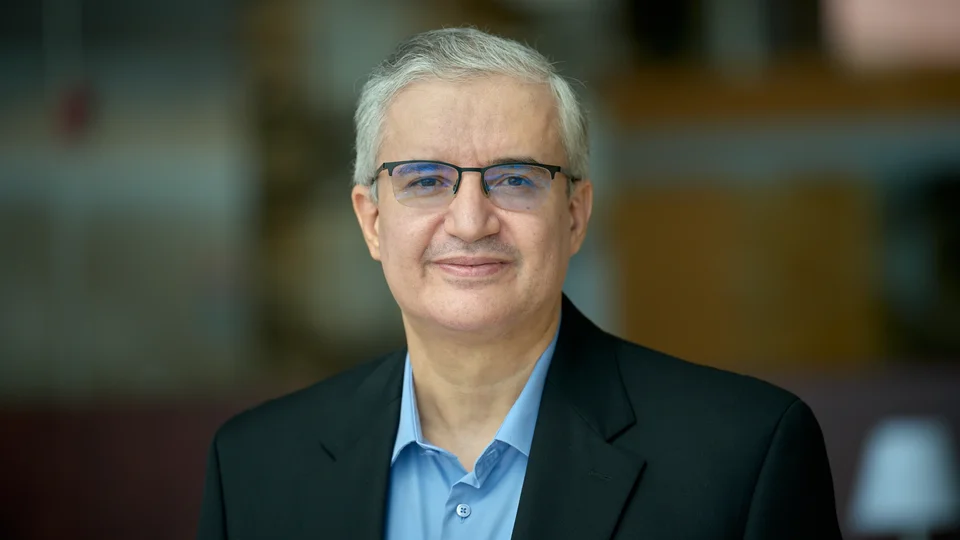
Mohamed-Slim Alouini
- Al-Khawarzmi Distinguished Professor, Electrical and Computer Engineering