
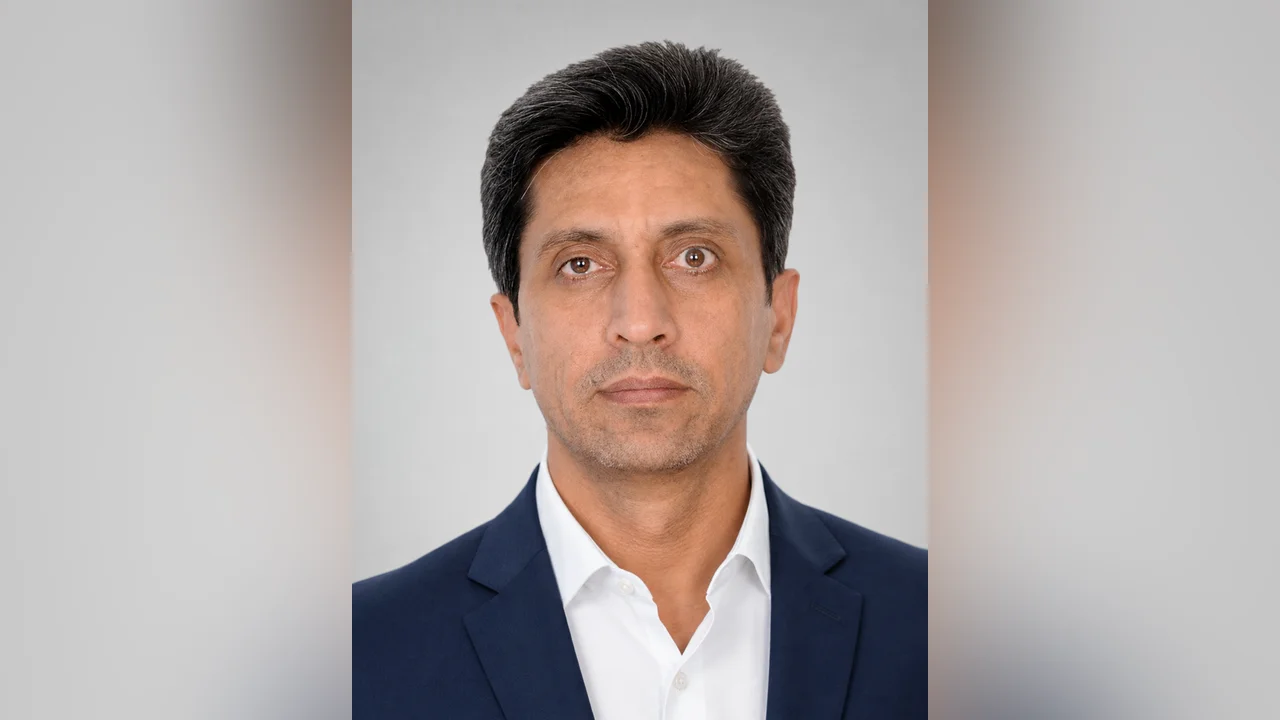
Mukhtiar Ahmad
About
Mukhtiar Ahmad is a Research Scientist in the Communication Theory Lab at King Abdullah University of Science and Technology (KAUST), Saudi Arabia. His research covers cellular networks and remote sensing over terrestrial and non-terrestrial networks, with a focus on Ultra-Reliable Low-Latency Communication (URLLC), integrated sensing and communication, and HAPS-enabled remote sensing.
Education and Early Career
Mukhtiar Ahmad received the M.Sc. and M.Phil. degrees in Electronics from Quaid-i-Azam University, Islamabad, Pakistan, and the Ph.D. degree in Electrical Engineering from the Lahore University of Management Sciences (LUMS), Lahore, Pakistan.
He joined KAUST in October 2025 as a Postdoctoral Researcher in the Communication Theory Lab and is currently a Research Scientist in the same group. Before joining academia, he spent 16 years in industry, most recently as Chief Technology Officer and Principal System Architect, where he led a technical team of over 20 engineers, developed safety-critical embedded systems and industrial automation products, and integrated AI into commercial products and services. He holds several patents from this work.
Scientific Interest
His research focuses on cellular networks and remote sensing over terrestrial and non-terrestrial networks. On the communication side, he works on URLLC for 3GPP-compliant NTN and space-air-ground integrated networks, including low-latency teleoperation, mission-critical (MCX) services over NTN, store-and-forward 5G for disconnected regions, and experimental validation on open-source 5G testbeds (srsRAN, OpenAirInterface, USRP) and airborne base stations. On the sensing side, he works on HAPS-enabled remote sensing payloads and their applications, such as wide-area surveillance, multi-tier drone detection with ISAC base stations, water-resource and pipeline-leak monitoring, and agricultural pest detection. Across both, he is interested in resilient positioning, navigation and timing (GNSS anti-spoofing), fault prediction for small-satellite constellations, and digital-twin frameworks orchestrated by agentic AI. The long-term goal is a global-scale network that delivers consistent low-latency, high-reliability connectivity and sensing beyond traditional geographical boundaries.
Quote
“Reliability is not a feature you add at the end; it has to be designed in from the first line of the architecture, whether the node sits in a factory, in the stratosphere, or in orbit.”
Awards and Distinctions
- •SBARA Research Award, LUMS: among the top 5 impactful Ph.D. research works
- ACM SIGCOMM Travel Grant (2019)
Education Profile
- M.Sc. and M.Phil. in Electronics, Quaid-i-Azam University, Islamabad, Pakistan
- Ph.D. in Electrical Engineering, Lahore University of Management Sciences (LUMS), Lahore, Pakistan
Related People
Principal Investigators
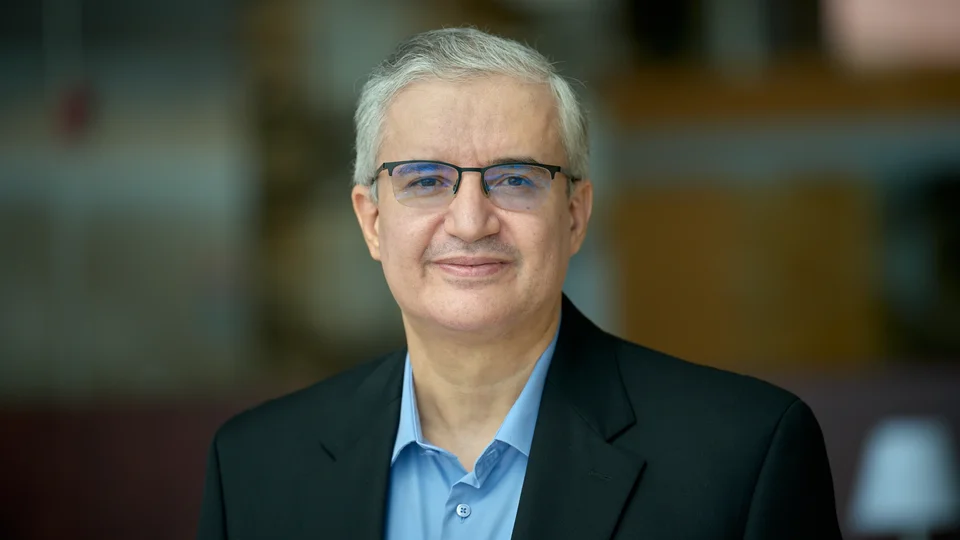
Mohamed-Slim Alouini
- Al-Khawarzmi Distinguished Professor, Electrical and Computer Engineering