About Ruibo Wang Ruibo Wang Postdoctoral Research Fellow, Electrical and Computer Engineering Stochastic Geometry Satellite Communications Optical communications Ruibo Wang is a Ph.D. student in Electrical and Computer Engineering and a member of the Communication Theory Laboratory (CTL) under the direction of Professor Mohamed Slim Alouini at King Abdullah University of Science and Technology (KAUST). Education and Early Career Ruibo Wang graduated from the University of Electronic Science and Technology of China (UESTC) with a Bachelor's degree in Engineering in 2020. Research Interest Ruibo's research interests include Stochastic Geometry, Wireless communication, and Networking. Education Profile B. S. in University of Electronic Science and Articles Related News March 2024 Towards ultra reliable low latency routing in LEO satellite constellations 1 min read · Wed, Mar 6 2024 News KAUST PhD candidate Ruibo Wang has been recognized for his innovative work in low earth orbit (LEO) satellite communication with a first-place prize in the contest on 6G and NTN: Challenges and Solutions at IEEE Future Networks . This award at this leading international forum acknowledges that this work in enhancing the efficiency and reliability of satellite communications and contributing significantly to sustainable technological advancements. More specifically, the work done in collaboration with Professors Mustafa A. Kishk and Mohamed-Slim Alouini, presents an innovative approach to July 2023 Research explores enhancing reliability in hybrid satellite-terrestrial networks 1 min read · Fri, Jul 14 2023 News satellite communication Wireless Communications A team of researchers from the Communication Theory Lab (CTL) at KAUST, including Ruibo Wang, Mustafa A. Kishk, and Mohamed-Slim Alouini, has achieved a significant advancement in the field of communication networks. Their research article, titled "Reliability Analysis of Multi-hop Routing in Multi-tier LEO Satellite Networks," led by KAUST Professor Mohamed-Slim Alouini, addresses the critical issue of network reliability within complex multi-tier hybrid satellite-terrestrial relay networks (HSTRN). Reliable communication networks are fundamental for global connectivity in today's March 2023 Resident population density-inspired aerial network deployment 1 min read · Mon, Mar 20 2023 News Using Unmanned Aerial Vehicles (UAVs) to enhance network coverage has proven a variety of benefits compared to terrestrial counterparts. One of the commonly used mathematical tools to model the locations of UAVs is stochastic geometry (SG). CTL researchers considered an inhomogeneous Poisson point process (PPP)-based model for the locations of the users that captures the degradation in the density of active users as users move away from the town center. The deployment of aerial vehicles following the same inhomogeneity of the users was proposed to maximize the performance. In addition, a multi August 2022 Stochastic geometry-based low latency routing in LEO satellite networks 1 min read · Mon, Aug 22 2022 News In recent years, we have witnessed the booming development of low earth orbit (LEO) satellite networks. In terms of low latency and ultra-long distance communication, the LEO satellite network has excellent advantages over ground networks and high orbit satellite networks. In ultra-long distance communication, multiple satellites are used as relays to complete multi-hop routing. How to select the relay satellite to achieve the minimum latency routing becomes one of the challenges. CTL researchers studied the routing in massive low earth orbit (LEO) satellites. They proposed a nearest-neighbor April 2022 A novel modeling technique for LEO satellite networks 1 min read · Mon, Apr 11 2022 News Low Earth orbit (LEO) satellite plays an indispensable role in the equal access network because of its low latency, large capacity, and seamless global coverage. For such an unprecedented extensive irregular system, stochastic geometry (SG) is a suitable research method. The SG model can not only cope with the increasing network scale but also accurately analyze and estimate the network’s performance. CTL researchers investigated several standard satellite distribution models and satellite-ground channel models. System-level metrics such as coverage probability and their intermediates were April 2021 Meet KAUST New Student: Ruibo Wang 1 min read · Wed, Apr 7 2021 News Unmanned Aerial Vehicle Ruibo Wang is a communication engineering graduate from the University of Electronic Science and Technology of China (UESTC), Chengdu, China, who joined KAUST in January 2021. Wang first came to KAUST as a visiting student and was instantly impressed by the University's excellent research atmosphere and high academic standards. This combination of factors piqued his interest in choosing KAUST to further his academic career.
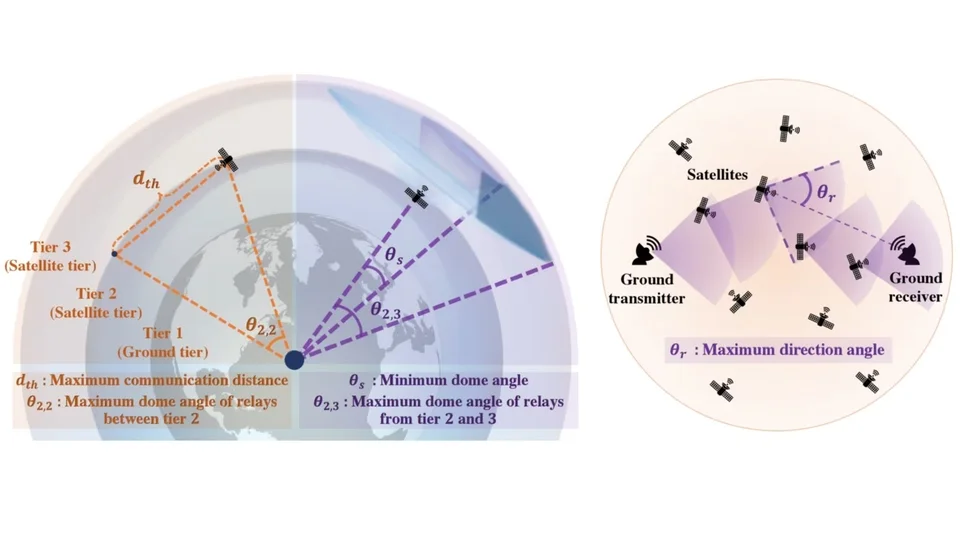
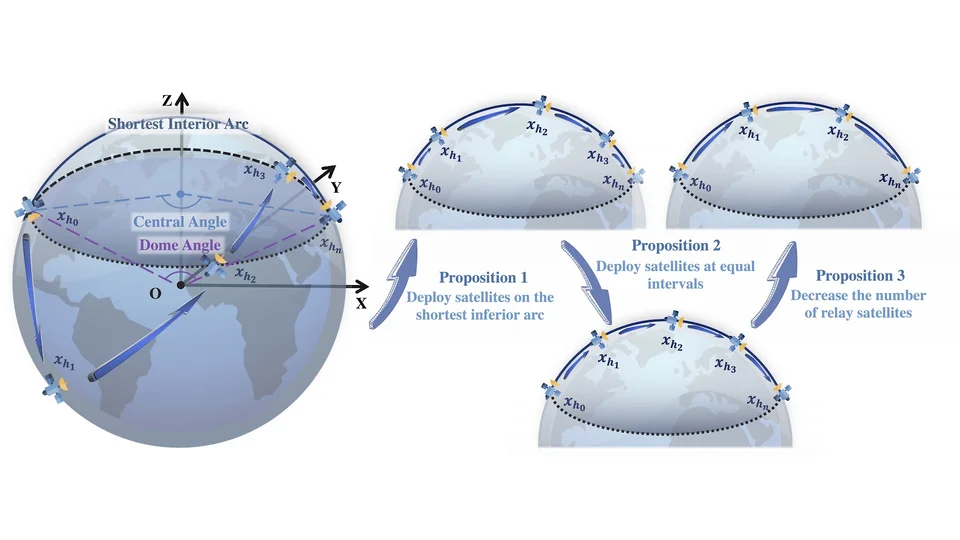
Towards ultra reliable low latency routing in LEO satellite constellations 1 min read · Wed, Mar 6 2024 News KAUST PhD candidate Ruibo Wang has been recognized for his innovative work in low earth orbit (LEO) satellite communication with a first-place prize in the contest on 6G and NTN: Challenges and Solutions at IEEE Future Networks . This award at this leading international forum acknowledges that this work in enhancing the efficiency and reliability of satellite communications and contributing significantly to sustainable technological advancements. More specifically, the work done in collaboration with Professors Mustafa A. Kishk and Mohamed-Slim Alouini, presents an innovative approach to
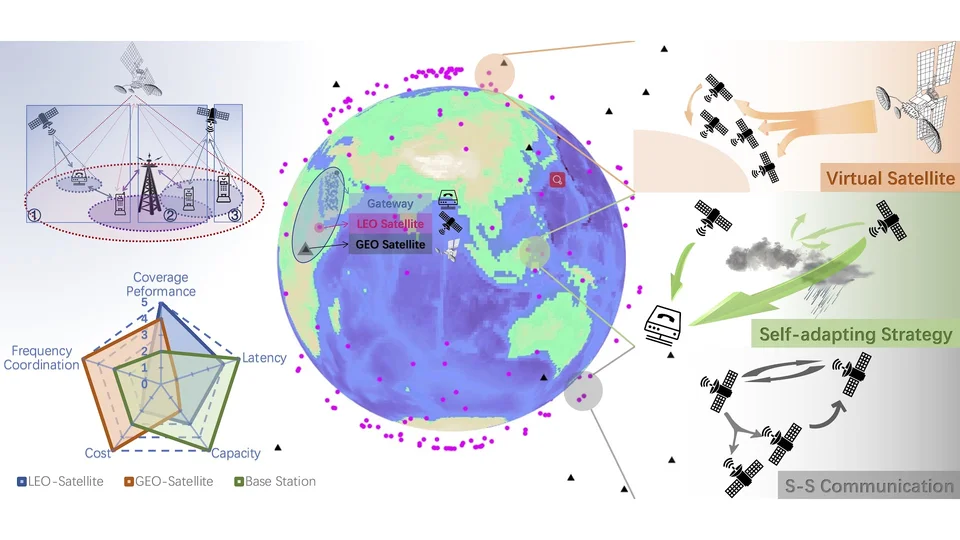
Research explores enhancing reliability in hybrid satellite-terrestrial networks 1 min read · Fri, Jul 14 2023 News satellite communication Wireless Communications A team of researchers from the Communication Theory Lab (CTL) at KAUST, including Ruibo Wang, Mustafa A. Kishk, and Mohamed-Slim Alouini, has achieved a significant advancement in the field of communication networks. Their research article, titled "Reliability Analysis of Multi-hop Routing in Multi-tier LEO Satellite Networks," led by KAUST Professor Mohamed-Slim Alouini, addresses the critical issue of network reliability within complex multi-tier hybrid satellite-terrestrial relay networks (HSTRN). Reliable communication networks are fundamental for global connectivity in today's
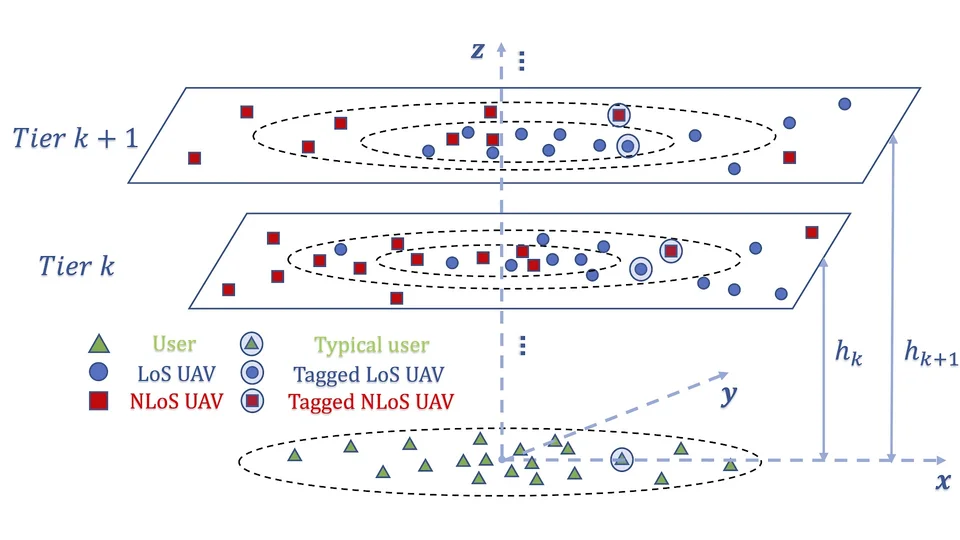
Resident population density-inspired aerial network deployment 1 min read · Mon, Mar 20 2023 News Using Unmanned Aerial Vehicles (UAVs) to enhance network coverage has proven a variety of benefits compared to terrestrial counterparts. One of the commonly used mathematical tools to model the locations of UAVs is stochastic geometry (SG). CTL researchers considered an inhomogeneous Poisson point process (PPP)-based model for the locations of the users that captures the degradation in the density of active users as users move away from the town center. The deployment of aerial vehicles following the same inhomogeneity of the users was proposed to maximize the performance. In addition, a multi
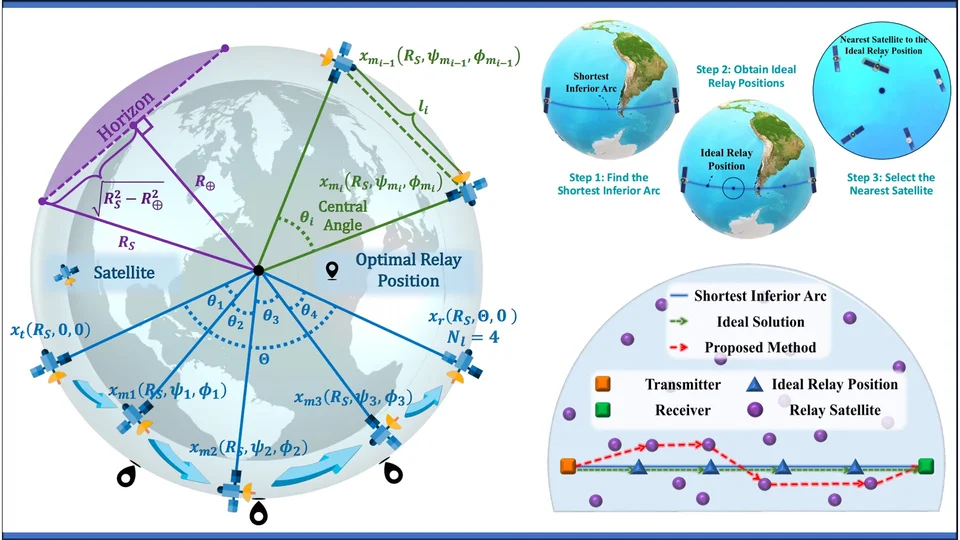
Stochastic geometry-based low latency routing in LEO satellite networks 1 min read · Mon, Aug 22 2022 News In recent years, we have witnessed the booming development of low earth orbit (LEO) satellite networks. In terms of low latency and ultra-long distance communication, the LEO satellite network has excellent advantages over ground networks and high orbit satellite networks. In ultra-long distance communication, multiple satellites are used as relays to complete multi-hop routing. How to select the relay satellite to achieve the minimum latency routing becomes one of the challenges. CTL researchers studied the routing in massive low earth orbit (LEO) satellites. They proposed a nearest-neighbor
A novel modeling technique for LEO satellite networks 1 min read · Mon, Apr 11 2022 News Low Earth orbit (LEO) satellite plays an indispensable role in the equal access network because of its low latency, large capacity, and seamless global coverage. For such an unprecedented extensive irregular system, stochastic geometry (SG) is a suitable research method. The SG model can not only cope with the increasing network scale but also accurately analyze and estimate the network’s performance. CTL researchers investigated several standard satellite distribution models and satellite-ground channel models. System-level metrics such as coverage probability and their intermediates were
Meet KAUST New Student: Ruibo Wang 1 min read · Wed, Apr 7 2021 News Unmanned Aerial Vehicle Ruibo Wang is a communication engineering graduate from the University of Electronic Science and Technology of China (UESTC), Chengdu, China, who joined KAUST in January 2021. Wang first came to KAUST as a visiting student and was instantly impressed by the University's excellent research atmosphere and high academic standards. This combination of factors piqued his interest in choosing KAUST to further his academic career.
Related Sites Electrical and Computer Engineering (ECE) Communication Theory Lab (CTL) Related Content Articles 6 Related Links Linkedin Google Scholar dblp KAUST Repository