About Shahad Qathan Shahad Qathan M.S. Student (former), Computer Science artificial intelligence machine learning Deep learning bioinformatics Shahad Qathan is an MS candidate in the Bio-Ontology Research Group (BORG) at King Abdullah University of Science and Technology (KAUST) under the supervision of Professor Robert Hoehndorf. Research Interests Artificial Intelligence, more specifically Machine Learning and its applications in healthcare and Bioinformatics Education Profile B.Sc, Computer Science, King Abdulaziz University, Jeddah, Saudi Arabia, 2020 Projects Related Projects 2022 Computational methods for functional metagenomics: from protein functions to multi-scale interactions Sat, Jan 1 2022 - Tue, Dec 31 2024 Applied Ontology Microbial communities Neuro-Symbolic AI protein function Metagenomic sequencing has made it routine to read the DNA of an entire microbial community, but most analysis pipelines stop at taxonomic composition or at the level of individual protein families. The really biologically informative questions, which proteins do what, which proteins interact, which metabolic pathways are reconstructible, and how the community as a whole interacts with its environment or host, remain largely out of reach computationally. Even associations that are very robust empirically, for example between gut microbiome composition and colorectal cancer or inflammatory
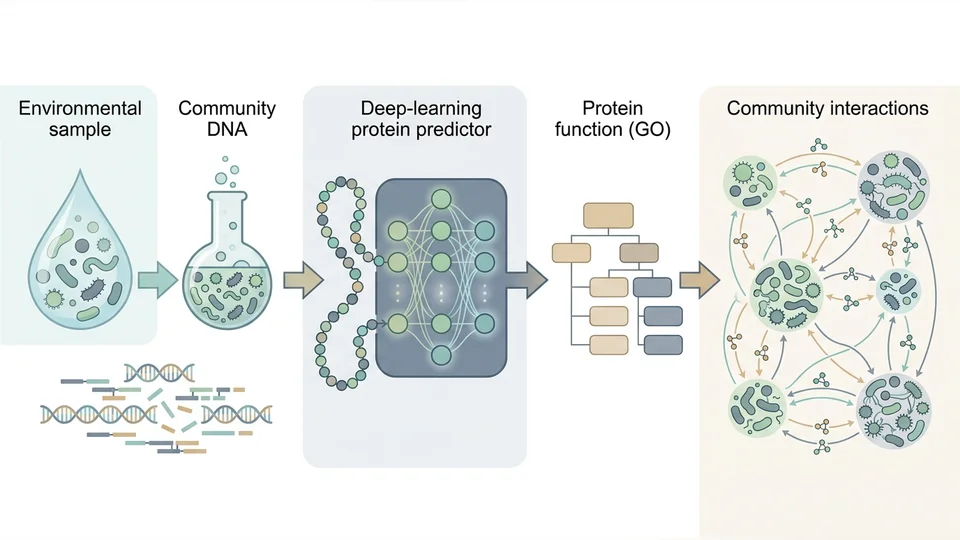
Computational methods for functional metagenomics: from protein functions to multi-scale interactions Sat, Jan 1 2022 - Tue, Dec 31 2024 Applied Ontology Microbial communities Neuro-Symbolic AI protein function Metagenomic sequencing has made it routine to read the DNA of an entire microbial community, but most analysis pipelines stop at taxonomic composition or at the level of individual protein families. The really biologically informative questions, which proteins do what, which proteins interact, which metabolic pathways are reconstructible, and how the community as a whole interacts with its environment or host, remain largely out of reach computationally. Even associations that are very robust empirically, for example between gut microbiome composition and colorectal cancer or inflammatory