King Abdullah University of Science and Technology
Computer, Electrical and Mathematical Sciences and Engineering
  • Home
  • Study
    • Prospective Students
    • Current Students
    • Internship Opportunities
  • Research
    • Research Overview
    • Research Areas
    • Research Groups
  • Programs
    • Applied Mathematics and Computational Science
    • Computer Science
    • Electrical and Computer Engineering
    • Statistics
  • People
    • All People
    • Faculty
    • Affiliate Faculty
    • Instructional Faculty
    • Research Scientists
    • Research Staff
    • Postdoctoral Fellows
    • Students
    • Alumni
    • Administrative Staff
  • News
  • Events
  • About
    • Who We Are
    • Leadership Team
  • Apply

Real-time sensor

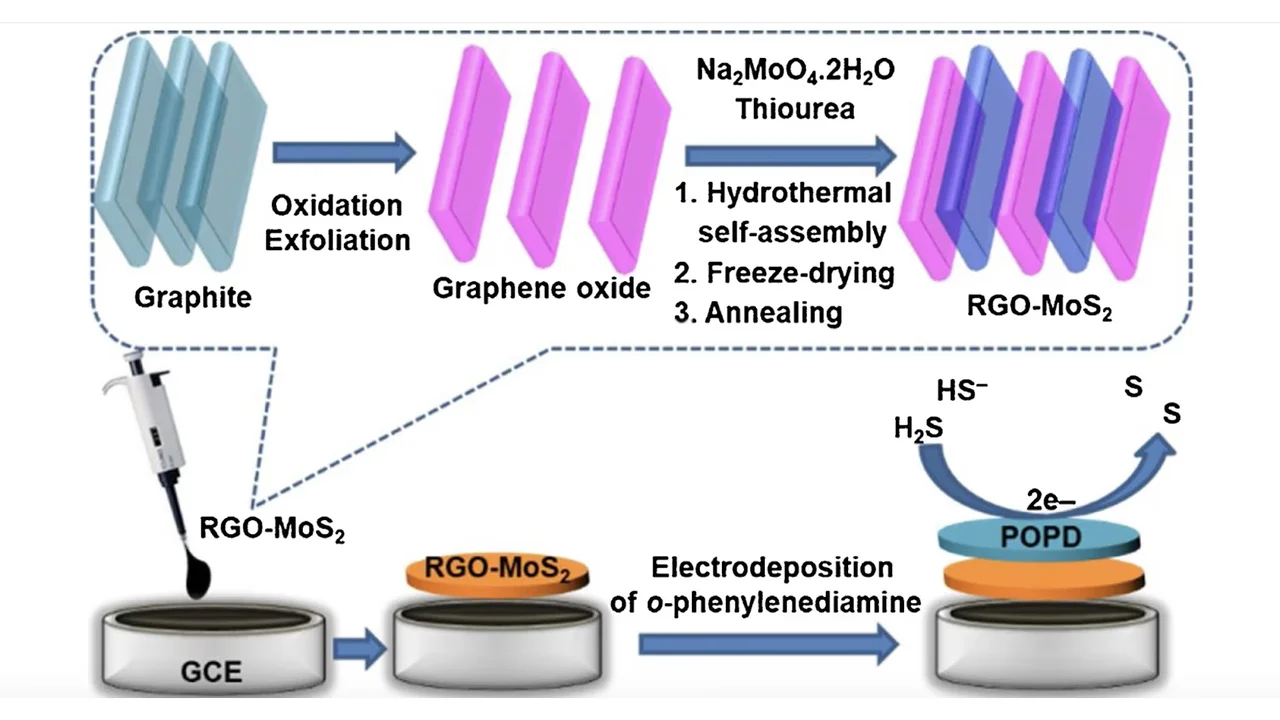
Anti-poisoning electrode for real-time in-situ monitoring of hydrogen sulfide release

1 min read · Tue, Sep 15 2020

News

Nanocomposites Gasotransmitters Serum biomarkerLive cells Real-time sensor Gas Sensors In-Situ sensors

Nithiya Jeromiyas, et al., " Anti-poisoning electrode for real-time in-situ monitoring of hydrogen sulfide release" Sensor and Actuators B: Chemistry 7 (10), 2020, 128844. Electrode poisoning and interferences from complex biological environments are major challenges in the development of in-situ H 2S sensors. To circumvent these issues, herein a robust electrode based on reduced graphene oxide-molybdenum disulfide nanohybrid (RGO-MoS 2) and polymerized o-phenylenediamine (POPD) is developed. The POPD/RGO-MoS 2-modified electrode catalyzed H 2S oxidation at a minimized overpotential (+ 0.15 V

Computer, Electrical and Mathematical Sciences and Engineering (CEMSE)

Connect with us

Footer

  • A-Z Directory
    • All Content
    • Announcements
    • Browse Related Sites
  • Site Management
    • Log in

© 2025 King Abdullah University of Science and Technology. All rights reserved. Privacy Notice

Disclaimer: The views and opinions expressed in this page are strictly those of the page author. The contents of this page have not been reviewed or approved by the King Abdullah University of Science and Technology.