Exploring AI-enabled microwave technologies for healthcare and wireless communication
KAUST convened international microwave and antenna scientists to explore AI-enabled high-frequency hardware for healthcare diagnostics, industrial monitoring and future communications.
About
Microwaves can reveal changes inside the human body and carry data between the devices around us. Both applications depend on understanding how electromagnetic waves interact with complex tissues and environments, as well as designing hardware that can transmit, receive and interpret these signals. Combining artificial intelligence (AI) with the physics governing electromagnetic waves is giving researchers new ways to address these challenges.
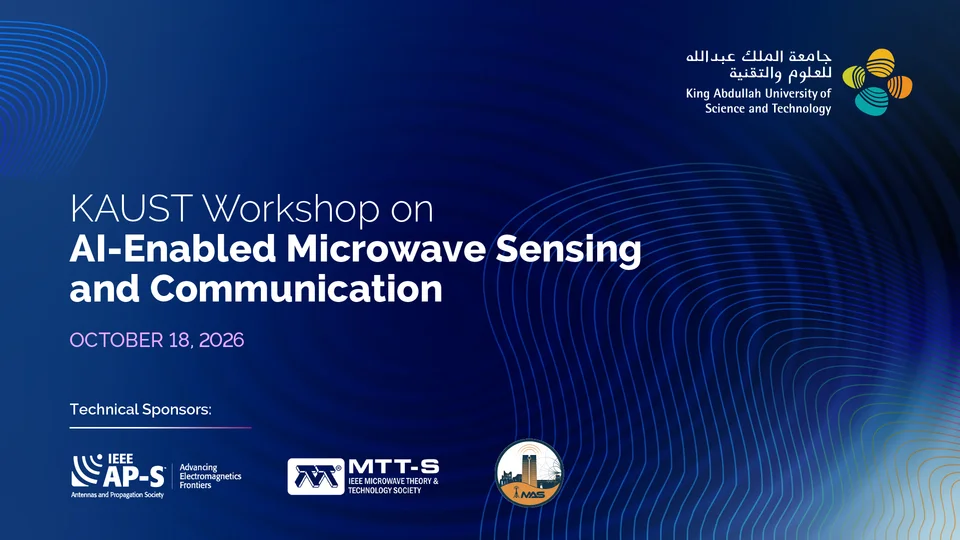
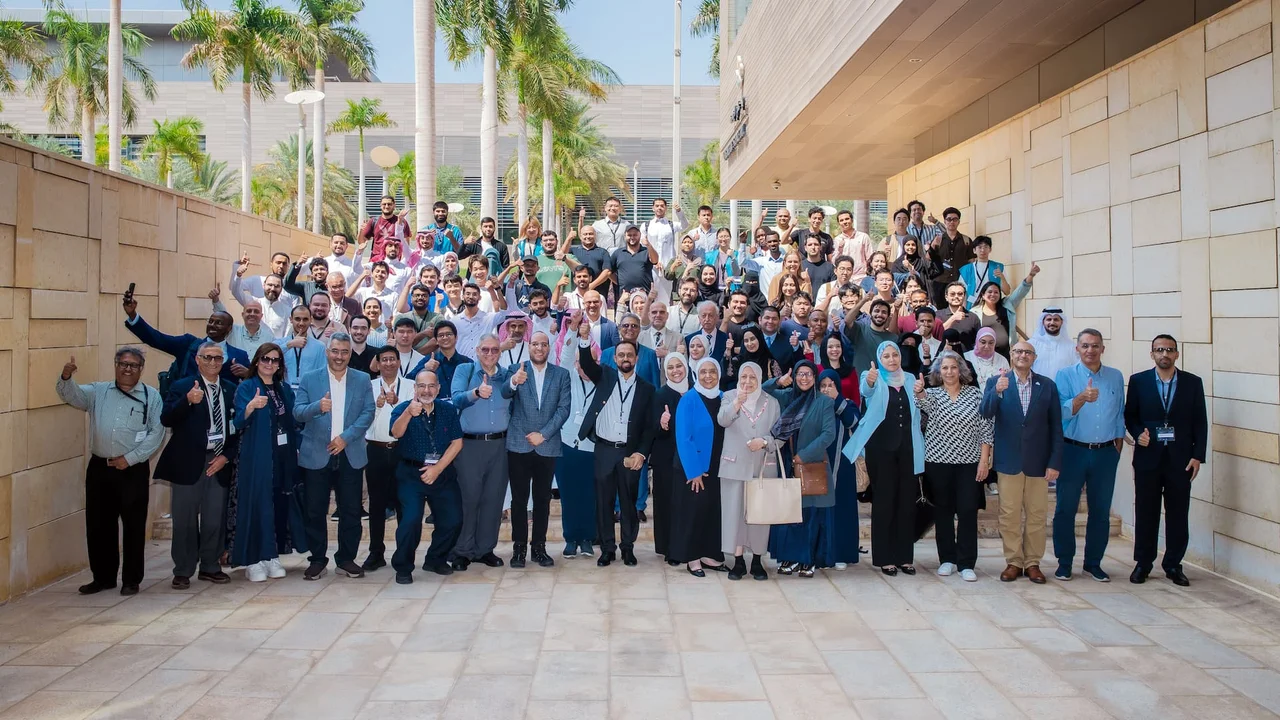
These developments were the focus of the KAUST Workshop on AI-Enabled Microwave Sensing and Communication, held Oct. 18 in conjunction with the IEEE International Microwave and Antenna Symposium (IMAS 2026). Organized by the Electrical and Computer Engineering program, the workshop convened an international microwave and antenna scientists at the university. The event connected KAUST faculty and students directly with researchers from institutions including NASA Jet Propulsion Laboratory, ETH Zurich, the University of Michigan and The University of Queensland
Realizing these applications, however, requires modeling complex electromagnetic waves, a process that demands substantial computational power. Integrating machine learning with fundamental physical principles allows researchers to accelerate these simulations, interpret noisy measurements and build reliable models without relying on massive training datasets.
“Advances in AI are creating new possibilities for how we design and use microwave technologies, particularly in biomedical sensing and wireless communication. Bringing these research communities together allows us to address shared scientific challenges and explore how these developments could translate into practical applications,” said Abdulrahman Alhamed, Ibn Rushd assistant professor of electrical and computer engineering at KAUST and organizer of the workshop.
Advancing biomedical sensing and imaging
In medicine, these advances could support the development of portable, noninvasive diagnostic tools. Microwave sensing uses differences in the electromagnetic properties of biological tissues to gather information about structures and changes inside the body, with researchers investigating applications in medical imaging, disease detection and health monitoring. Integrating AI into these systems could help improve image reconstruction and the interpretation of complex measurements.
The workshop also examined how advances in electromagnetic modeling and AI could contribute to wearable health technologies. Integrating sensing capabilities with compact wireless systems could support continuous monitoring and expand opportunities for collecting health information outside traditional clinical settings.
"At KAUST, we are exploring how flexible sensors, integrated circuits and wireless communication can come together in wearable systems that monitor health and transmit information. Connecting these technologies could make health monitoring more accessible and practical,” said Atif Shamim, professor and chair of KAUST's Electrical and Computer Engineering Program and co-organizer of the workshop.
Connecting AI, physics and wireless technologies
The integration of physics and AI also has implications for the antennas, integrated circuits and high-frequency systems underpinning modern communication networks. AI-assisted modeling could accelerate simulation and design processes, allowing engineers to investigate increasingly complex hardware configurations.
The research also extends to integrated sensing and communication, where wireless systems combine data transmission with the ability to detect their surroundings. Such approaches could support connected medical devices, wearable sensors and intelligent wireless networks.
At KAUST, research in computational electromagnetics is addressing the challenge of accurately simulating complex electromagnetic systems while improving computational efficiency. These capabilities are important for developing and evaluating advanced sensing and communication technologies.
"Combining electromagnetic modeling with machine learning could help us simulate complex systems more efficiently and accelerate the development of new technologies,” said Hakan Bagci, professor of electrical and computer engineering at KAUST.
By connecting expertise from KAUST, local institutions and the international microwave community, the workshop supports research directions relevant to future healthcare technologies and intelligent digital infrastructure. These areas also connect with Saudi Arabia's national objectives in digital health innovation and the development of advanced medical technologies.
This event is funded through the KAUST Research Funding Services Conference and Workshop Support Program (CS2026).
Related People
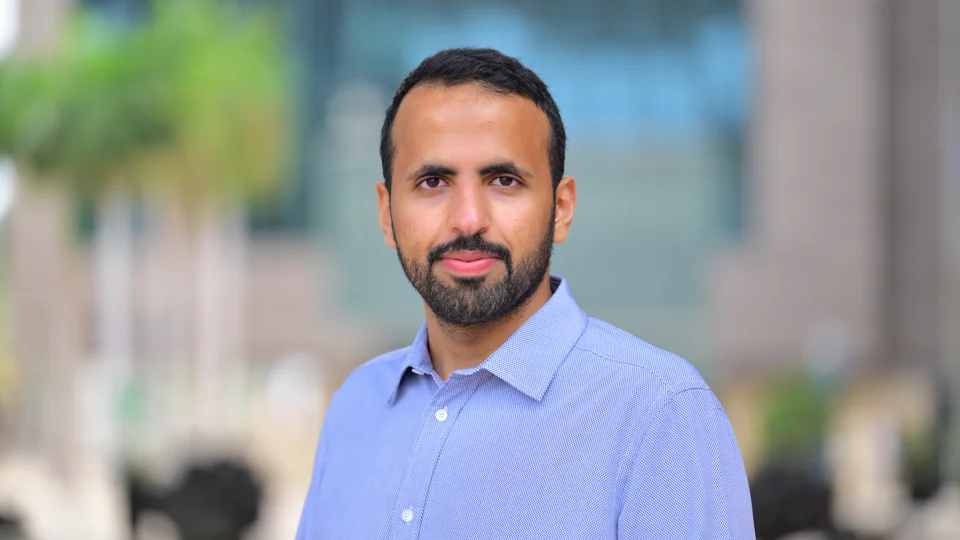
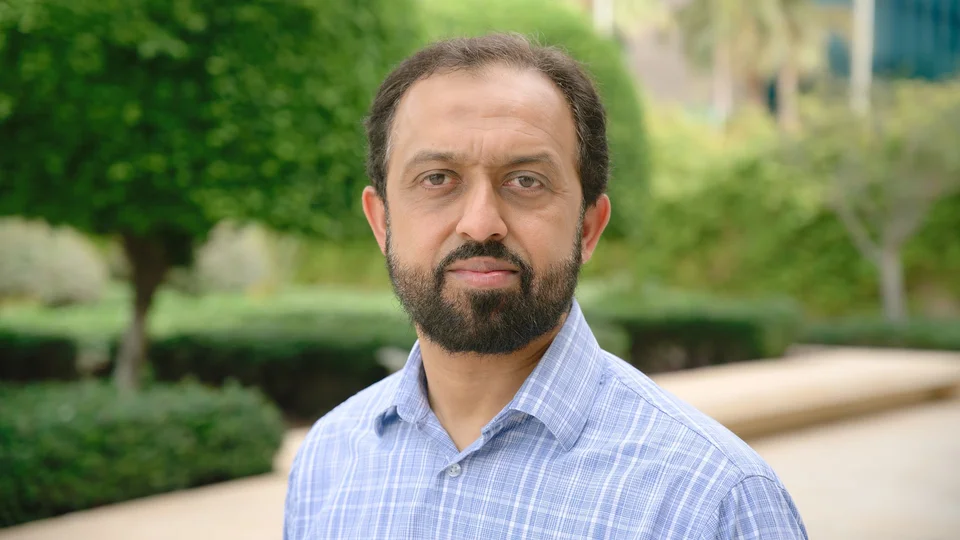
Atif Shamim
- Associate Dean for Special Projects, Computer, Electrical and Mathematical Sciences and Engineering