
Free-Space Optics for Non-Terrestrial Networks: Energy-Sustained Platforms and Photon-Counting Receivers
This dissertation develops an integrated NTN–FSO design framework spanning energy-sustained platform deployment, turbulence-aware laser power transfer (LPT) for in-flight recharging, and photon-counting receiver optimization under dead time.
Overview
Non-terrestrial networks (NTNs) increasingly rely on free-space optical (FSO) links to support high-throughput and low-latency communications, but their end-to-end performance is jointly limited by platform energy, atmospheric impairments, and receiver non-idealities. This dissertation develops an integrated NTN–FSO design framework spanning energy-sustained platform deployment, turbulence-aware laser power transfer (LPT) for in-flight recharging, and photon-counting receiver optimization under dead time. It first studies the 3-D placement of a solar-powered hovering relay for RF-to-FSO backhaul under stochastic atmospheric effects, revealing regime-dependent optimal deployment strategies. It then investigates LPT-assisted endurance enhancement for a mobile NTN platform and derives the jointly optimal flight speed and trajectory radius under turbulence and propulsion constraints. Finally, it analyzes photon-counting detector arrays with non paralyzable dead time and develops an adaptive spot-sizing strategy that improves capacity and BER across different photon-flux regimes. Overall, this dissertation provides a cross-layer framework for robust, energy-aware optical backhaul in NTN systems involving satellites, HAPs, and UAVs.
Presenters
Brief Biography
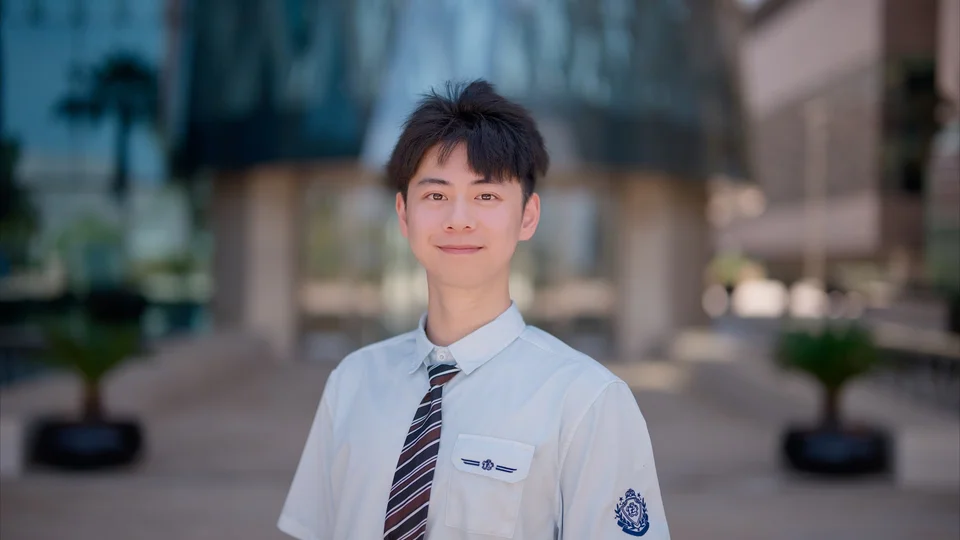
Heyou Liu is a Ph.D. candidate in Electrical and Computer Engineering at King Abdullah University of Science and Technology (KAUST) and a member of the Communication Theory Lab, where he works under the supervision of Professor Mohamed-Slim Alouini. He obtained his bachelor’s degree in Electrical Engineering from the University of Electronic Science and Technology of China in 2021 and joined KAUST in the same year. His research interests lie in free-space optical communications and communication systems, particularly in energy-sustained airborne platforms, optical wireless backhaul, and photon-counting receiver design for next-generation non-terrestrial networks.
Related People
Related Researchers
Advisors
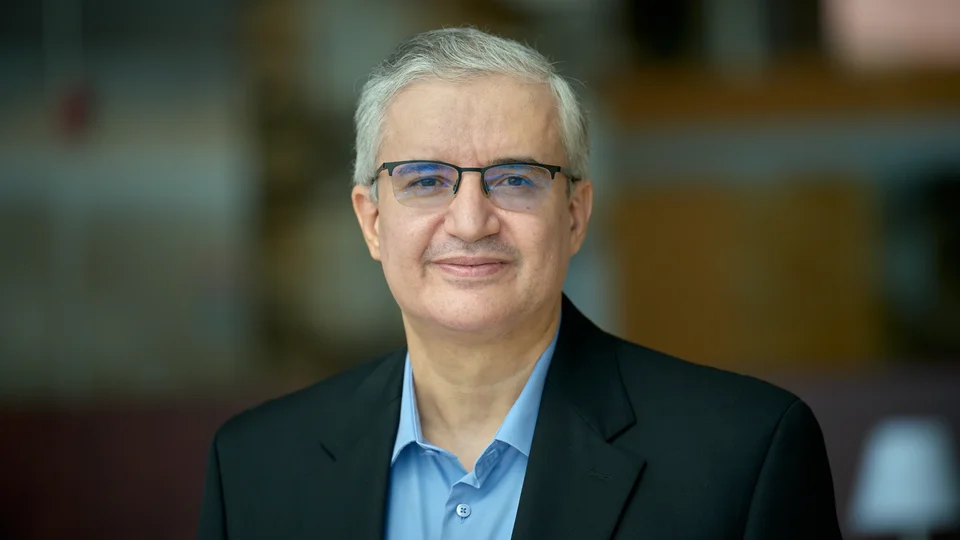
Mohamed-Slim Alouini
- Al-Khawarzmi Distinguished Professor, Electrical and Computer Engineering