
Ph.D. Dissertation Defense - Jong-Min Kim
This dissertation studies experimental demonstration and performance analysis of free space optical (FSO) systems with multiple lenses to develop practical design guidelines for reliable, high-capacity, and adaptive multi-lens FSO systems.
Overview
Free space optical (FSO) communication has attracted significant attention as a promising wireless transmission technology for beyond 5G (B5G) and sixth-generation (6G) networks. Due to the narrow beamwidth of infrared laser beams, FSO links can provide high received optical power, high signal-to-noise ratio (SNR), and wide unlicensed bandwidth. However, practical FSO systems are still affected by atmospheric turbulence, pointing error, and hardware limitations. To address these challenges, this dissertation studies experimental demonstration and performance analysis of FSO systems with multiple lenses. The dissertation follows a progressive structure from a single-input single-output (SISO)-FSO experiment to single-input multiple-output (SIMO)-FSO and multiple-input multiple-output (MIMO)-FSO performance analysis.
First, a wavelength division multiplexing (WDM)-based radio-over-FSO (RoFSO) transmission testbed is experimentally demonstrated using commercially available radio frequency (RF) and optical devices. The proposed testbed transmits two independent RF data streams over two wavelength channels through a 100 m indoor FSO link. IEEE 802.11a wireless local area network (WLAN)-based image transmission and 10 Gbps on-off keying (OOK) transmission are evaluated. The experimental results show that the system achieves an aggregate data rate of 20 Gbps. In addition, the system satisfies an error-free condition with bit error rate (BER) below 10^{-12} for the OOK transmission. The results also show that achromatic collimators effectively suppress chromatic aberration between the two WDM channels.
Second, the performance of SIMO-FSO systems with multiple receiver lenses is analyzed under correlated lognormal atmospheric turbulence and coupled pointing error. The pointing error is modeled by the displacement of a single received beam, which creates coupled geometric loss over all receiver lenses. Based on this channel model, approximate closed-form expressions are derived for outage probability, average BER, and ergodic capacity. The exact diversity order is also obtained from the formal definition of geometric loss. The analysis shows that the diversity order is mainly limited by pointing jitter under coupled pointing error. The proposed framework also enables numerical optimization of the lens spacing that minimizes the average BER.
Finally, an outage capacity analysis is developed for MIMO-FSO systems with generalized hybrid mode. The generalized hybrid mode unifies diversity mode, multiplexing mode, and hybrid mode in a single framework by balancing the number of independent data streams and the degree of diversity. The analysis considers common boresight, geometric loss, lognormal atmospheric turbulence, and inter-group interference in the signal-to-interference-plus-noise ratio (SINR) formulation. A tractable outage capacity approximation is derived using moment matching and lognormal approximation. Based on this approximation, an analysis-based mode selection method is proposed. The proposed method achieves performance close to exhaustive Monte Carlo (MC) search while reducing computational complexity. These results provide practical design guidelines for reliable, high-capacity, and adaptive FSO systems with multiple lenses.
Presenters
Brief Biography
Jongmin Kim is a Ph.D. candidate in Electrical and Computer Engineering at King Abdullah University of Science and Technology (KAUST), working with Prof. Mohamed-Slim Alouini. Jongmin received his Bachelor of Science (B.S.) degree in Electrical Engineering from Korea University in 2020.
Jongmin has published his research in journals and conferences including IEEE Transactions on Communications, IEEE Journal of Solid-State Circuits, ICT Express, and IEEE INFOCOM Workshops. He received Third Prize in the 2025 IEEE GLOBECOM Four-Minute Thesis (4MT) Competition and has received several best paper awards from the Korean Institute of Communications and Information Sciences (KICS). His research has also resulted in a granted U.S. patent on wireless optical communication.
Related People
Related Researchers

Academic Advisors
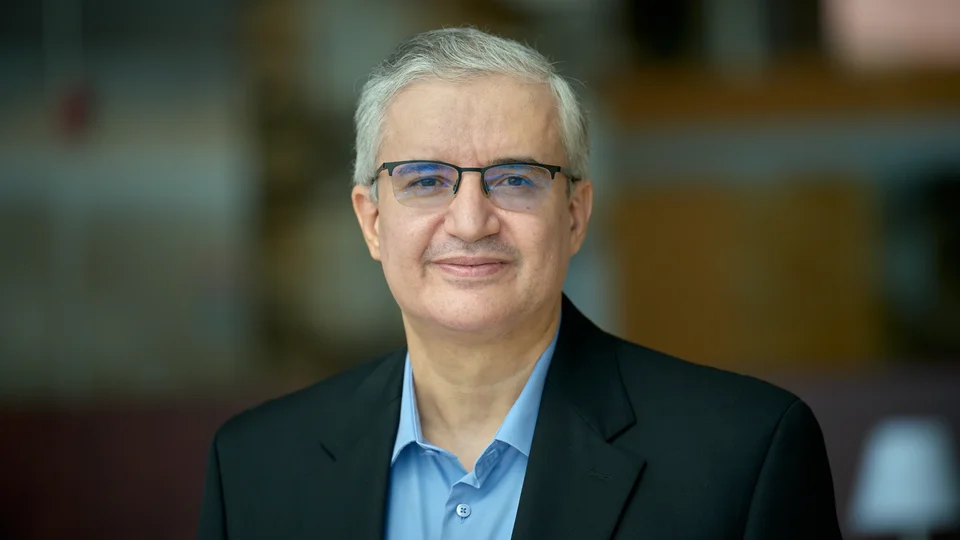
Mohamed-Slim Alouini
- Al-Khawarzmi Distinguished Professor, Electrical and Computer Engineering