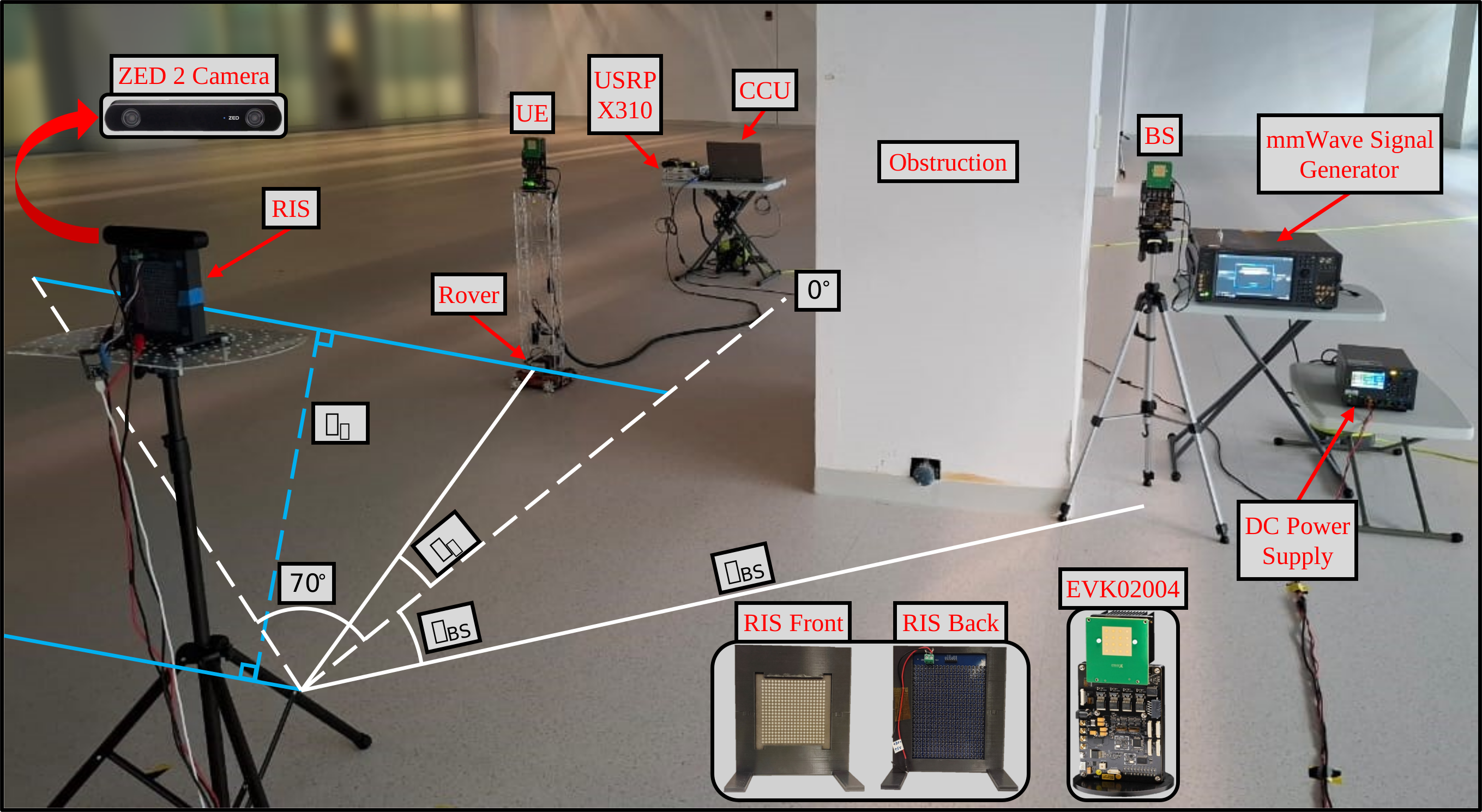
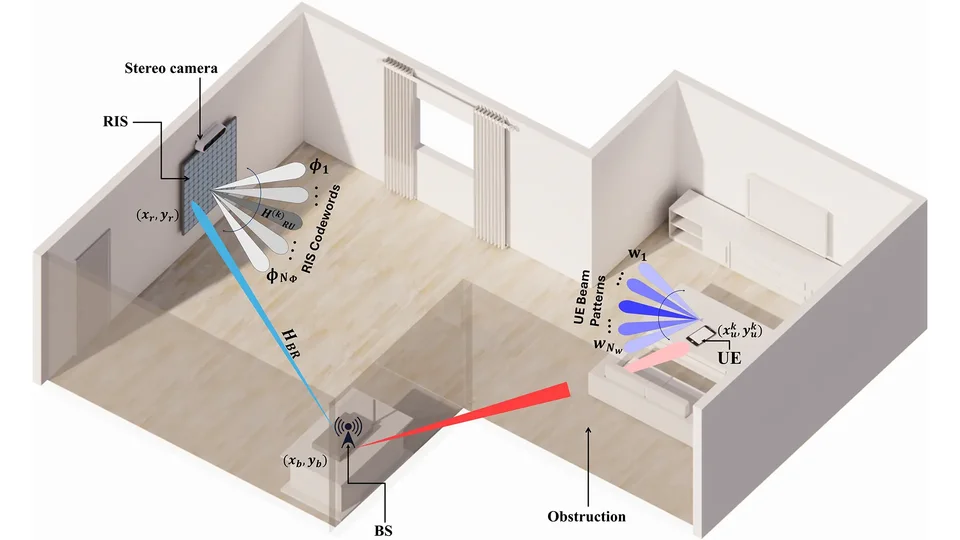
About Ahmed Nasser Ismail Ahmed Nasser Ismail Postdoctoral Research Fellow, Electrical and Computer Engineering ISAC HetNets interference management NOMA mMIMO channel estimation interference alignment Digital signal processing Projects Related Projects 2026 From Lab to Digital Twin: Calibration of mmWave Ray-Tracing with RIS Reflections Thu, Aug 27 2026 Research wireless communication Beyond 5G networks are expected to deliver ultra-reliable, low-latency, and high-capacity connectivity. One of the key enabling technologies for achieving these goals is a reconfigurable intelligent surface (RIS), which is a programmable metasurface composed of many passive elements, each capable of adjusting the phase of incident signals. By intelligently controlling these elements, RIS can manipulate wireless propagation environment to enhance coverage, increase capacity, and improve energy efficiency. To accurately model the behavior of RIS within complex and dynamic environments, digital 2025 Digital Twin For Indoor Scenario Fri, Sep 12 2025 wireless communication In indoor wireless scenarios, Digital Twin enables the accurate modeling of complex environments, such as offices, factories, and smart homes, allowing for the real-time optimization of coverage, interference management, and seamless connectivity for IoT devices. IT supports applications like intelligent building management, immersive AR/VR, and industrial automation. At CCSL, we investigate two specific indoor DT scenarios: digital twin–aided beamforming design and digital twin–aided blockage prediction/detection for MIMO systems. Experiment Description Digital Twin (DT) technology enables Digital Twin For Outdoor Scenario Fri, Sep 12 2025 Research wireless communication In outdoor scenarios, DTs provide large-scale virtual replicas of urban or rural networks to optimize base station placement, manage mobility, and enhance vehicular or drone communications. These advantages make DTs a powerful tool for improving reliability, efficiency, and adaptability across diverse wireless environments. At CCSL, we investigate two specific DT scenarios for outdoor wireless cellular networks: digital twin–aided beamforming design and digital twin–aided blockage prediction/detection for MIMO systems. Experiment Description Digital Twin (DT) technology enables the accurate Digital Twin For RIS-Aided Systems Fri, Sep 12 2025 Research wireless communication Beyond 5G networks are expected to deliver ultra-reliable, low-latency, and high-capacity connectivity. One of the key enabling technologies for achieving these goals is a reconfigurable intelligent surface (RIS), which is a programmable metasurface composed of many passive elements, each capable of adjusting the phase of incident signals. By intelligently controlling these elements, RIS can manipulate wireless propagation environment to enhance coverage, increase capacity, and improve energy efficiency. To accurately model the behavior of RIS within complex and dynamic environments, digital Multimodal Sensing for Indoor RIS-Aided Beam Selection Wed, Sep 24 2025 Research wireless communication In the 5G standard, beam sweeping is typically periodically executed through exhaustive search methods to maintain continuous alignment of user equipment (UE) and base station (BS) beamformers. In a reconfigurable intelligent surface (RIS)-aided massive MIMO (mMIMO) system, beam training is a daunting challenge as RIS codebook sizes are significantly larger compared to regular transceivers. To address the beam-training overhead, deep learning-based solutions have attracted great interest, enabling learning from data and adapting to dynamic conditions. The integration of multimodal sensing RIS-Aided mmWave Indoor Localization Wed, Sep 24 2025 wireless communication Deep Learning Framework for RSSI-Based Indoor Localization in RIS-Aided mmWave Systems. We present a novel deep learning framework for indoor localization in millimeter-wave (mmWave) environments using received signal strength indicator (RSSI) measurements from a reconfigurable intelligent surface (RIS)-aided system. Our dual-stream orientation-gated (DSOG) architecture addresses the critical challenges of non-line-of-sight (NLoS) conditions and orientation variability, achieving unprecedented decimeter-level accuracy with a median error of 0.19 m—outperforming classical methods by 74.7% and
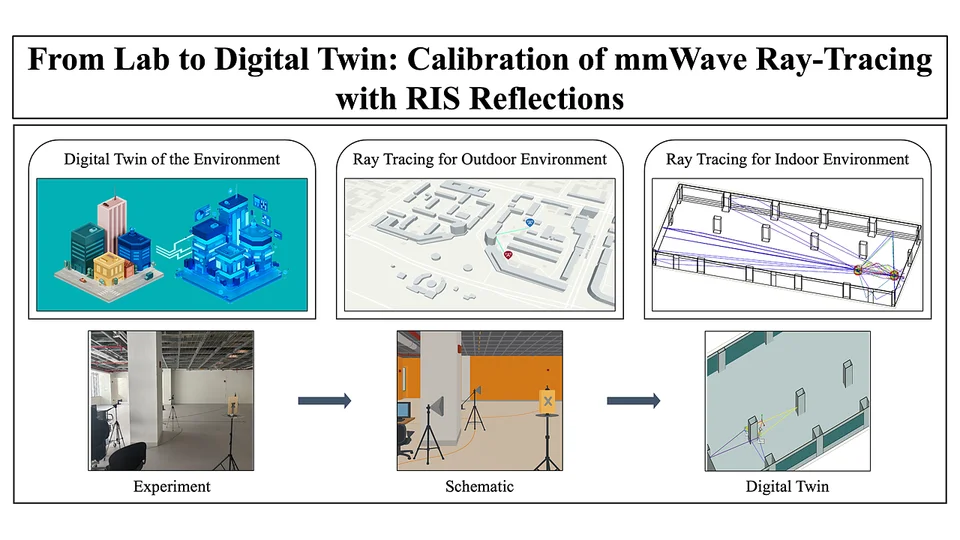
From Lab to Digital Twin: Calibration of mmWave Ray-Tracing with RIS Reflections Thu, Aug 27 2026 Research wireless communication Beyond 5G networks are expected to deliver ultra-reliable, low-latency, and high-capacity connectivity. One of the key enabling technologies for achieving these goals is a reconfigurable intelligent surface (RIS), which is a programmable metasurface composed of many passive elements, each capable of adjusting the phase of incident signals. By intelligently controlling these elements, RIS can manipulate wireless propagation environment to enhance coverage, increase capacity, and improve energy efficiency. To accurately model the behavior of RIS within complex and dynamic environments, digital
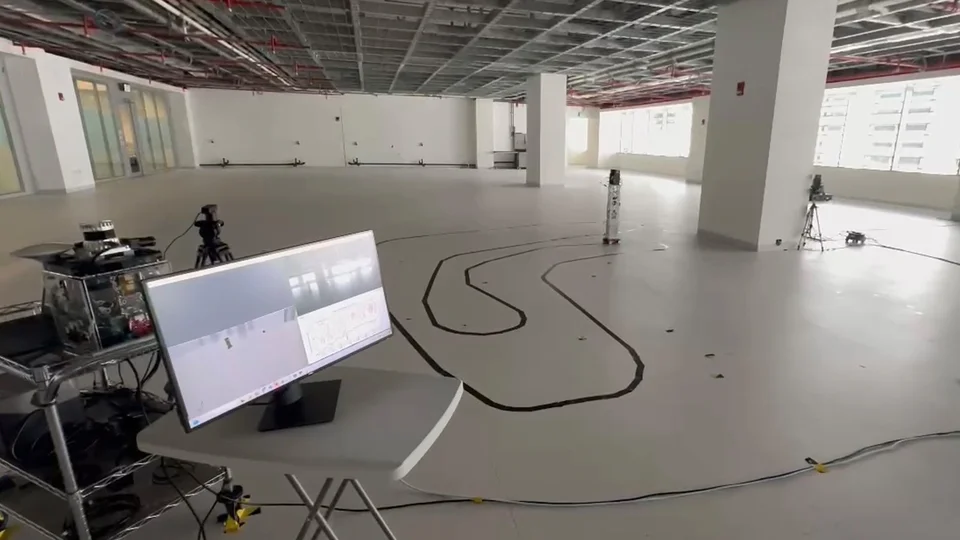
Digital Twin For Indoor Scenario Fri, Sep 12 2025 wireless communication In indoor wireless scenarios, Digital Twin enables the accurate modeling of complex environments, such as offices, factories, and smart homes, allowing for the real-time optimization of coverage, interference management, and seamless connectivity for IoT devices. IT supports applications like intelligent building management, immersive AR/VR, and industrial automation. At CCSL, we investigate two specific indoor DT scenarios: digital twin–aided beamforming design and digital twin–aided blockage prediction/detection for MIMO systems. Experiment Description Digital Twin (DT) technology enables
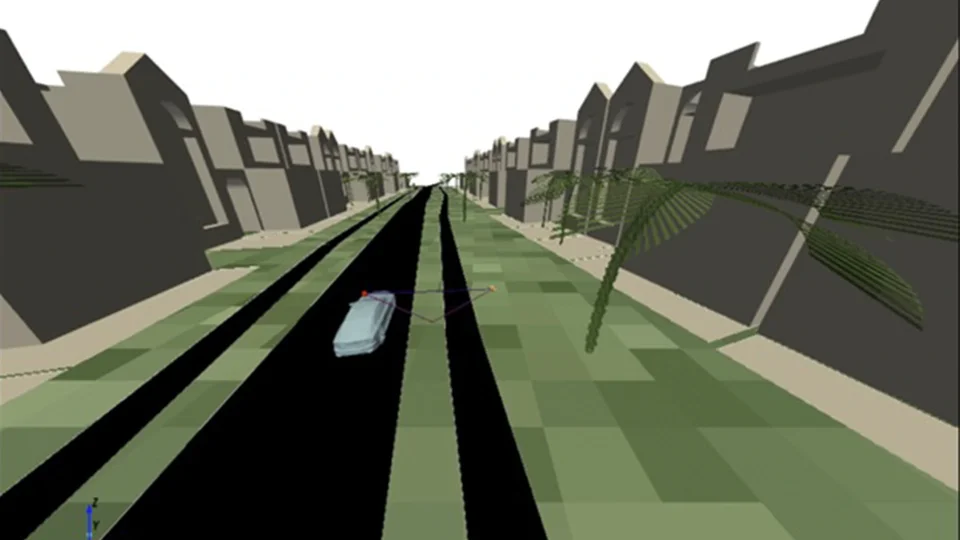
Digital Twin For Outdoor Scenario Fri, Sep 12 2025 Research wireless communication In outdoor scenarios, DTs provide large-scale virtual replicas of urban or rural networks to optimize base station placement, manage mobility, and enhance vehicular or drone communications. These advantages make DTs a powerful tool for improving reliability, efficiency, and adaptability across diverse wireless environments. At CCSL, we investigate two specific DT scenarios for outdoor wireless cellular networks: digital twin–aided beamforming design and digital twin–aided blockage prediction/detection for MIMO systems. Experiment Description Digital Twin (DT) technology enables the accurate
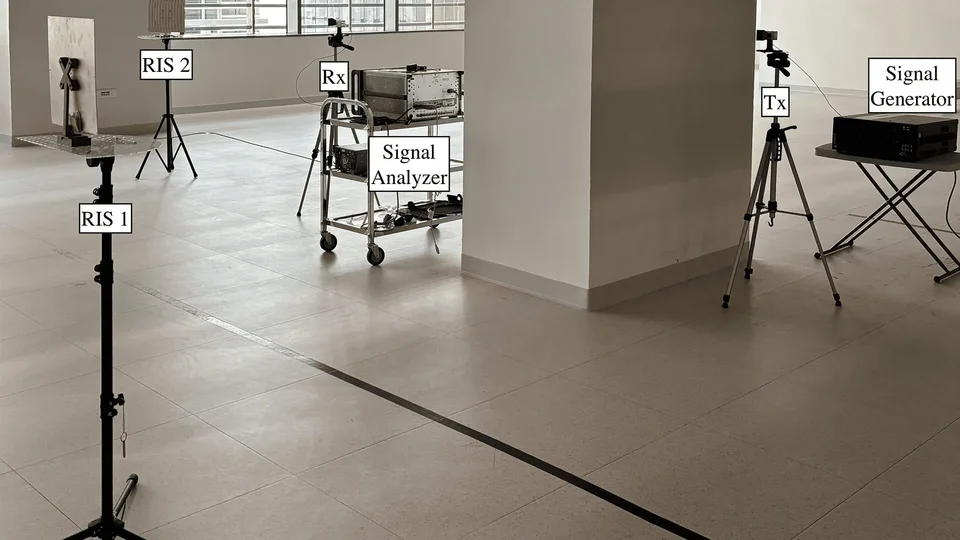
Digital Twin For RIS-Aided Systems Fri, Sep 12 2025 Research wireless communication Beyond 5G networks are expected to deliver ultra-reliable, low-latency, and high-capacity connectivity. One of the key enabling technologies for achieving these goals is a reconfigurable intelligent surface (RIS), which is a programmable metasurface composed of many passive elements, each capable of adjusting the phase of incident signals. By intelligently controlling these elements, RIS can manipulate wireless propagation environment to enhance coverage, increase capacity, and improve energy efficiency. To accurately model the behavior of RIS within complex and dynamic environments, digital
Multimodal Sensing for Indoor RIS-Aided Beam Selection Wed, Sep 24 2025 Research wireless communication In the 5G standard, beam sweeping is typically periodically executed through exhaustive search methods to maintain continuous alignment of user equipment (UE) and base station (BS) beamformers. In a reconfigurable intelligent surface (RIS)-aided massive MIMO (mMIMO) system, beam training is a daunting challenge as RIS codebook sizes are significantly larger compared to regular transceivers. To address the beam-training overhead, deep learning-based solutions have attracted great interest, enabling learning from data and adapting to dynamic conditions. The integration of multimodal sensing
RIS-Aided mmWave Indoor Localization Wed, Sep 24 2025 wireless communication Deep Learning Framework for RSSI-Based Indoor Localization in RIS-Aided mmWave Systems. We present a novel deep learning framework for indoor localization in millimeter-wave (mmWave) environments using received signal strength indicator (RSSI) measurements from a reconfigurable intelligent surface (RIS)-aided system. Our dual-stream orientation-gated (DSOG) architecture addresses the critical challenges of non-line-of-sight (NLoS) conditions and orientation variability, achieving unprecedented decimeter-level accuracy with a median error of 0.19 m—outperforming classical methods by 74.7% and
Engage ORCID ShareClipboard Related Sites Electrical and Computer Engineering (ECE) Communication and Computing Systems Lab (CCSL) Related Content Projects 6 Events 1 Related Links Google Scholar Publications LinkedIn