About David Ketcheson David Ketcheson Professor, Applied Mathematics and Computational Science numerical methods numerical analysis PDE nonlinear waves heterogenouse media dispersive waves optimization software development Professor Ketcheson is an expert in numerical analysis and computational science, specializing in the study of numerical methods for differential equations and the modeling and analysis of time-dependent nonlinear wave phenomena. Projects Related Projects 2024 Nonlinear waves Thu, Oct 10 2024 Research We apply these powerful numerical methods to discover, characterize, and understand behavior of waves in novel applications. Much of our work in this area focuses on water waves, ranging from flow in the kitchen sink to tsunamis to waves in channels. Numerical Software and Numerical Analysis Tools Thu, Oct 10 2024 Research Resource In order for new numerical algorithms to have impact, they must be implemented in software that is both easy to use and powerful enough to solve interesting problems. Computational science software development is an integral part of our research. Additionally, we develop and maintain software whose purpose is to facilitate the design and understanding of numerical methods themselves. Optimization of time integrators Thu, Oct 10 2024 Research The method of lines is a popular and effective approach to high order accurate solution of time-dependent PDEs. The time integration is typically achieved by use of Runge-Kutta or linear multistep methods. Because of the large number of ODEs involved, this integration is expensive both in terms of computation and memory. Structure-preserving discretizations Thu, Oct 10 2024 Research Many mathematical models possess structural properties that characterize their behavior in important qualitative ways. Such properties may include conservation or dissipation of energy, or positivity of values such as density, depth, or concentration. Numerical discretizations that preserve this structure are preferable and often essential. Development of such discretizations can be very challenging.
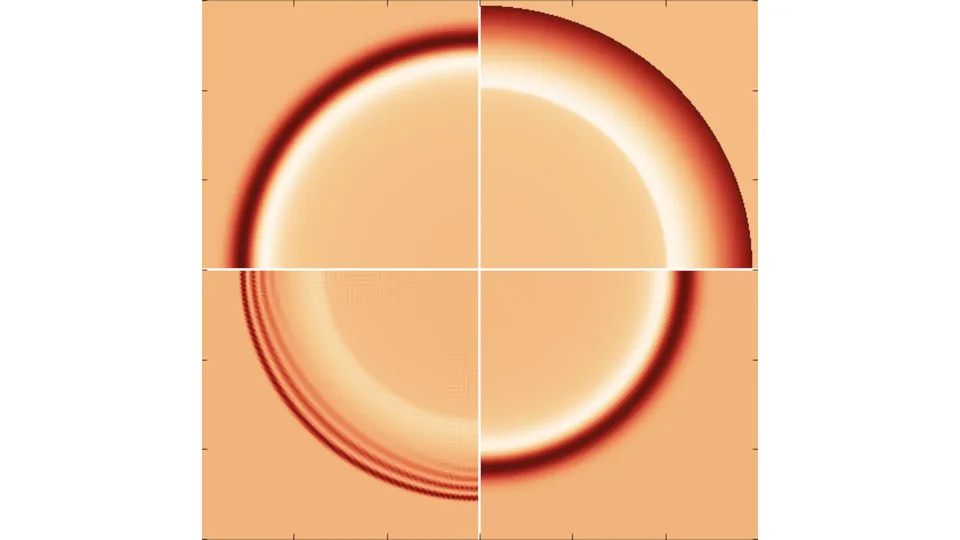
Nonlinear waves Thu, Oct 10 2024 Research We apply these powerful numerical methods to discover, characterize, and understand behavior of waves in novel applications. Much of our work in this area focuses on water waves, ranging from flow in the kitchen sink to tsunamis to waves in channels.
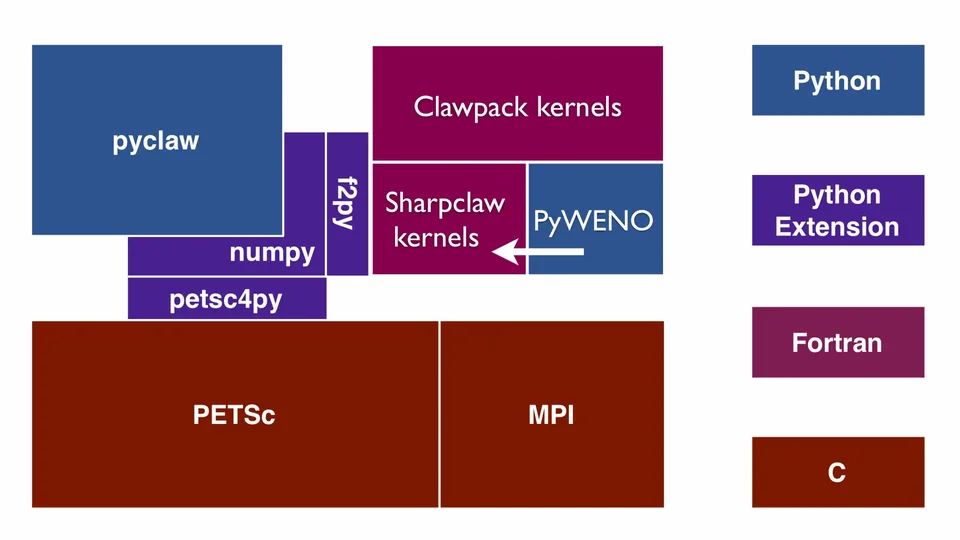
Numerical Software and Numerical Analysis Tools Thu, Oct 10 2024 Research Resource In order for new numerical algorithms to have impact, they must be implemented in software that is both easy to use and powerful enough to solve interesting problems. Computational science software development is an integral part of our research. Additionally, we develop and maintain software whose purpose is to facilitate the design and understanding of numerical methods themselves.
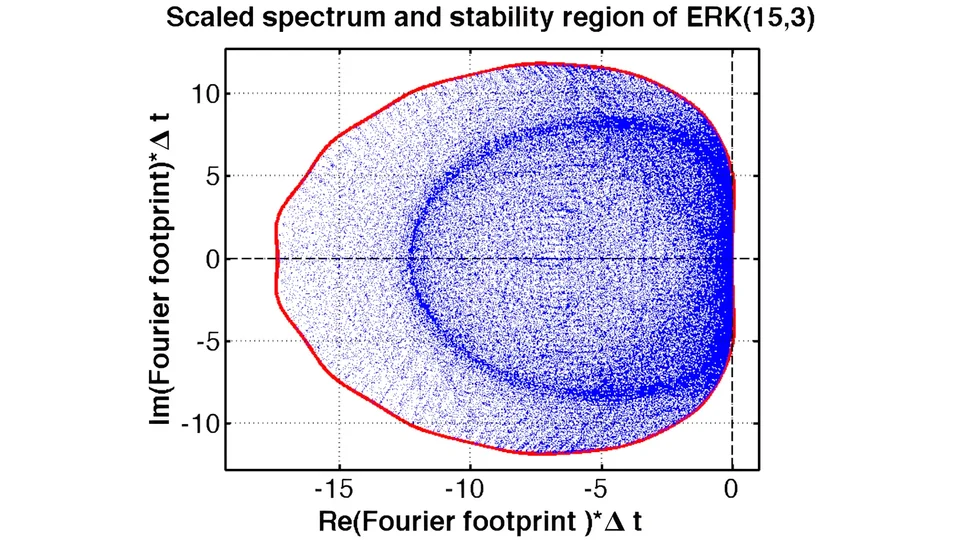
Optimization of time integrators Thu, Oct 10 2024 Research The method of lines is a popular and effective approach to high order accurate solution of time-dependent PDEs. The time integration is typically achieved by use of Runge-Kutta or linear multistep methods. Because of the large number of ODEs involved, this integration is expensive both in terms of computation and memory.
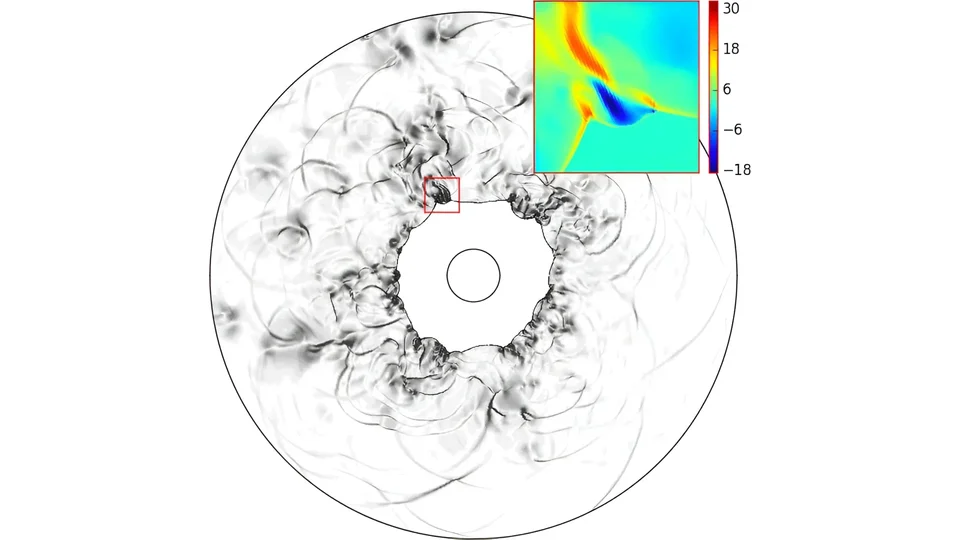
Structure-preserving discretizations Thu, Oct 10 2024 Research Many mathematical models possess structural properties that characterize their behavior in important qualitative ways. Such properties may include conservation or dissipation of energy, or positivity of values such as density, depth, or concentration. Numerical discretizations that preserve this structure are preferable and often essential. Development of such discretizations can be very challenging.
Engage ORCID Scopus KAUST Academic Portal KAUST Repository ShareClipboard Related Sites Applied Mathematics and Computational Science (AMCS) Numerical Mathematics (Numerics) Related Content Articles 7 Projects 4 Events 6 Related Links Personal website