About Ram Chandra Subedi Ram Chandra Subedi Ph.D. Student, Electrical and Computer Engineering semiconductors Deep UV optoelectronic devices Bio-inspired luminescent material Ram Chandra Subedi (RC) is a Ph.D. student at Photonics Lab under the supervision of Professor Boon Ooi at King Abdullah University of Science and Technology (KAUST). He received his B.Sc. and M.Sc. in Physics from Tribhuvan University, Nepal in 2009 and 2011 respectively. In addition, he received his M.S. in the Experimental Condensed Matter Physics University of Georgia, Athens (UGA in 2016). During his stay at UGA, he worked as a Teaching/Research Assistant. His research at UGA was primarily focused on polymer/ small molecule-based Organic Light-Emitting Diodes (OLEDs) and Organic Spin Articles Related News September 2021 Giant clam inspired photo-conversion highlighted by Photonics Focus 1 min read · Wed, Sep 1 2021 News Giant clam inspired photo-conversion for high-speed communication work highlighted in the September issue of Photonics Focus Magazine. "Reporting in Optical Materials Express, the researchers peg their interest on the intensifying need for high-capacity optical communication links as the Internet of Things undergoes explosive growth. The iridocytes' natural ability to manipulate light, including UV wavelengths, is tantalizing to the researchers because the higher- frequency light can accommodate high-bandwidth optical communications and data transfer." The article can be accessed through the July 2018 Semiconductor Today features "KAUST demonstrates nanowire GRINSCH diode for efficient UV-LED/laser applications" 1 min read · Mon, Jul 23 2018 News "AlGaN-based light-emitting devices are promising ultraviolet light sources to replace the existing UV gas lasers and UV lamps containing toxic substances (mercury). However, the performance of AlGaN-based UV emitters are limited, and in particular high-power UV laser diodes (emitting below 330nm) have not yet been reported. Moreover, the threshold operating voltages of reported UV laser diodes (>330nm) are quite high, surpassing 25V in lasing mode with high series resistance due to poor hole injection efficiency." "These limitations in device performance are attributed to several factors such
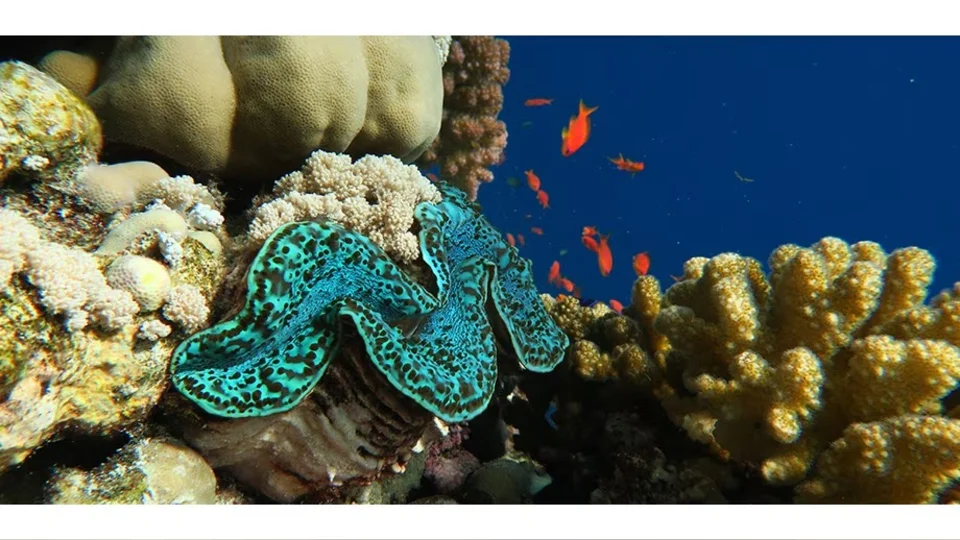
Giant clam inspired photo-conversion highlighted by Photonics Focus 1 min read · Wed, Sep 1 2021 News Giant clam inspired photo-conversion for high-speed communication work highlighted in the September issue of Photonics Focus Magazine. "Reporting in Optical Materials Express, the researchers peg their interest on the intensifying need for high-capacity optical communication links as the Internet of Things undergoes explosive growth. The iridocytes' natural ability to manipulate light, including UV wavelengths, is tantalizing to the researchers because the higher- frequency light can accommodate high-bandwidth optical communications and data transfer." The article can be accessed through the
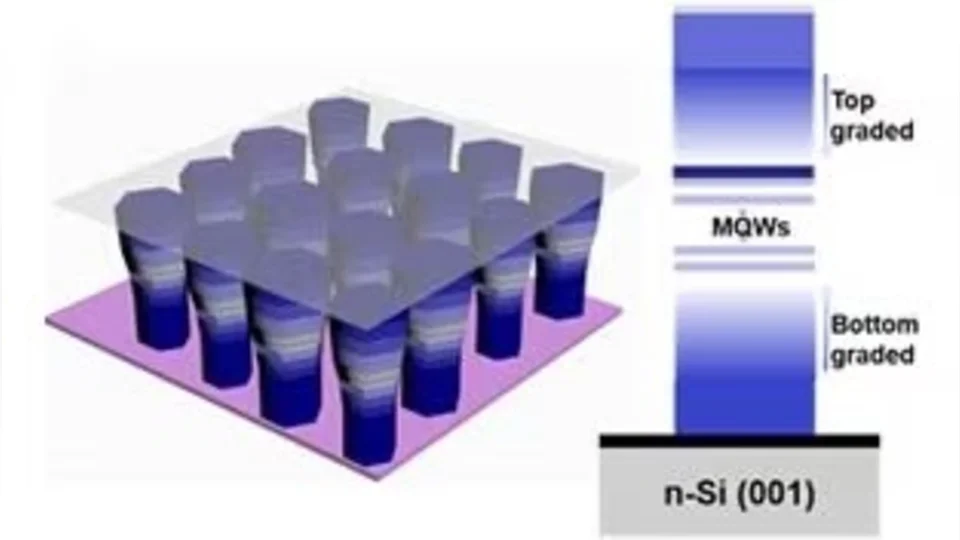
Semiconductor Today features "KAUST demonstrates nanowire GRINSCH diode for efficient UV-LED/laser applications" 1 min read · Mon, Jul 23 2018 News "AlGaN-based light-emitting devices are promising ultraviolet light sources to replace the existing UV gas lasers and UV lamps containing toxic substances (mercury). However, the performance of AlGaN-based UV emitters are limited, and in particular high-power UV laser diodes (emitting below 330nm) have not yet been reported. Moreover, the threshold operating voltages of reported UV laser diodes (>330nm) are quite high, surpassing 25V in lasing mode with high series resistance due to poor hole injection efficiency." "These limitations in device performance are attributed to several factors such
Engage ORCID ShareClipboard Related Sites Electrical and Computer Engineering (ECE) Photonics Laboratory (Photonics) Related Content Articles 2 Events 1 Related Links View Publications in the KAUST Repository. View Publications on ORCID View Publications on ResearchGate Downloadable CV Link to Publons Link to Google Scholar LinkedIn