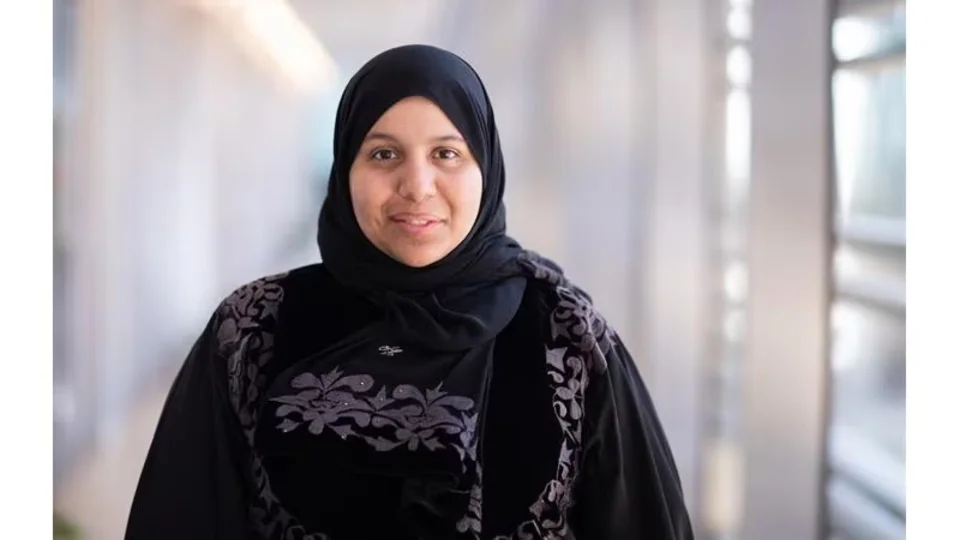
About Sara Althubaiti Sara Althubaiti Ph.D. Student (former), Computer Science bioinformatics text mining machine learning Ontologies cancer Sara Althubaiti is currently a Ph.D. candidate in the Bio-Ontology Research Group (BORG) at King Abdullah University of Science and Technology (KAUST) under the supervision of Professor Robert Hoehndorf. Prior to this, Sara received her master's degree in computer science with a focus on bioinformatics from KAUST in December 2018. Research Interests Sara's research interests include bioinformatics, text mining, ontologies, and cancer. Her research focuses on applying machine learning methods in cancer biology and development specifically in the field of finding driver genes and mutations in Projects Related Projects 2019 CompleX: Variant Prioritization in Complex Disease Tue, Jan 1 2019 - Fri, Dec 31 2021 Applied Ontology Neuro-Symbolic AI Rare disease Semantic similarity The hardest cases in clinical genome sequencing are the ones where no single variant explains the disease. As Mendelian gene discovery slows and the diagnostic rate for whole-exome sequencing stalls below 50%, growing evidence points to oligogenic and polygenic origins: combinations of medium-rare or common alleles that, individually, look unremarkable. Population-level approaches lack the power to find them, and traditional single-gene Mendelian reasoning ignores them. The CompleX project (2019–2021, with the Universities of Cambridge and Birmingham) set out to break this impasse by extending
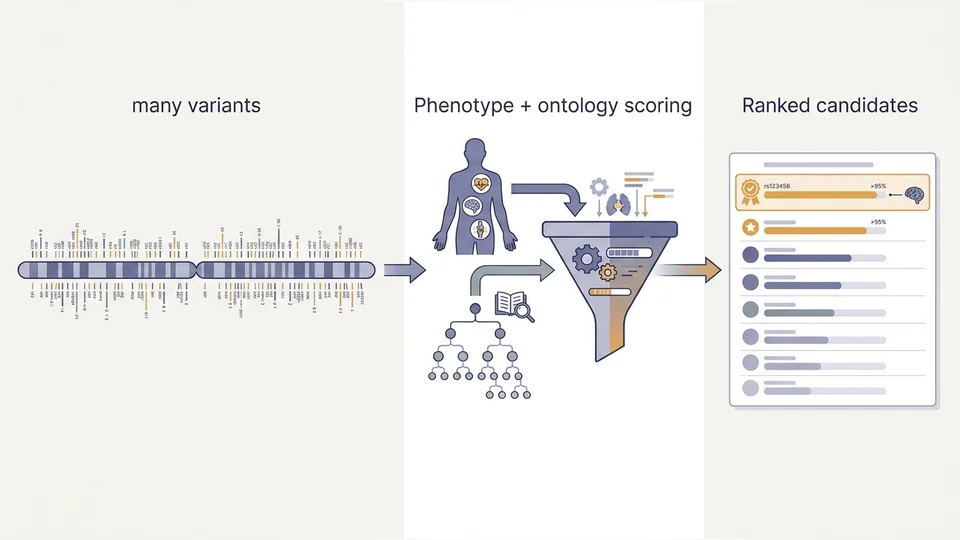
CompleX: Variant Prioritization in Complex Disease Tue, Jan 1 2019 - Fri, Dec 31 2021 Applied Ontology Neuro-Symbolic AI Rare disease Semantic similarity The hardest cases in clinical genome sequencing are the ones where no single variant explains the disease. As Mendelian gene discovery slows and the diagnostic rate for whole-exome sequencing stalls below 50%, growing evidence points to oligogenic and polygenic origins: combinations of medium-rare or common alleles that, individually, look unremarkable. Population-level approaches lack the power to find them, and traditional single-gene Mendelian reasoning ignores them. The CompleX project (2019–2021, with the Universities of Cambridge and Birmingham) set out to break this impasse by extending
Related Sites Bio-Ontology Research Group (BORG) Computer Science (CS) Related Content Articles 3 Projects 1 Events 1