Distilling doctoral complexity in four minutes: CEMSE student trio honored by IEEE ComSoc
Recognized at ICC 2026, the students translated research spanning wireless communications, maritime connectivity and wearable health technologies into award-winning four-minute presentations.
About
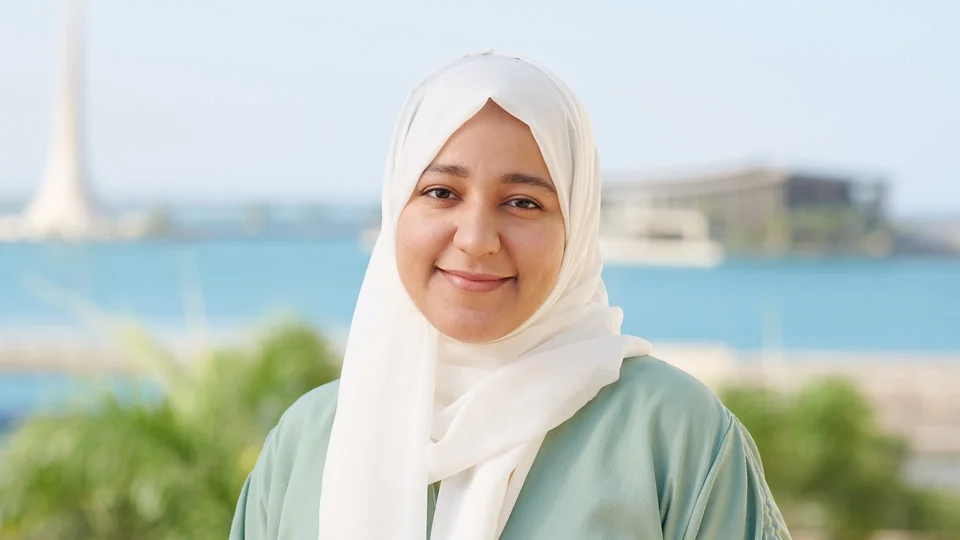
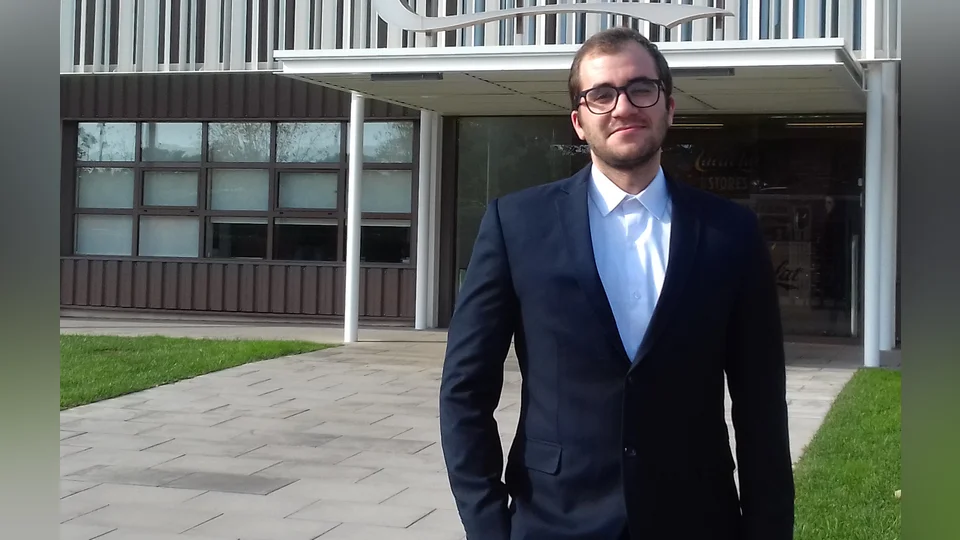
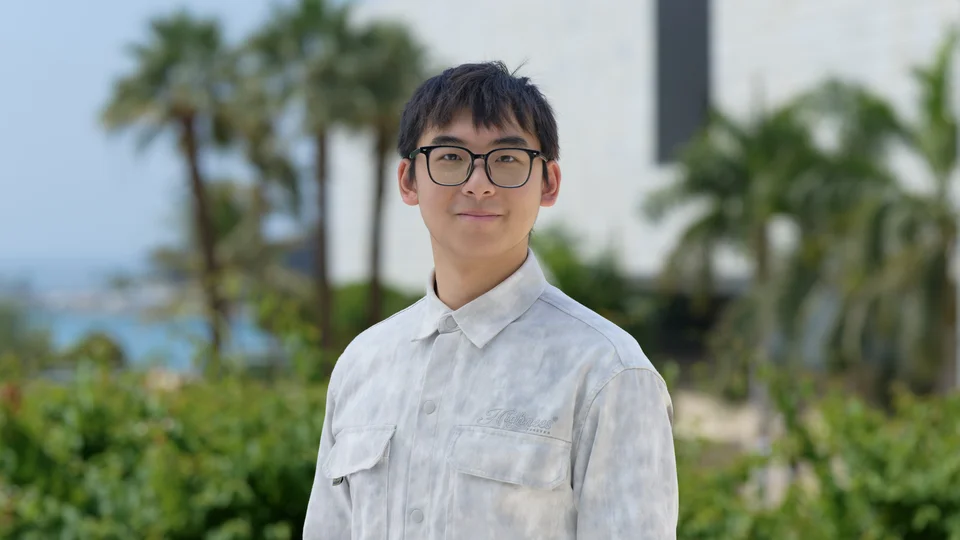
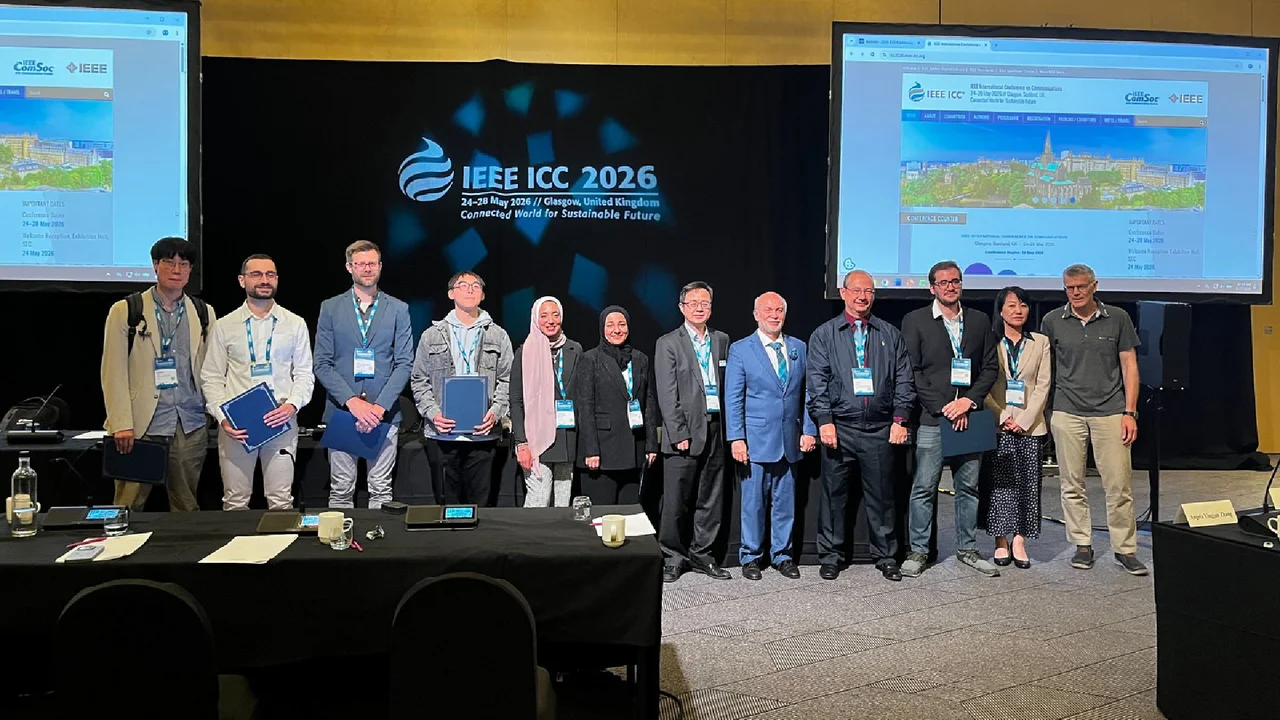
Three KAUST CEMSE doctoral candidates — Hakim Jemaa, Hao Lin and Abeer Alamoudi — won second- and third-place honors at the 2026 IEEE International Conference on Communications (ICC 2026) Four Minute Thesis (4MT) Competition.
Held during the IEEE Communications Society’s (IEEE ComSoc) flagship conference, themed "Connected World for a Sustainable Future," the competition brought together leading experts, researchers, and industry professionals to discuss advances in global communications and digital infrastructure.
Selected through an initial video submission before competing in an on-site final round at ICC 2026, Jemaa (second place), Lin (third place) and Alamoudi (third place) were recognized for presenting their complex doctoral research clearly and engagingly to a non-specialist audience within a four-minute time limit.
More than a presentation challenge, the competition required participants to distill years of doctoral research into a compelling description that highlighted the problem, its significance and its real-world impact without compromising scientific rigor.
Making terahertz communications practical
Supervised by Professors Tareq Al-Naffouri and Mohamed-Slim Alouini, Jemaa’s research focuses on terahertz (THz) wireless communications, a technology expected to play a key role in future ultra-high-speed communication networks. While THz systems promise enormous bandwidth and terabit-per-second data rates, processing that volume of information efficiently remains a significant challenge.
To address this, Jemaa develops low-complexity signal-processing algorithms and channel-decoding methods that help bridge the gap between the data-transmission rates of THz systems and the processing efficiency of receivers.
“The 4MT format was exciting and demanding,” he said. “Every sentence and every slide had to serve a clear purpose. I had to focus on one central message and explain the motivation, the proposed solution and the practical impact in a way that a non-specialist could remember.
“Research does not create impact only by existing, but when people understand it and can build on it. Communication skills are essential because they improve the research itself. When we are forced to explain a problem simply and honestly, we often understand more clearly what is important and where the real contribution lies.”
Jemaa will continue to develop receiver architectures and signal-processing algorithms for next-generation THz wireless systems that address hardware constraints while enabling faster, more efficient communication.
Connecting maritime communities
Lin, supervised by Professor Mohamed-Slim Alouini, received third place for his research exploring high-altitude platform station (HAPS) networks that could improve connectivity across oceans.
His work uses mathematical modeling to develop design guidelines for airborne communication platforms that provide reliable coverage for island, nearshore and offshore users. By determining the appropriate HAPS density for different electromagnetic environments, the research could help overcome many of the limitations associated with existing maritime infrastructure and satellite communications.
Lin believes successful research communication begins by helping audiences understand why the work matters.
“When presenting our work to a non-specialist audience, we still need to demonstrate some technical details,” he said. “However, it is more important to clearly explain the research motivation, application scenarios, advantages and main conclusions using as few words as possible.”
His future research will continue exploring non-terrestrial networks and emerging radiomulti
frequency and free-space optical communication technologies to enhance global connectivity, particularly in underserved and remote regions.
Advancing wearable health technologies
Alamoudi, supervised by Professor Ahmed Eltawil, also earned third place for research that combines human body communication, energy harvesting, networking protocols, and artificial intelligence to develop next-generation wearable health technologies.
Her research explores using the human body as a communication medium for wearable sensors, enabling continuous health monitoring while reducing the need for frequent battery charging. Current applications focus on cardiovascular disease monitoring, with future potential extending to diabetes, epilepsy and respiratory disorders.
“My research is multifaceted,” Alamoudi said. “The hardest part of the competition was not reducing the technical details, but organizing what remained into a logical sequence from the problem to the solution while preserving the scientific novelty.”
She plans to continue advancing adaptive energy-harvesting wearable sensors and incorporate those innovations into an n integrated circuit for human body communication currently under development at KAUST.
More than a competition
Although their research addresses different scientific challenges, Jemaa, Lin and Alamoudi shared a common takeaway from the 4MT competition: communicating research effectively is becoming an increasingly important part of scientific discovery.
Preparing presentations for a general audience encouraged them to think beyond specialist terminology and consider how collaborators, industry, policymakers and the public engage with scientific research. They also found that explaining their work clearly broadens its impact and helps sharpen their own understanding of the problems they seek to solve.
The students also reflected on the role their supervisors and mentors played in developing both their research and communication skills.
“My supervisors, Professors Al-Naffouri and Alouini, helped shape both my research and how I communicate it,” Jemaa said. “They have supported me through the many ups and downs of Ph.D. research, including the challenges and periods of stagnation that occur more often than we tend to admit.”
“My mentors have always encouraged me to communicate my work with a clear motivation," Alamoudi added. “I was also fortunate to work with the English Language and Communication Program team here at KAUST, who also coached me on how to present my research clearly and connect with different audiences.”
“My supervisor and mentors have provided me with continuous guidance and encouragement,” Lin said. “Their advice has helped me strengthen my communication skills, present my research ideas more clearly and share my work with greater confidence.”
The recognition of three KAUST students at ICC 2026 reflects the University’s commitment to developing researchers who value scientific excellence and the ability to communicate discoveries in ways that broaden their impact.