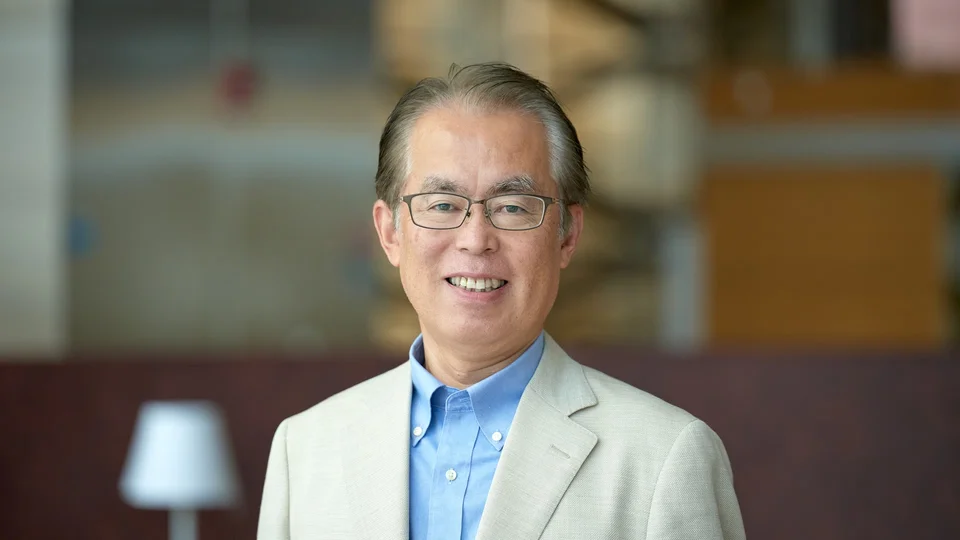
About Kazuhiro Ohkawa Kazuhiro Ohkawa Professor (former), Electrical and Computer Engineering metalorganic vapor-phase epitaxy nitride semiconductor micro-light-emitting diodes vertical-cavity surface emitting laser Professor Ohkawa is a highly regarded researcher, widely recognized for his contributions to electrical engineering and applied physics, particularly for his pioneering work in refining the metalorganic vapor-phase epitaxy technique for novel wide bandgap semiconductors. Events Presented Events Nov 26 - Dec 2, 2023 Semiconductor Epitaxy for Micro-LEDs and Novel Lasers Kazuhiro Ohkawa, Professor (former), Electrical and Computer Engineering Nov 26, 12:00 - 13:00 B9 L2 H2 semiconductor laser InGaN-based monolithic RGB LED arrays would be the key to producing micro-LED displays. The micro-LED displays will reduce the frequency of battery charging for mobiles and make head-mount displays thinner and lighter weight. It will become a game changer. Apr 10 - Apr 16, 2022 Semiconductor Epitaxy and Micro-Device Fabrication Toward AR and VR World Kazuhiro Ohkawa, Professor (former), Electrical and Computer Engineering Apr 10, 12:00 - 13:00 B9 L2 R2322 H1 Wearable, fast-response, and efficient displays are suitable to enjoy the AR and VR world. Apr 4 - Apr 10, 2021 Blue LED material beyond Blue for Micro-LED Displays Kazuhiro Ohkawa, Professor (former), Electrical and Computer Engineering Apr 4, 12:00 - 13:00 KAUST LED material Displays Energy is an indispensable part of our lives. We are challenging energy-saving novel light emitters and clean-energy generation systems at Energy Conversion Devices and Materials (ECO Devices) Laboratory at KAUST. The former is based on MOCVD technology, material science, and device technology. The latter is the nitride photocatalyst invented by Ohkawa. The development of highly-efficient InGaN-based blue LEDs was the topic of the 2014 Nobel Prize in Physics. InGaN-based green LEDs were realized after improving the quality of higher-In-content InGaN. The three primary colors in light are RGB. The current red LEDs are based on InGaP as the active region. If we realize red LEDs by InGaN, we can fabricate the monolithic RGB LEDs in a wafer. Such RGB integration will be a breakthrough for micro-LED displays that are the next generation after the OLED displays. In this seminar, the science of MOCVD, the growth of high-In-content InGaN, and the state-of-the-art InGaN-based red LEDs will be introduced. Apr 5 - Apr 11, 2020 Blue LED material extended to Green, Yellow, and now Red Kazuhiro Ohkawa, Professor (former), Electrical and Computer Engineering Apr 5, 12:00 - 13:00 KAUST electrical engineering energy LED OLEDs MOCVD In this seminar, the science of MOCVD, the material science of InGaN, and the new-born InGaN-based red LED performance will be discussed. The three primary colors in light are RGB. Green and blue LEDs have been realized by using InGaN active region. The current red LEDs are based on AlGaAs or InGaP as the active region. If we can realize red LEDs by InGaN, it is possible to integrate RGB LEDs in a wafer. Such RGB integration is a breakthrough to develop the next displays, so-called, micro-LED displays that are the next after the OLED displays, and functional LED lightings.
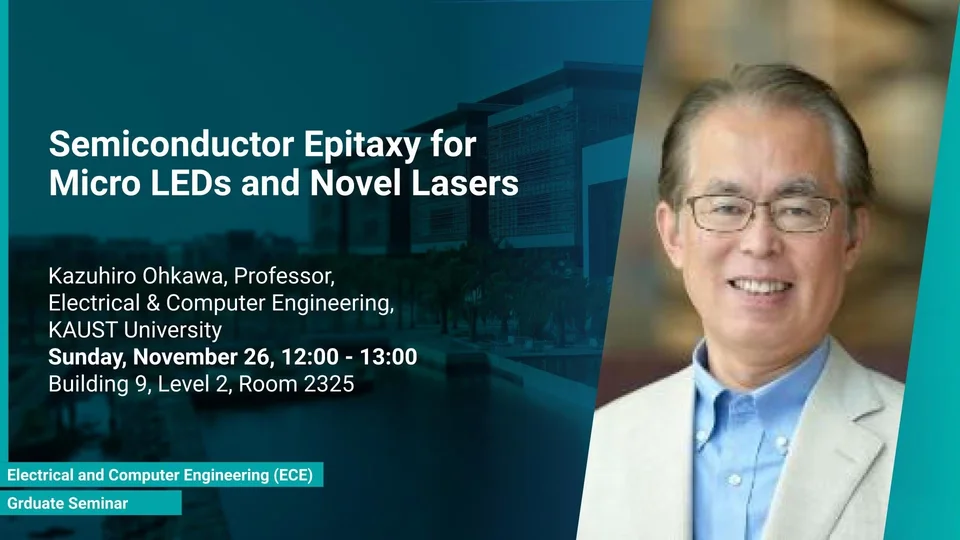
Semiconductor Epitaxy for Micro-LEDs and Novel Lasers Kazuhiro Ohkawa, Professor (former), Electrical and Computer Engineering Nov 26, 12:00 - 13:00 B9 L2 H2 semiconductor laser InGaN-based monolithic RGB LED arrays would be the key to producing micro-LED displays. The micro-LED displays will reduce the frequency of battery charging for mobiles and make head-mount displays thinner and lighter weight. It will become a game changer.
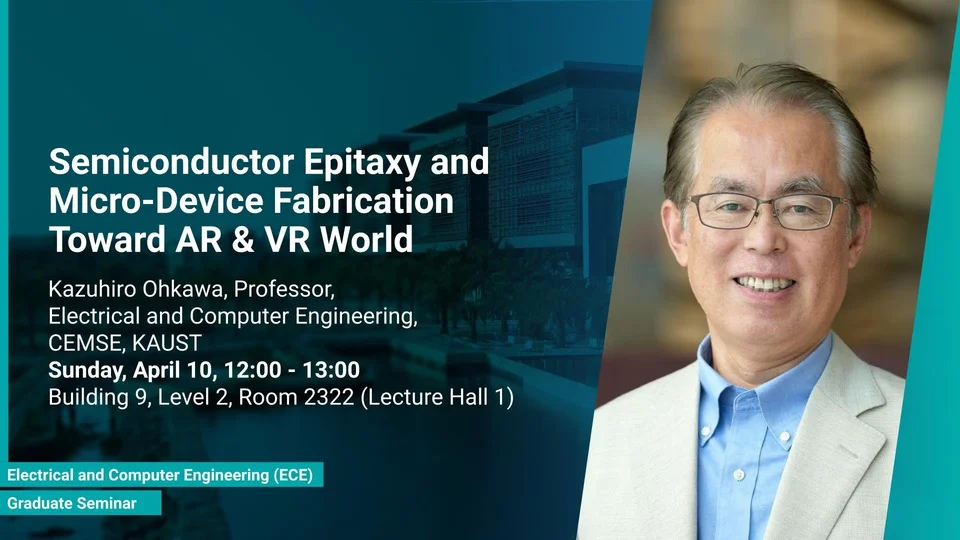
Semiconductor Epitaxy and Micro-Device Fabrication Toward AR and VR World Kazuhiro Ohkawa, Professor (former), Electrical and Computer Engineering Apr 10, 12:00 - 13:00 B9 L2 R2322 H1 Wearable, fast-response, and efficient displays are suitable to enjoy the AR and VR world.
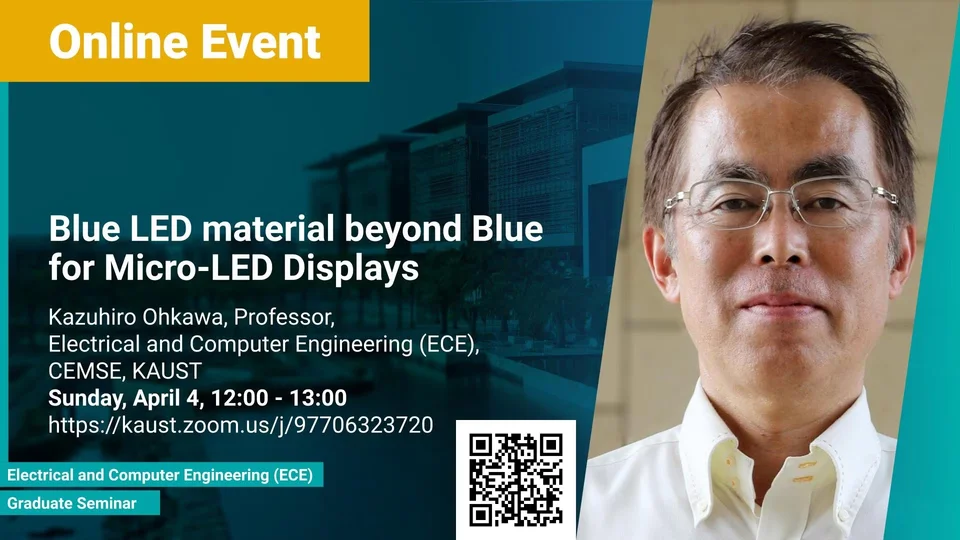
Blue LED material beyond Blue for Micro-LED Displays Kazuhiro Ohkawa, Professor (former), Electrical and Computer Engineering Apr 4, 12:00 - 13:00 KAUST LED material Displays Energy is an indispensable part of our lives. We are challenging energy-saving novel light emitters and clean-energy generation systems at Energy Conversion Devices and Materials (ECO Devices) Laboratory at KAUST. The former is based on MOCVD technology, material science, and device technology. The latter is the nitride photocatalyst invented by Ohkawa. The development of highly-efficient InGaN-based blue LEDs was the topic of the 2014 Nobel Prize in Physics. InGaN-based green LEDs were realized after improving the quality of higher-In-content InGaN. The three primary colors in light are RGB. The current red LEDs are based on InGaP as the active region. If we realize red LEDs by InGaN, we can fabricate the monolithic RGB LEDs in a wafer. Such RGB integration will be a breakthrough for micro-LED displays that are the next generation after the OLED displays. In this seminar, the science of MOCVD, the growth of high-In-content InGaN, and the state-of-the-art InGaN-based red LEDs will be introduced.
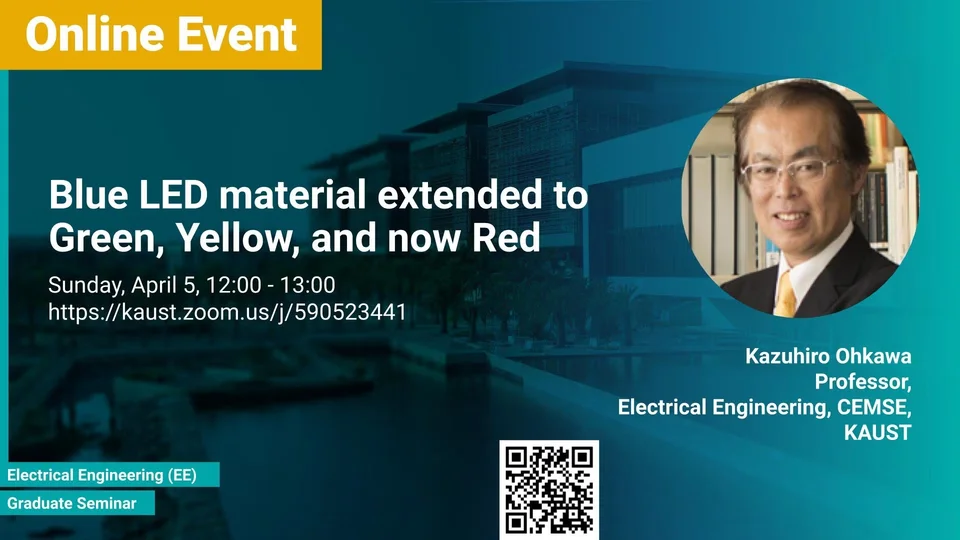
Blue LED material extended to Green, Yellow, and now Red Kazuhiro Ohkawa, Professor (former), Electrical and Computer Engineering Apr 5, 12:00 - 13:00 KAUST electrical engineering energy LED OLEDs MOCVD In this seminar, the science of MOCVD, the material science of InGaN, and the new-born InGaN-based red LED performance will be discussed. The three primary colors in light are RGB. Green and blue LEDs have been realized by using InGaN active region. The current red LEDs are based on AlGaAs or InGaP as the active region. If we can realize red LEDs by InGaN, it is possible to integrate RGB LEDs in a wafer. Such RGB integration is a breakthrough to develop the next displays, so-called, micro-LED displays that are the next after the OLED displays, and functional LED lightings.
Engage ORCID KAUST Repository KAUST Academic Portal ShareClipboard Related Sites Electrical and Computer Engineering (ECE) Energy Conversion Devices and Materials Laboratory (ECODEVICES) Related Content Articles 65 Events 4