CEMSE Weekly Updates - April 28, 2026 Tue, Apr 28 2026 Newsletter Upcoming Events Stay informed about the upcoming events and the latest news from CEMSE. Upcoming Events Ultra-Wide Bandgap Al-Rich AlGaN Devices for Next Generation Power Electronics Applications Ting’ang (挺昂) Liu, Ph.D. Student, Electrical and Computer Engineering May 3, 12:00 - 13:00 B9 R2325 This presentation explores the development of advanced ultra-wide bandgap (UWBG) Al-rich AlGaN power devices, revealing the superior material properties that position this technology to transform next-generation power electronics. What Survives When Code Doesn’t? Dr. Laurent Bindschaedler, Research Group Leader, Max Planck Institute for Software Systems (MPI-SWS) May 4, 12:00 - 13:00 B9 R2325 Trustworthy AI trustworthy machine learning coding AI axplainable AI software development This talk explores how AI-driven code generation shifts the role of software from a durable artifact to a disposable implementation and argues for a new computational model for agentic software that formalizes the fundamental guarantees of intent, state, composition, and effect into explicit, enforceable contracts. Modeling Complex Dependence in Multivariate Time Series, with Applications to Brain Signals Paolo Victor Redondo, Ph.D. Student, Statistics May 5, 15:00 - 17:00 B2 R5209; Zoom Meeting 95773646717 extreme statistics Biostatistics brain signals multivariate statistics Time Series This thesis develops approaches to address issues and limitations associated with multivariate processes generated from unknown complex systems such as brain signals. Fully Decentralized Inference for Spatial Data Using Low-Rank Models Jianwei Shi, Postdoctoral Research Fellow, Statistics May 7, 12:00 - 13:00 B9 R2325 statistical inference decentralized systems Geospatial Data geospatial statistics optimization This talk introduces a novel, fully decentralized optimization framework to enable scalable parameter inference in large spatial low-rank models, supported by both theoretical guarantees and empirical validation. Learning under Limited Information across Federated, Multi-Agent, and LLM Settings Salma Kharrat, Ph.D. Student, Computer Science May 7, 15:00 - 16:45 B3 R5220 Federated learning personalized learning decentralized learning Reinforcement Learning black-box optimization prompt optimization decentralized systems combinatorial optimization observability inference Trustworthy AI trustworthy machine learning intelligent systems LLM This dissertation studies learning under structural information constraints across three major paradigms: federated learning, cooperative multi-agent reinforcement learning, and black-box optimization of large language models. Multimodal Agents: From Automation toward Open-Ended Self-Improvement Mingchen Zhuge, Ph.D. Student, Computer Science May 9, 17:30 - 19:30 B4 R5220; Zoom Meeting 91489077683 AI agents coding Multi-agent systems world models recursive self-improvement LLM Deep Reinforcement Learning This thesis presents practical methodologies for building scalable multimodal agents that move from narrow automation toward open-ended self-improvement. Latest News Gallium oxide electronics withstand extreme cold 1 min read · Mon, Apr 27 2026 News Clip News advanced semiconductors Gallium oxide Robust semiconductor enables devices to operate close to absolute zero, with potential applications in space missions and quantum computing. KAUST student Saverio Pasqualoni receives ISC Hans Meuer Best Paper Award for leading research on an open-source framework 3 min read · Sun, Apr 26 2026 Awards News HPC computer networking and systems Improving how supercomputers communicate can significantly reduce the time required to train artificial intelligence models. Research led by KAUST M.S./Ph.D. student Saverio Pasqualoni shows that optimizing communication across large-scale systems can cut training time by up to 44%. The research introduces PICO (Performance Insights for Collective Operations), an open-source framework that analyzes and improves communication across large-scale computing systems. The system’s fine-grained profiling, rich metadata collection and automated orchestration break down complex internal algorithmic KAUST researchers publish new book on decision rule systems 1 min read · Thu, Apr 23 2026 News decision trees computation combinatorial optimization computational geometry KAUST Postdoctoral Research Fellows Kerven Durdymyradov and Azimkhon Ostonov, along with Professor Mikhail Moshkov, have published a new book with Springer titled "Transforming Decision Rule Systems into Decision Trees: Syntactic Approach." The book is devoted to the transformation of decision rule systems into deterministic and nondeterministic decision trees that recognize the properties of these systems. It continues the development of the syntactic approach to the study of the transformation problem, which assumes the input data is unknown and only a system of decision rules exists to be Resilient renewable energy networks designed for the desert 1 min read · Thu, Apr 23 2026 News Clip News renewable energy systems energy systems optimization climate data extreme weather Accounting for weather extremes is essential for designing reliable renewable energy systems in hot, arid regions. Protecting the systems that power modern life 4 min read · Tue, Apr 14 2026 News Research in Focus cybersecurity Critical Infrastructure Protection Distributed Systems Security AI machine learning The modern world runs on interconnected cyber-physical and distributed digital systems. When cyber-physical systems are compromised, the consequences can extend into the physical world. A cyberattack on a maritime system can disrupt supply chains. A breach in financial infrastructure can destabilize economies. An autonomous system exploit can paralyze transportation networks. These scenarios raise a fundamental question: how can digital and cyber-physical systems be designed to remain secure and resilient in increasingly complex environments? For three decades, KAUST Professor Roberto Di
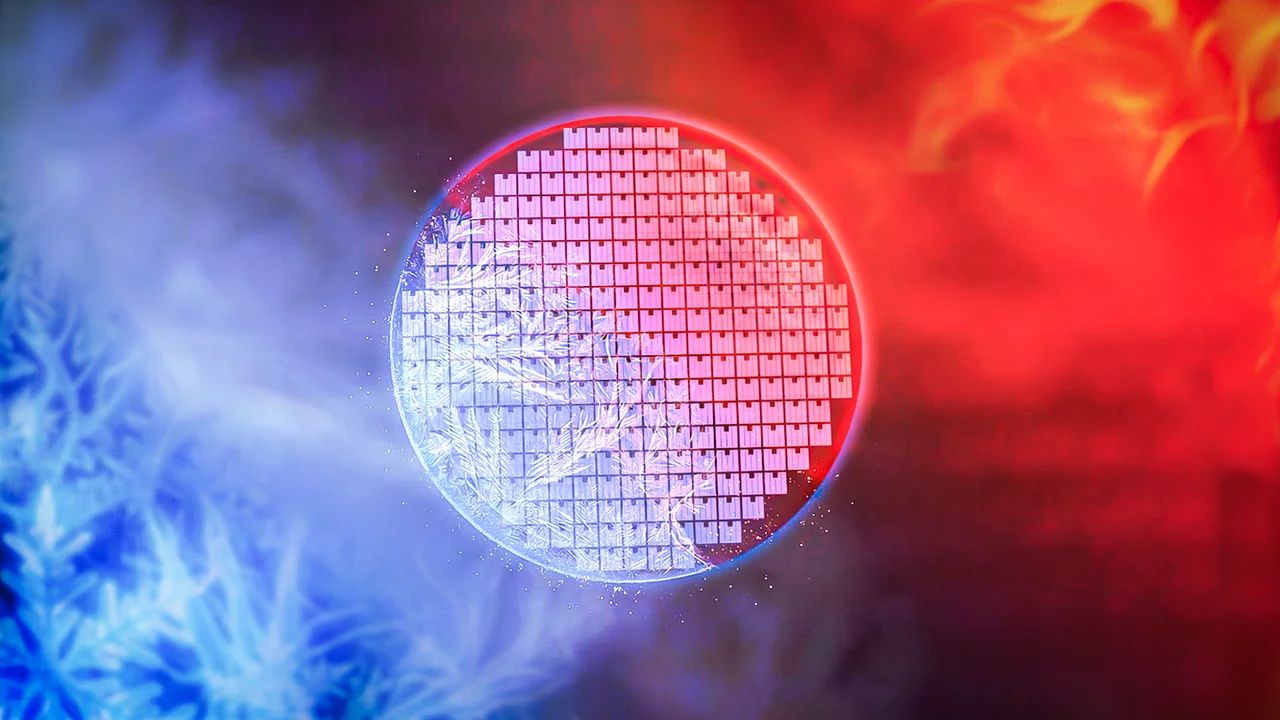
Gallium oxide electronics withstand extreme cold 1 min read · Mon, Apr 27 2026 News Clip News advanced semiconductors Gallium oxide Robust semiconductor enables devices to operate close to absolute zero, with potential applications in space missions and quantum computing.
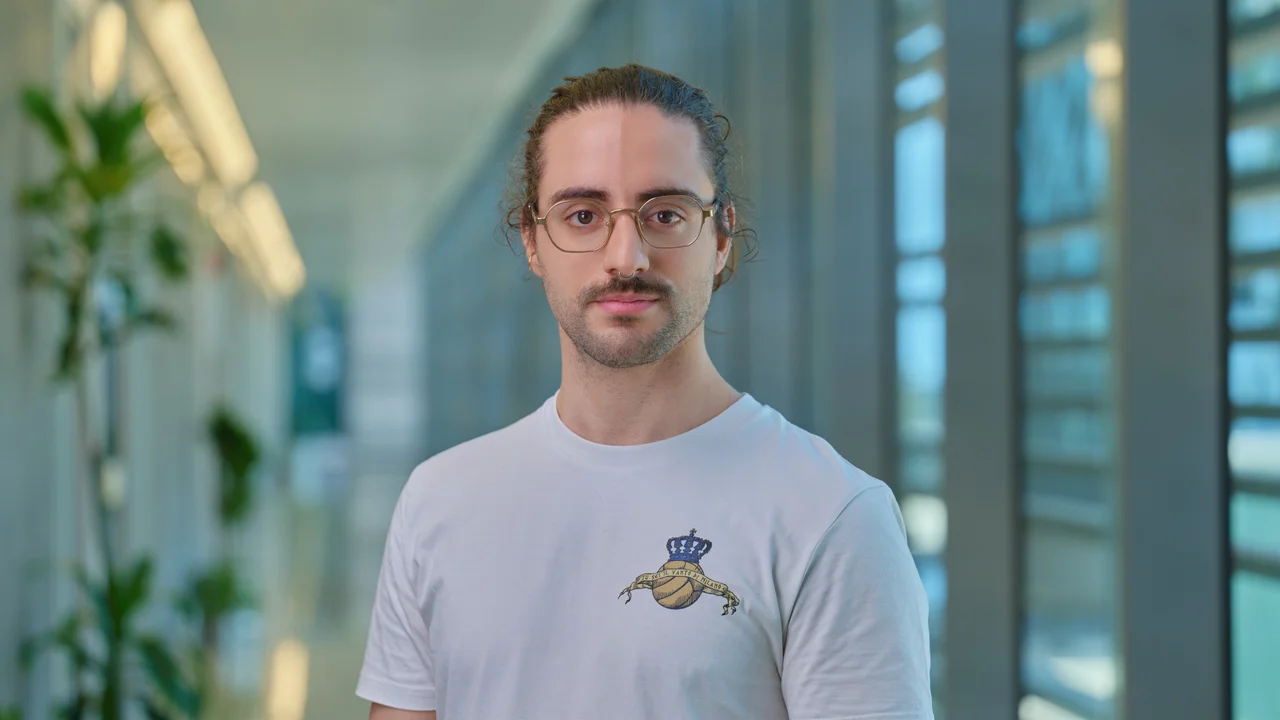
KAUST student Saverio Pasqualoni receives ISC Hans Meuer Best Paper Award for leading research on an open-source framework 3 min read · Sun, Apr 26 2026 Awards News HPC computer networking and systems Improving how supercomputers communicate can significantly reduce the time required to train artificial intelligence models. Research led by KAUST M.S./Ph.D. student Saverio Pasqualoni shows that optimizing communication across large-scale systems can cut training time by up to 44%. The research introduces PICO (Performance Insights for Collective Operations), an open-source framework that analyzes and improves communication across large-scale computing systems. The system’s fine-grained profiling, rich metadata collection and automated orchestration break down complex internal algorithmic
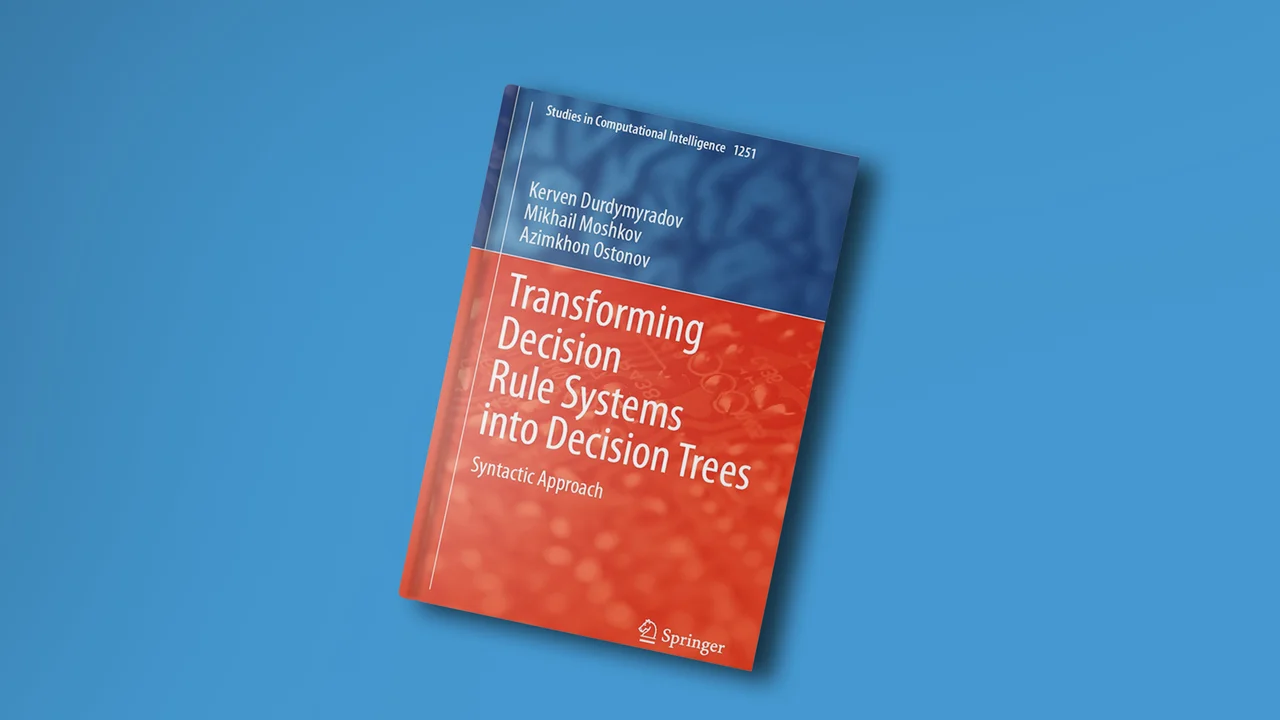
KAUST researchers publish new book on decision rule systems 1 min read · Thu, Apr 23 2026 News decision trees computation combinatorial optimization computational geometry KAUST Postdoctoral Research Fellows Kerven Durdymyradov and Azimkhon Ostonov, along with Professor Mikhail Moshkov, have published a new book with Springer titled "Transforming Decision Rule Systems into Decision Trees: Syntactic Approach." The book is devoted to the transformation of decision rule systems into deterministic and nondeterministic decision trees that recognize the properties of these systems. It continues the development of the syntactic approach to the study of the transformation problem, which assumes the input data is unknown and only a system of decision rules exists to be