About Andrea Fratalocchi Andrea Fratalocchi Professor, Electrical and Computer Engineering photonics energy harvesting imaging apparatus intelligent lasers Professor Fratalocchi is a pioneer in complex systems and sustainable technologies, focused on addressing critical global challenges. His groundbreaking research has led to innovative solutions in areas such as energy harvesting, clean water production and smart materials. As a founder of the ECE program at KAUST and co-founder of Pixeltra, Professor Fratalocchi is a proven leader and entrepreneur, successfully translating his research into real-world impact. Articles Related News November 2021 Coal product used to create green clean water 1 min read · Wed, Nov 3 2021 News filtration desalination water resources monitoring Compressed blocks of pulverized coal can be used as the basis of sunlight-powered off-grid water purification. The technology is already being progressed by commercial partners toward pilot-scale production of drinking water. Dark-colored materials that strongly soak up sunlight to drive seawater desalination are a long-standing research interest of KAUST's Andrea Fratalocchi. While reading about the economic challenges of ending coal’s use for power generation, Fratalocchi was struck by a novel possible use for coal. “The two ideas clicked together: why don’t we use coal for a new economy in April 2021 KAUST-led research set to revolutionize communications privacy 1 min read · Wed, Apr 14 2021 News CMOS-compatible silicon chip communications privacy In our modern information-saturated society, data protection is a significant and ongoing challenge for both individuals and organizations. Every day we share public and business data over unsecured information channels, computer systems, and networks, be it through video calls, emails and text messaging. At any moment, the transmission of this sensitive, private communication can be intercepted and hacked to commit fraudulent acts such as stealing passwords, identity theft, and gaining access to bank accounts. March 2021 This black is the new black, and light is its prisoner 1 min read · Tue, Mar 2 2021 News Originally published in Wired Black gold signals the future of energy in the Middle East—and, for once, that doesn't mean oil. At least this is the vision of Italy-born academic Andrea Fratalocchi, who in 2015 was recognized by Guinness World Records for co-creating the "blackest black"—the darkest human-made substance, which is actually fashioned from gold. The nanomaterial Fratalocchi's team invented absorbs more than 99 percent of visible light and over 98 percent of infrared. Think of it as a tiny, imperfect, terrestrial black hole, just sucking in light rays. While having joined Neil August 2020 KAUST prospective student: Qizhou Wang 1 min read · Sun, Aug 9 2020 News machine learning Computer Vision Qizhou Wang, 22, is a communication engineering graduate who will join KAUST from the University of Electronic Science and Technology, China. Wang will join KAUST in the fall of 2020 as a M.S./Ph.D. candidate in the KAUST Primalight Lab under the supervision of Professor Andrea Fratalocchi. January 2020 KAUST Associate Professor Andrea Fratalocchi elected Fellow of the Optical Society 1 min read · Thu, Jan 2 2020 News photonics energy harvesting Andrea Fratalocchi, associate professor in the University's Computer, Electrical and Mathematical Science and Engineering division, was recently elected as a Fellow of the Optical Society (OSA) at the society's Board of Directors meeting in September. December 2019 Patterned optical chips keep secrets perfectly safe 1 min read · Sun, Dec 22 2019 News communications data security electrical engineering Chaos could help put cyberhackers out of business with a patterned silicon chip that will be uncrackable even in the future. November 2019 Andrea Fratalocchi Elected OSA Fellow for Pioneering Innovations 3 min read · Mon, Nov 25 2019 Spotlight News photonics energy harvesting Andrea Fratalocchi, associate professor in the University's Computer, Electrical and Mathematical Sciences and Engineering (CEMSE) Division, was recently elected as a Fellow Member of The Optical Society of America (OSA) at the Society’s Board of Directors meeting in September. May 2019 KAUST Associate Professor Andrea Fratalocchi’s research leads to Institute of Physics Fellowship 1 min read · Sun, May 12 2019 Awards Spotlight News photonics cybersecurity Andrea Fratalocchi, associate professor in the University's Computer, Electrical and Mathematical Science and Engineering (CEMSE) division, was recently granted a Fellowship of the Institute of Physics (FInstP) by the Institute of Physics (IOP). Fratalocchi was awarded the IOP's highest level of membership in recognition of his outstanding accomplishments in physics. April 2019 The darkest black 1 min read · Tue, Apr 30 2019 News gold nanosphere nanorods insects light Metallic nanostructures absorb light better than any other known structures. February 2018 UESTC students visit CEMSE Laboratories during a one week Winter Camp at KAUST 1 min read · Sun, Feb 4 2018 News photonics printable electronics nanoelectronics laser sensors bioimaging biophotonics 3D printing Twenty-two undergraduate students from the University of Electronic Science and Technology of China (UESTC), Chengdu, are currently visiting the CEMSE Division as part of one week Winter Camp at KAUST. August 2017 Dark materials squeeze green fuel from sunlight 1 min read · Sun, Aug 27 2017 News metamaterials photocatalysis plasmon resonance Metallic nanostructures that slow down light dramatically can triple the efficiency of solar-based hydrogen fuel generation. July 2017 A firefly's flash inspires new nanolaser light 1 min read · Sat, Jul 15 2017 News nanoscience nanoscale electrical engineering light Synchronized emissions from innovative on-chip lasers create possibilities for inexpensive artificial neural networks. November 2016 Color-changing coatings ready for the big time 1 min read · Sat, Nov 19 2016 News applied mathematics nanomaterials light electrical engineering The dazzling colors of peacock feathers arise from the physical interaction of light with biological nanostructures. Researchers have discovered how to exploit this natural trickery known as structural coloration into a large-scale printing technology that produces lightweight and ultraresistant coatings in any color desirable. August 2016 Crafting technology from nature's darkest secrets 1 min read · Sat, Aug 20 2016 News nanofabrication resonator Exploiting the properties of disordered chaotic systems leads to low-cost energy harvesting and innovative micro-surgery applications. May 2016 New nanolasers for quantum information sources 1 min read · Sun, May 1 2016 News plasmonics nanolasers Integrating coherent light sources at the nanoscale with spasers is one of the most promising applications of plasmonics. In a spaser, localized plasmon polaritons (LPPs) waves occurring at the metal-dielectric interface are amplified by an active medium. Under specific conditions, the gain of plasmonic modes can overcome the absorption losses occurring in the metal and stimulated emission of radiation occurs, as experimentally observed in optically pumped spasers. Despite the large body of experimental research, the theoretical understanding of the spaser dynamics is still challenging April 2016 Defying symmetry for better synthesis 1 min read · Sat, Apr 2 2016 News nanoparticles gold nanosphere Insight into the role of sulfur-bearing ligands provides a better handle on ways to synthesize asymmetric metal nanoparticles. September 2015 Cancer screening advance: single point genetic mutations made visible by new optical chip 3 min read · Fri, Sep 4 2015 News photonics energy harvesting imaging apparatus The collaboration of the teams of professors Enzo Di Fabrizio and Andrea Fratalocchi at the King Abdullah University of Science and Technology (KAUST), in Saudi Arabia, has led to the development of a new device that enables the detection of mutations down to a single amino acid. May 2015 Optical chips harness the power of rogue waves 1 min read · Sat, May 2 2015 News optics nanoscale Optical chip A microchip designed to generate and control rogue waves of light on the nano-scale has many potential applications.An optical chip to create and harness the power of nanoscale rogue waves of light could ultimately lead to better prediction systems for weather events and natural disasters by improving researchers’ understanding of the mechanisms that underpin chaotic wave events. Natural catastrophic events are inherently unpredictable, stemming from high-energy, chaotic systems that are difficult to understand or emulate. Andrea Fratalocchi, and his team from KAUST, in collaboration with April 2015 Tsunami On Demand: The Power To Harness Catastrophic Events 2 min read · Sun, Apr 5 2015 News photonics rogue waves nanoscale A new study published today on Nature Physics features a nano-optical chip that makes possible generating and controlling nanoscale rogue waves. The innovative chip was developed by an international team of physicists, led by Andrea Fratalocchi from King Abdullah University of Science and Technology (KAUST), in Saudi Arabia, and is expected to have significant applications for energy research and environmental safety. December 2014 Lights up for chaotic storage 1 min read · Tue, Dec 23 2014 News optical resonator photonic crystals Chaotic optical resonators can trap more light energy than their orderly counterparts. May 2013 Klemens Katterbauer (PhD in Electrical Engineering) comes 2nd place at the Middle East, North Africa & South Asia SPE Student Paper contest 1 min read · Thu, May 2 2013 News Spotlight 4D seismic History Matching imaging apparatus energy harvesting photonics Klemens Katterbauer (Ph.D. candidate under supervision Andrea Fratalocchi) comes 2nd place at the Middle East, North Africa & South Asia SPE Student Paper Contest. February 2013 Prof. Andrea Fratalocchi receives appreciation from Nature Publications as one of its best reviewers 1 min read · Sat, Feb 2 2013 Spotlight News photonics energy harvesting imaging apparatus Prof. Andrea Fratalocchi received a letter of appreciation from the Editor-in-Chief of Nature for serving as a reviewer. September 2012 Prof. Andrea Fratalocchi appointed member of the Editorial Board of Scientific Reports 1 min read · Mon, Sep 17 2012 News imaging apparatus energy harvesting photonics Prof. Andrea Fratalocchi has been appointed as a member of the Editorial Board of Scientific Reports.
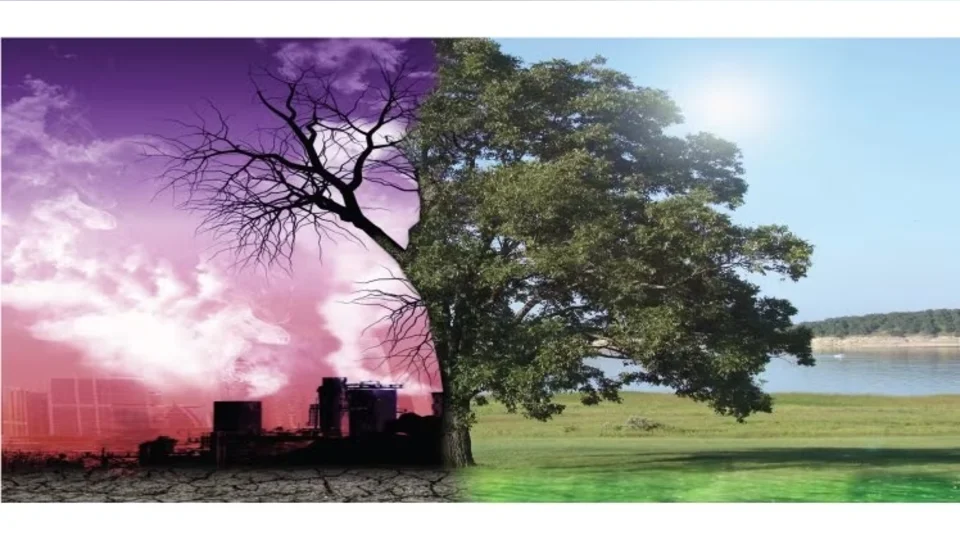
Coal product used to create green clean water 1 min read · Wed, Nov 3 2021 News filtration desalination water resources monitoring Compressed blocks of pulverized coal can be used as the basis of sunlight-powered off-grid water purification. The technology is already being progressed by commercial partners toward pilot-scale production of drinking water. Dark-colored materials that strongly soak up sunlight to drive seawater desalination are a long-standing research interest of KAUST's Andrea Fratalocchi. While reading about the economic challenges of ending coal’s use for power generation, Fratalocchi was struck by a novel possible use for coal. “The two ideas clicked together: why don’t we use coal for a new economy in
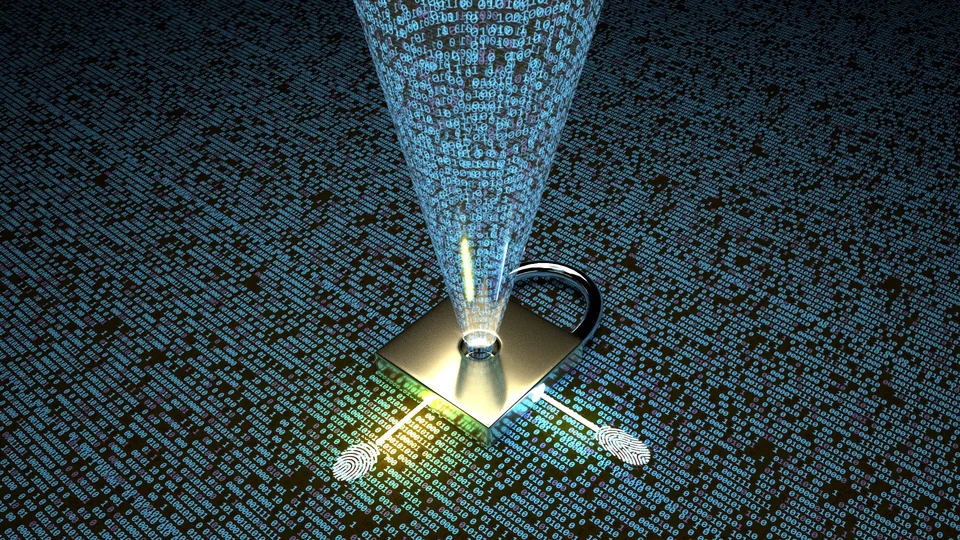
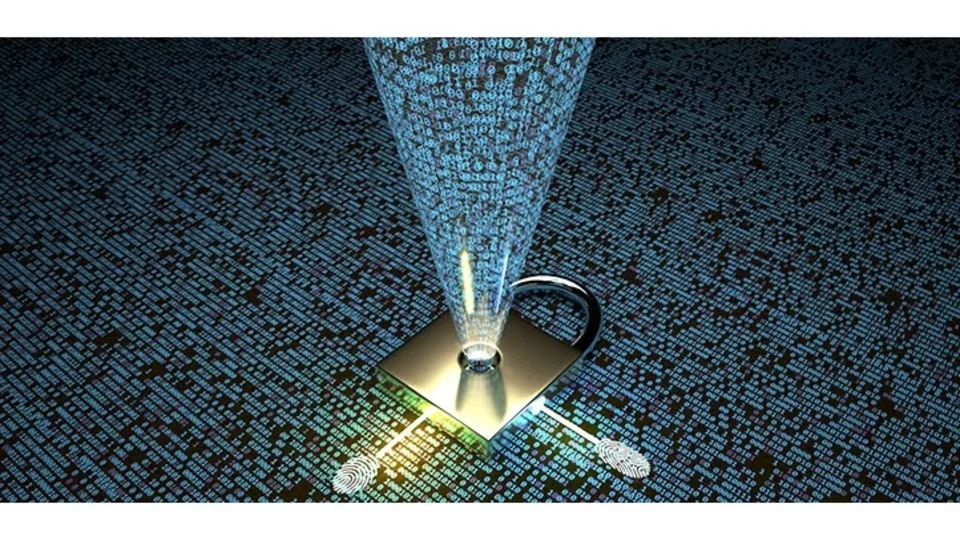
KAUST-led research set to revolutionize communications privacy 1 min read · Wed, Apr 14 2021 News CMOS-compatible silicon chip communications privacy In our modern information-saturated society, data protection is a significant and ongoing challenge for both individuals and organizations. Every day we share public and business data over unsecured information channels, computer systems, and networks, be it through video calls, emails and text messaging. At any moment, the transmission of this sensitive, private communication can be intercepted and hacked to commit fraudulent acts such as stealing passwords, identity theft, and gaining access to bank accounts.
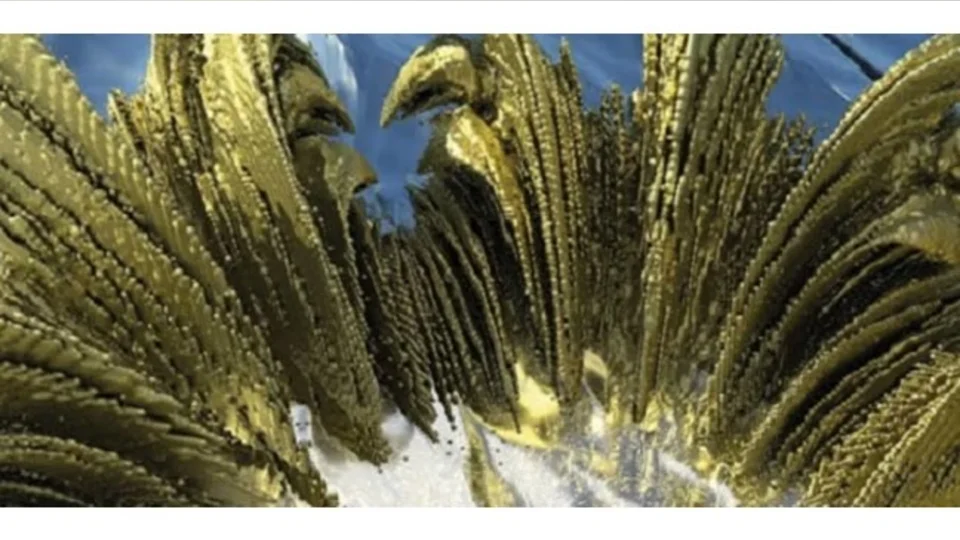
This black is the new black, and light is its prisoner 1 min read · Tue, Mar 2 2021 News Originally published in Wired Black gold signals the future of energy in the Middle East—and, for once, that doesn't mean oil. At least this is the vision of Italy-born academic Andrea Fratalocchi, who in 2015 was recognized by Guinness World Records for co-creating the "blackest black"—the darkest human-made substance, which is actually fashioned from gold. The nanomaterial Fratalocchi's team invented absorbs more than 99 percent of visible light and over 98 percent of infrared. Think of it as a tiny, imperfect, terrestrial black hole, just sucking in light rays. While having joined Neil
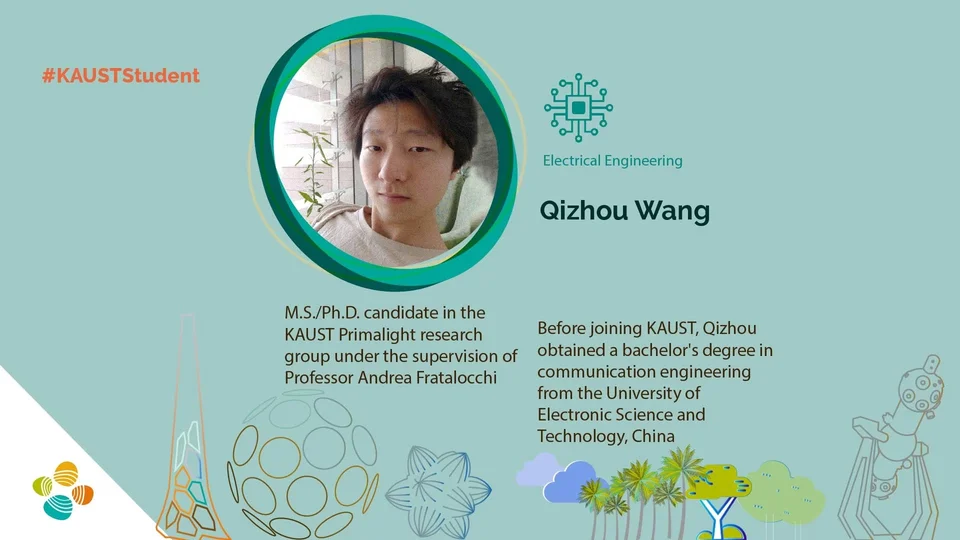
KAUST prospective student: Qizhou Wang 1 min read · Sun, Aug 9 2020 News machine learning Computer Vision Qizhou Wang, 22, is a communication engineering graduate who will join KAUST from the University of Electronic Science and Technology, China. Wang will join KAUST in the fall of 2020 as a M.S./Ph.D. candidate in the KAUST Primalight Lab under the supervision of Professor Andrea Fratalocchi.
KAUST Associate Professor Andrea Fratalocchi elected Fellow of the Optical Society 1 min read · Thu, Jan 2 2020 News photonics energy harvesting Andrea Fratalocchi, associate professor in the University's Computer, Electrical and Mathematical Science and Engineering division, was recently elected as a Fellow of the Optical Society (OSA) at the society's Board of Directors meeting in September.
Patterned optical chips keep secrets perfectly safe 1 min read · Sun, Dec 22 2019 News communications data security electrical engineering Chaos could help put cyberhackers out of business with a patterned silicon chip that will be uncrackable even in the future.
Andrea Fratalocchi Elected OSA Fellow for Pioneering Innovations 3 min read · Mon, Nov 25 2019 Spotlight News photonics energy harvesting Andrea Fratalocchi, associate professor in the University's Computer, Electrical and Mathematical Sciences and Engineering (CEMSE) Division, was recently elected as a Fellow Member of The Optical Society of America (OSA) at the Society’s Board of Directors meeting in September.
KAUST Associate Professor Andrea Fratalocchi’s research leads to Institute of Physics Fellowship 1 min read · Sun, May 12 2019 Awards Spotlight News photonics cybersecurity Andrea Fratalocchi, associate professor in the University's Computer, Electrical and Mathematical Science and Engineering (CEMSE) division, was recently granted a Fellowship of the Institute of Physics (FInstP) by the Institute of Physics (IOP). Fratalocchi was awarded the IOP's highest level of membership in recognition of his outstanding accomplishments in physics.
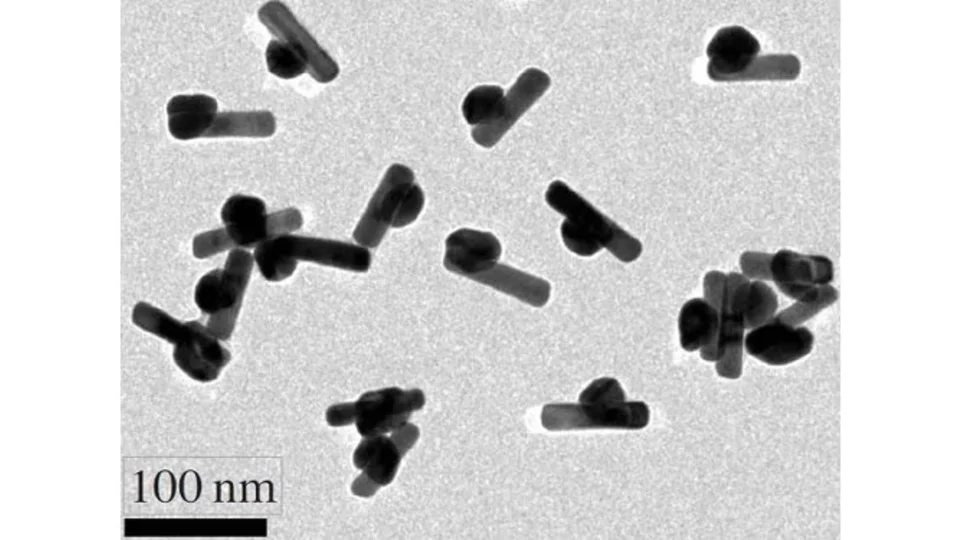
The darkest black 1 min read · Tue, Apr 30 2019 News gold nanosphere nanorods insects light Metallic nanostructures absorb light better than any other known structures.
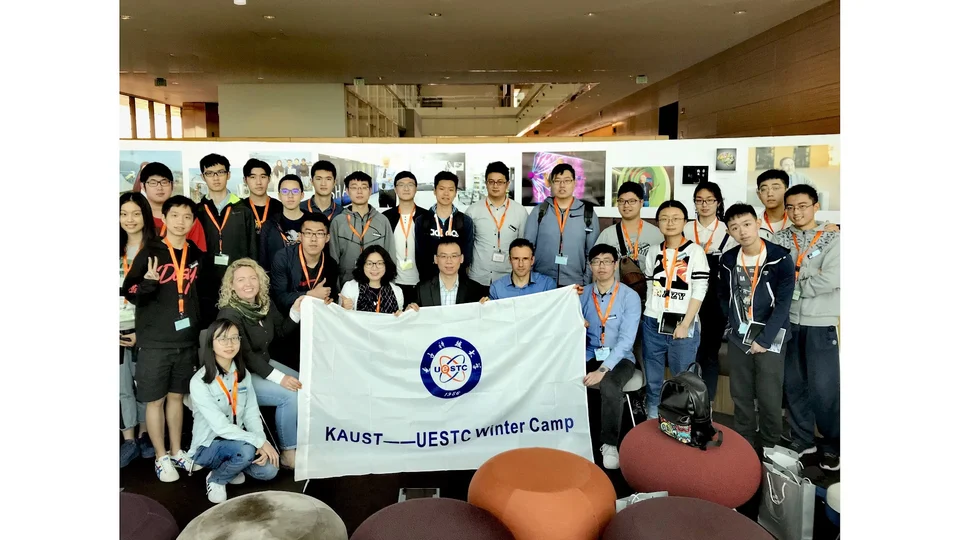
UESTC students visit CEMSE Laboratories during a one week Winter Camp at KAUST 1 min read · Sun, Feb 4 2018 News photonics printable electronics nanoelectronics laser sensors bioimaging biophotonics 3D printing Twenty-two undergraduate students from the University of Electronic Science and Technology of China (UESTC), Chengdu, are currently visiting the CEMSE Division as part of one week Winter Camp at KAUST.
Dark materials squeeze green fuel from sunlight 1 min read · Sun, Aug 27 2017 News metamaterials photocatalysis plasmon resonance Metallic nanostructures that slow down light dramatically can triple the efficiency of solar-based hydrogen fuel generation.
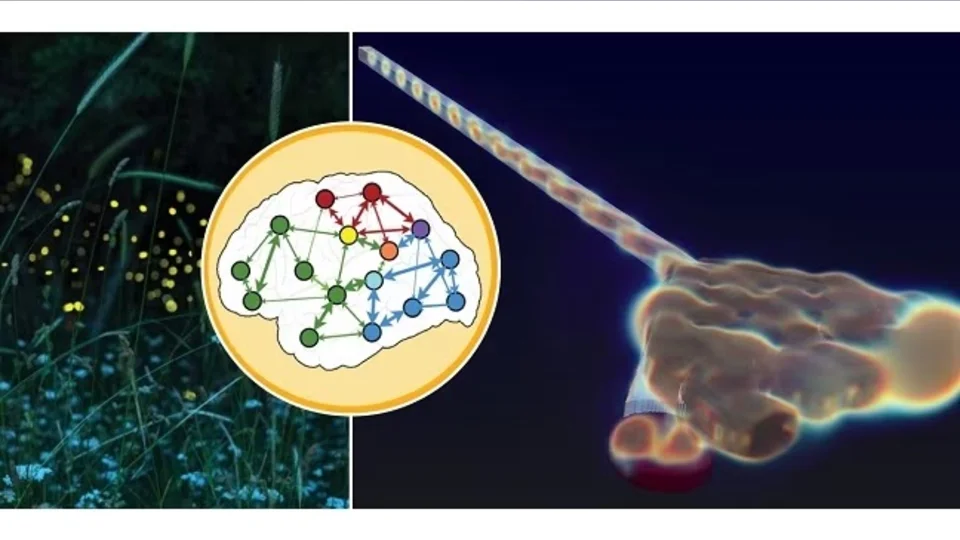
A firefly's flash inspires new nanolaser light 1 min read · Sat, Jul 15 2017 News nanoscience nanoscale electrical engineering light Synchronized emissions from innovative on-chip lasers create possibilities for inexpensive artificial neural networks.
Color-changing coatings ready for the big time 1 min read · Sat, Nov 19 2016 News applied mathematics nanomaterials light electrical engineering The dazzling colors of peacock feathers arise from the physical interaction of light with biological nanostructures. Researchers have discovered how to exploit this natural trickery known as structural coloration into a large-scale printing technology that produces lightweight and ultraresistant coatings in any color desirable.
Crafting technology from nature's darkest secrets 1 min read · Sat, Aug 20 2016 News nanofabrication resonator Exploiting the properties of disordered chaotic systems leads to low-cost energy harvesting and innovative micro-surgery applications.
New nanolasers for quantum information sources 1 min read · Sun, May 1 2016 News plasmonics nanolasers Integrating coherent light sources at the nanoscale with spasers is one of the most promising applications of plasmonics. In a spaser, localized plasmon polaritons (LPPs) waves occurring at the metal-dielectric interface are amplified by an active medium. Under specific conditions, the gain of plasmonic modes can overcome the absorption losses occurring in the metal and stimulated emission of radiation occurs, as experimentally observed in optically pumped spasers. Despite the large body of experimental research, the theoretical understanding of the spaser dynamics is still challenging
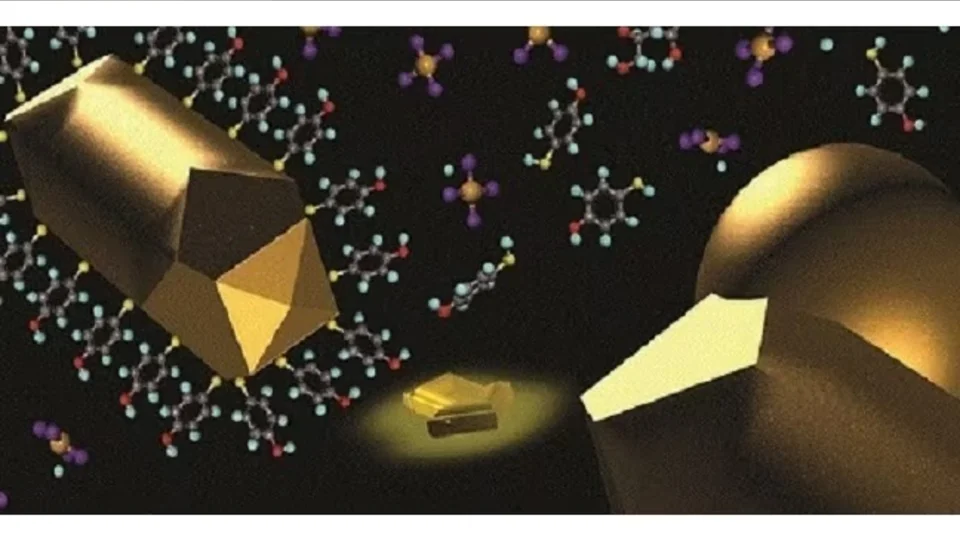
Defying symmetry for better synthesis 1 min read · Sat, Apr 2 2016 News nanoparticles gold nanosphere Insight into the role of sulfur-bearing ligands provides a better handle on ways to synthesize asymmetric metal nanoparticles.
Cancer screening advance: single point genetic mutations made visible by new optical chip 3 min read · Fri, Sep 4 2015 News photonics energy harvesting imaging apparatus The collaboration of the teams of professors Enzo Di Fabrizio and Andrea Fratalocchi at the King Abdullah University of Science and Technology (KAUST), in Saudi Arabia, has led to the development of a new device that enables the detection of mutations down to a single amino acid.
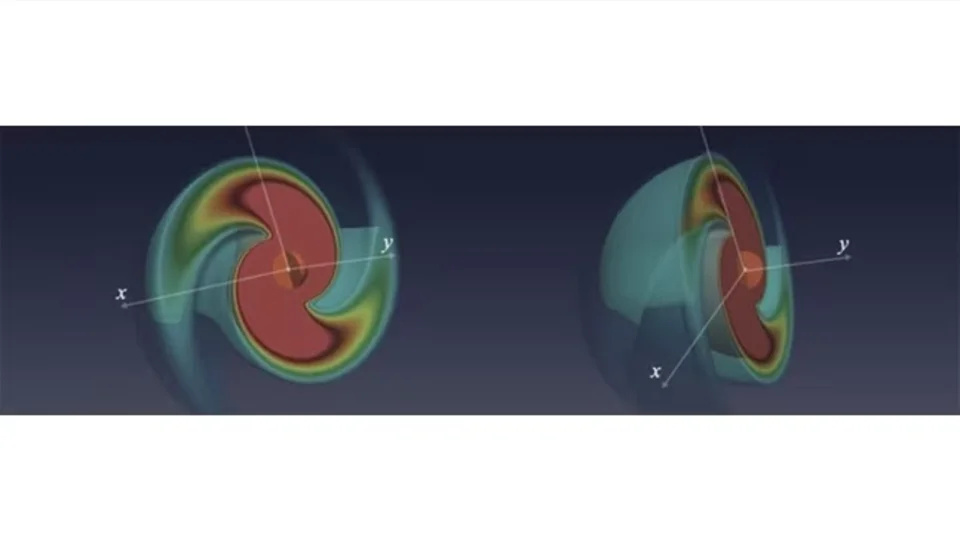
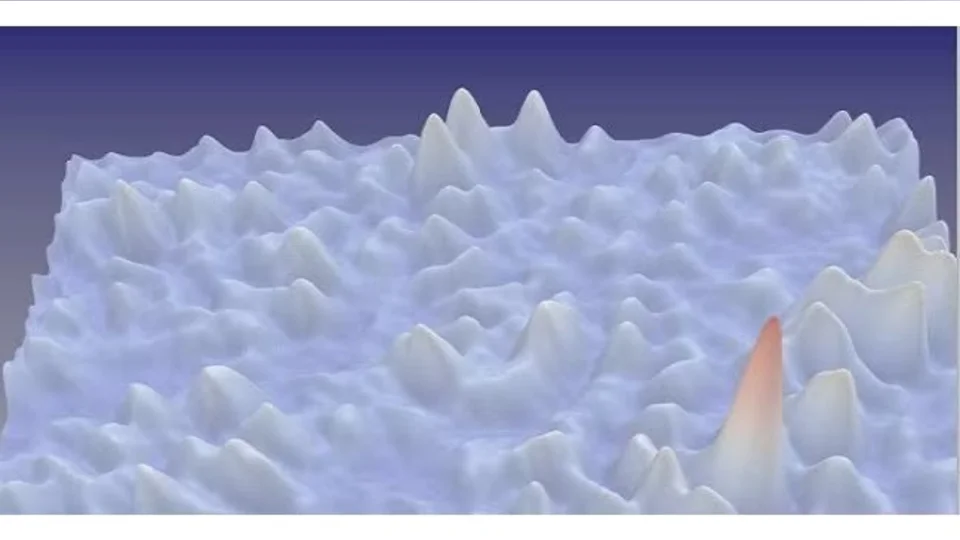
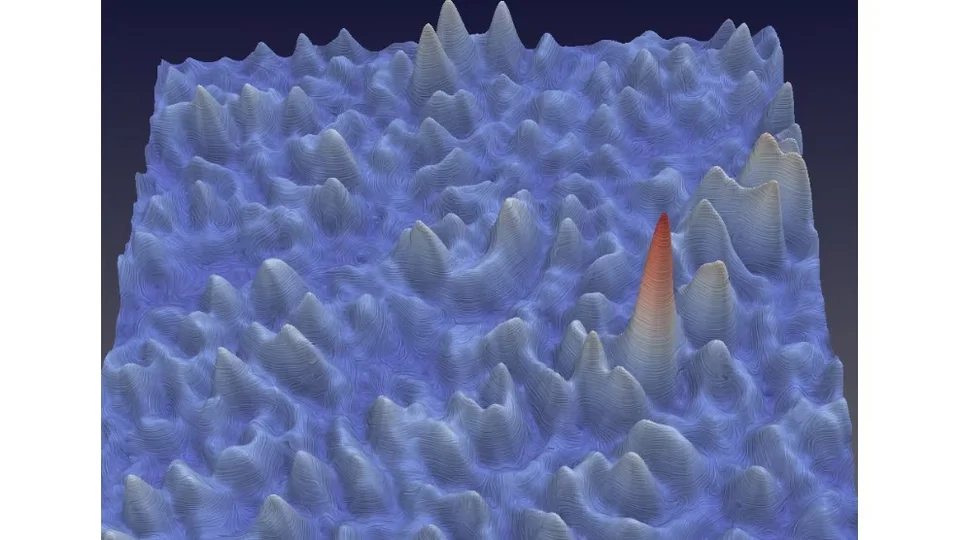
Optical chips harness the power of rogue waves 1 min read · Sat, May 2 2015 News optics nanoscale Optical chip A microchip designed to generate and control rogue waves of light on the nano-scale has many potential applications.An optical chip to create and harness the power of nanoscale rogue waves of light could ultimately lead to better prediction systems for weather events and natural disasters by improving researchers’ understanding of the mechanisms that underpin chaotic wave events. Natural catastrophic events are inherently unpredictable, stemming from high-energy, chaotic systems that are difficult to understand or emulate. Andrea Fratalocchi, and his team from KAUST, in collaboration with
Tsunami On Demand: The Power To Harness Catastrophic Events 2 min read · Sun, Apr 5 2015 News photonics rogue waves nanoscale A new study published today on Nature Physics features a nano-optical chip that makes possible generating and controlling nanoscale rogue waves. The innovative chip was developed by an international team of physicists, led by Andrea Fratalocchi from King Abdullah University of Science and Technology (KAUST), in Saudi Arabia, and is expected to have significant applications for energy research and environmental safety.
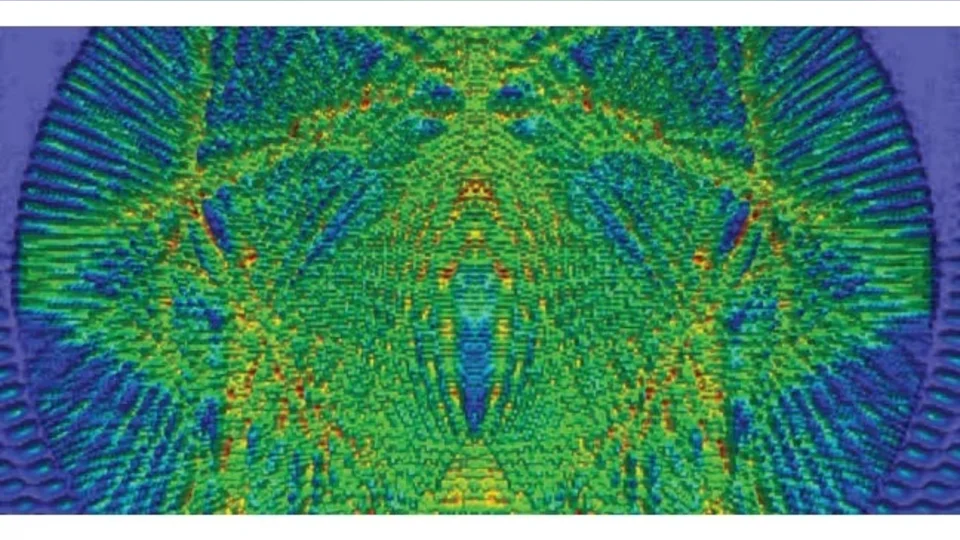
Lights up for chaotic storage 1 min read · Tue, Dec 23 2014 News optical resonator photonic crystals Chaotic optical resonators can trap more light energy than their orderly counterparts.
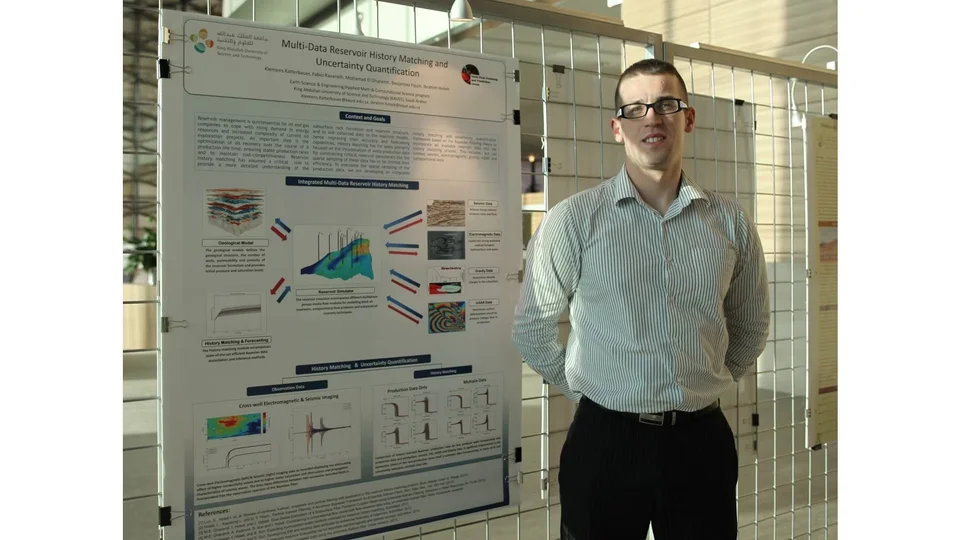
Klemens Katterbauer (PhD in Electrical Engineering) comes 2nd place at the Middle East, North Africa & South Asia SPE Student Paper contest 1 min read · Thu, May 2 2013 News Spotlight 4D seismic History Matching imaging apparatus energy harvesting photonics Klemens Katterbauer (Ph.D. candidate under supervision Andrea Fratalocchi) comes 2nd place at the Middle East, North Africa & South Asia SPE Student Paper Contest.
Prof. Andrea Fratalocchi receives appreciation from Nature Publications as one of its best reviewers 1 min read · Sat, Feb 2 2013 Spotlight News photonics energy harvesting imaging apparatus Prof. Andrea Fratalocchi received a letter of appreciation from the Editor-in-Chief of Nature for serving as a reviewer.
Prof. Andrea Fratalocchi appointed member of the Editorial Board of Scientific Reports 1 min read · Mon, Sep 17 2012 News imaging apparatus energy harvesting photonics Prof. Andrea Fratalocchi has been appointed as a member of the Editorial Board of Scientific Reports.
Engage ORCID KAUST Repository KAUST Academic Portal Scopus ShareClipboard Related Sites Electrical and Computer Engineering (ECE) Applied Mathematics and Computational Science (AMCS) Center of Excellence for Generative AI (GenAI) Primalight Laboratory (Primalight) Related Content Articles 23 Events 6